Triathlon is not three separate sports stacked into one race but one sport in which fatigue from the swim carries over to the bike, and fatigue from the bike carries over to the run. That is why a triathlete’s preparation is built around a shared week: each sport has its own job, and the load is distributed so that workouts don’t get in each other’s way. Below is which workouts you need in each sport, what bricks are, how to control intensity and how to build a week for different numbers of hours.
In short: what you need to know
- Workouts in each sport have different jobs. Swimming — technique and intervals, cycling — the long ride and work at race intensity, running — easy volume and tempo.
- Bricks — running straight after the bike — are an essential part of preparation: your legs learn to run after pedalling.
- Most of the volume is in the easy zone, with few hard workouts and never back to back.
- More attention to your weakest sport: usually it is swimming.
- Preparation runs in periods: base, specific work, taper before the race.
- Ready-made programmes by distance are collected in the triathlon training plans section.
Distances and how preparation differs
| Distance | Legs and the main focus of preparation |
|---|---|
| Sprint | 750 m swim, 20 km bike, 5 km run. Speed and transitions: the race is short, so mistakes in transitions are costly |
| Olympic | 1.5 km, 40 km, 10 km. A pace near threshold in all three sports and the ability to hold it |
| 70.3 (113 km) | 1.9 km, 90 km, 21.1 km. Endurance on the bike, fuelling during the race, running on tired legs |
| Ironman (226 km) | 3.8 km, 180 km, 42.2 km. Volume, long rides and bricks, well-practised fuelling, an even pace |
The preparation timeline depends on what you bring into triathlon: whether you can swim the distance in front crawl, and how much you ride and run. In our plans the sprint and Olympic distance are designed for 12 weeks, 113 and 226 km for 28 weeks for those who already have a base, and Ironman from zero for 12 months. If you want to start with the shortest race, the first step is usually a sprint; how to prepare for it and what you need to be able to do in open water is covered in the article on your first triathlon.
Swimming: technique and intervals
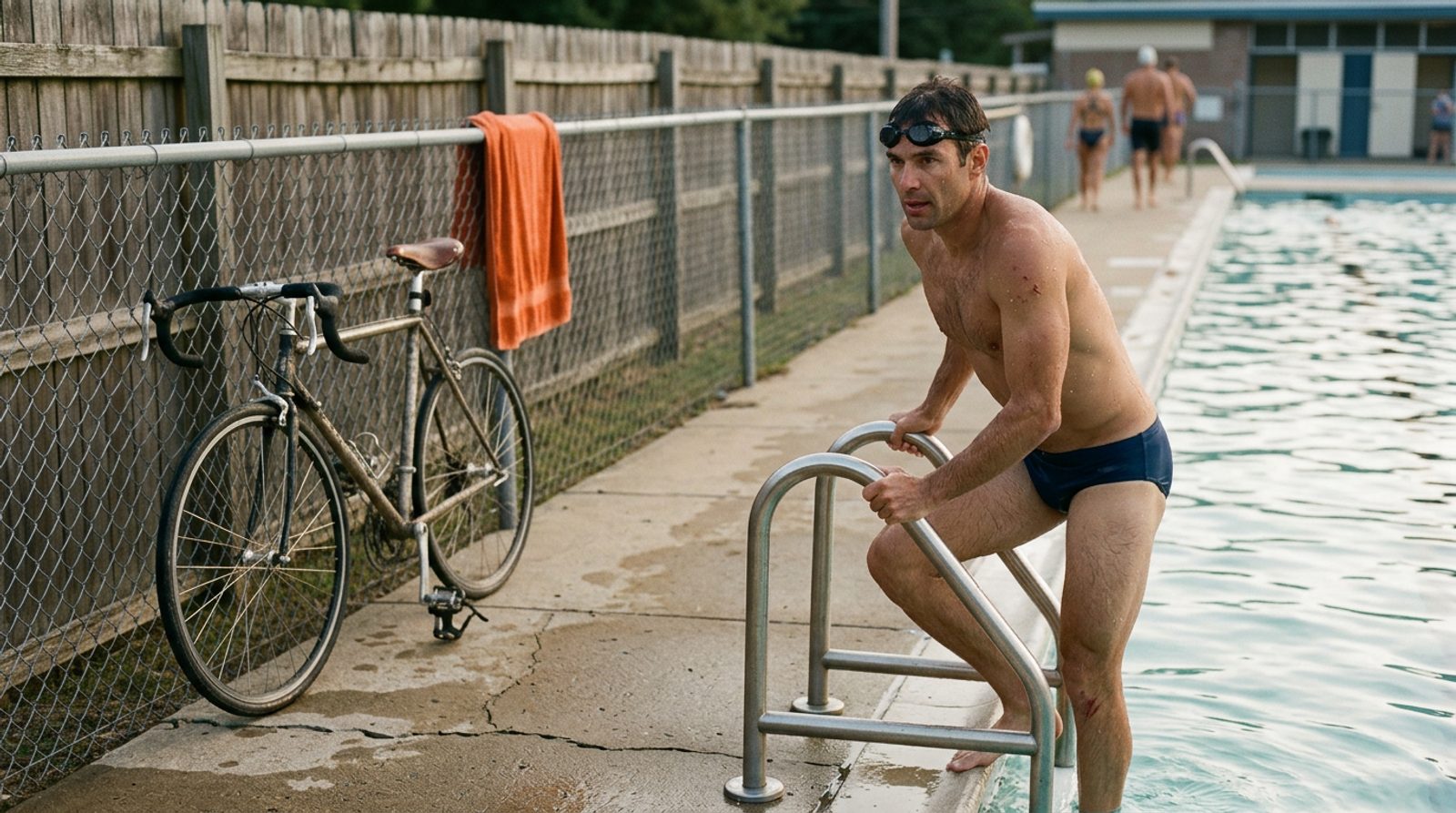
For most amateurs who come from running, swimming is the weakest sport, and the gains here come from technique, not strength. Every pool session is a warm-up, technique drills (bilateral breathing, body position, a long stroke), the main set and a cool-down. The main set is intervals: for example, 100–400-metre repeats with short pauses at the wall, evenly, without fading on the last one. The longer the target distance, the longer the repeats and the more important an even pace. Two swims a week is a reasonable minimum, three if your technique is weak.
Cycling: the long ride and race intensity
The bike is the longest leg of any distance, and it is on the bike that it is decided whether you will have enough energy for the run. The base is the long easy ride at the weekend. The second key workout is work at the intensity of your future race: for the sprint and Olympic distance these are efforts near threshold, for 70.3 and Ironman long blocks at a moderate pace you can hold for hours. Types of bike workouts and power and heart rate zones are covered in detail in the article on cycling training.
Running: easy volume, tempo and running off the bike
A triathlete’s running volume is usually lower than that of a runner of the same level: the legs are already loaded by the bike. The base comes from easy runs and one long run, and the key workout is a tempo run or intervals. This does not remove the injury risk of running: volume grows gradually, and easy runs stay easy.
Bricks: running straight after the bike
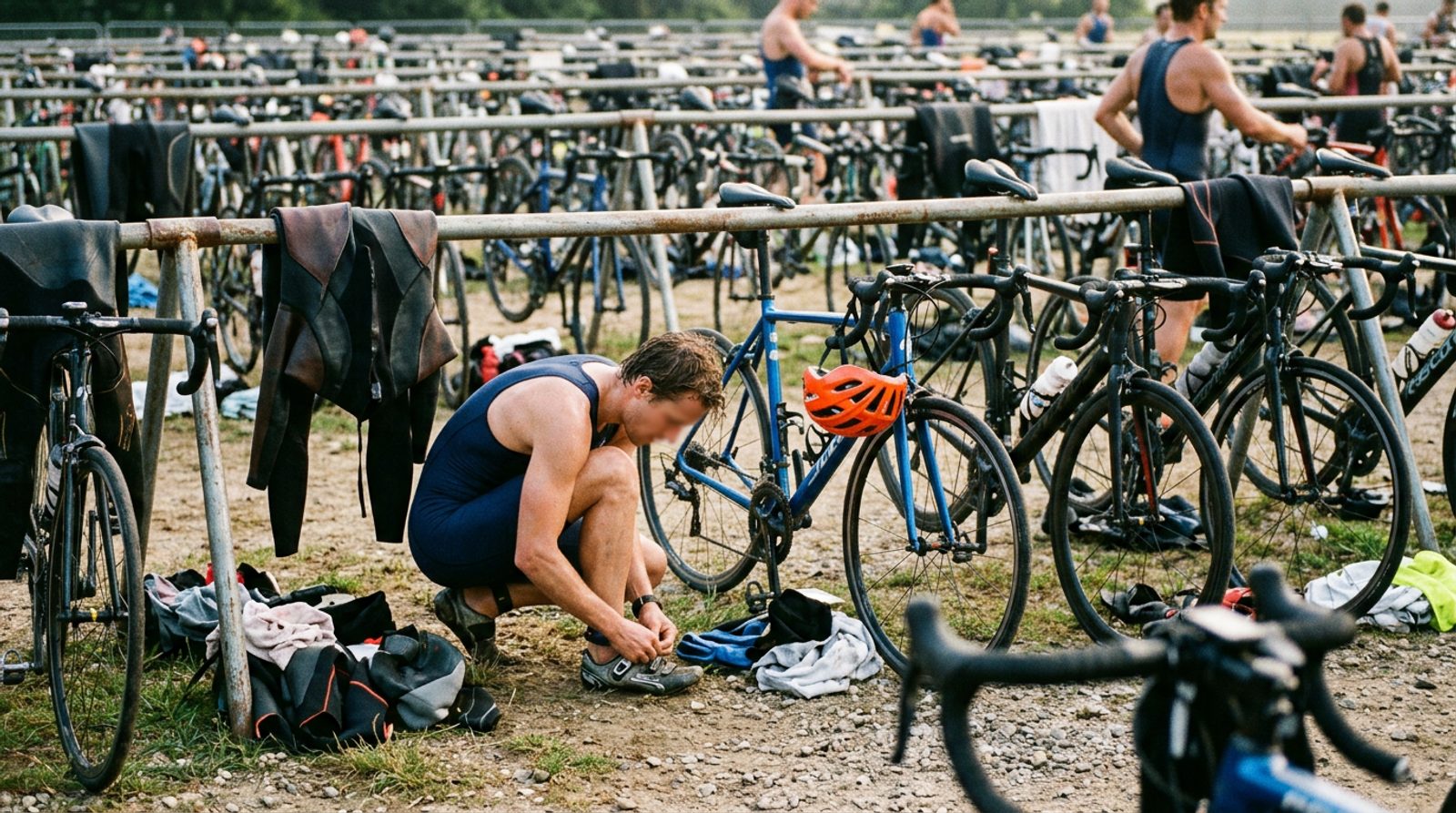
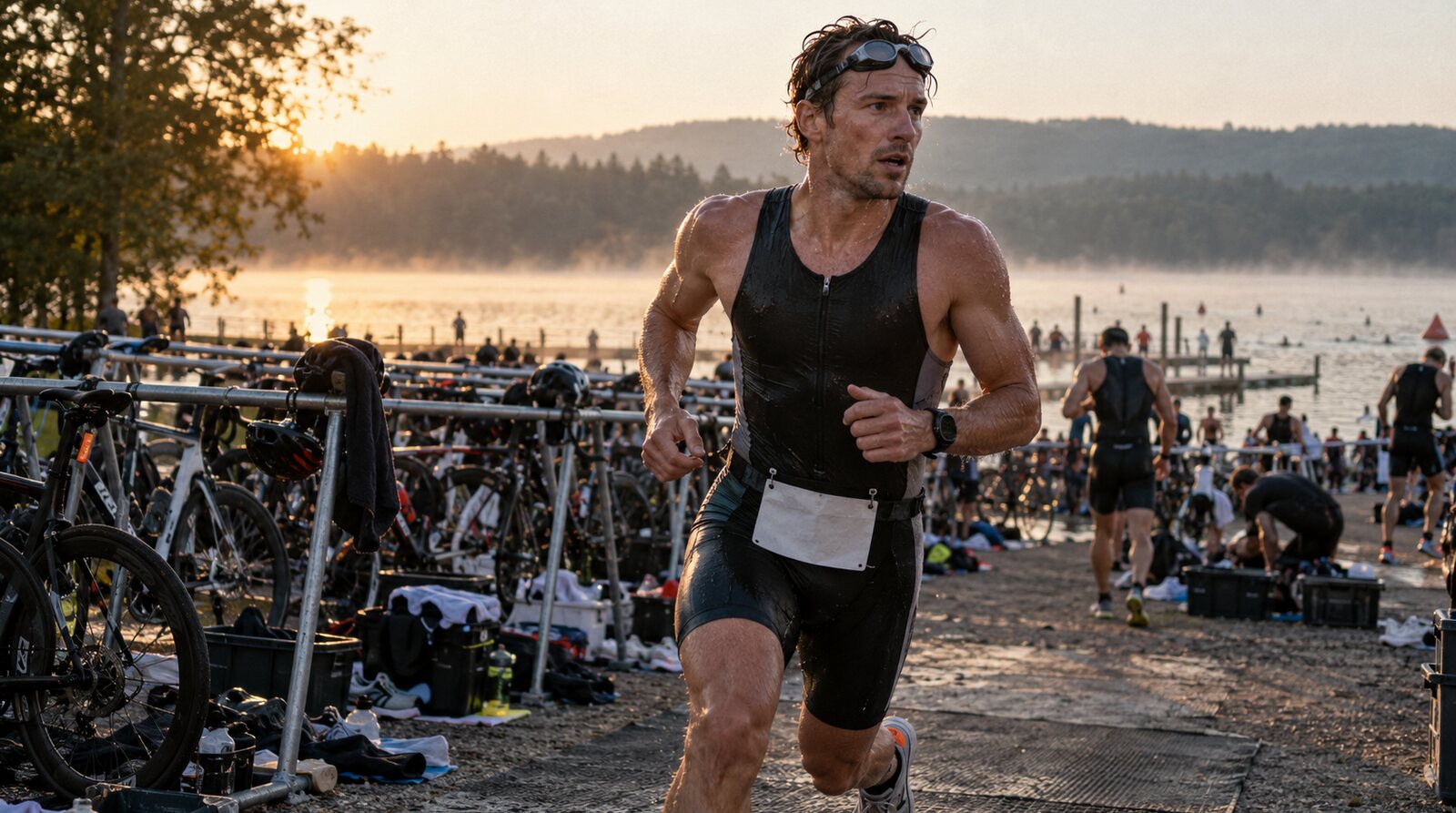
A brick is a workout where the run comes straight after the bike, without a break. For the first minutes of running after a ride your legs feel “wooden”, the stride is short and the pace feels unfamiliar — you need to get used to this feeling before the race. Start with 10–15 minutes of easy running after a normal ride; in the specific period the run off the bike is lengthened and brought closer to race pace. One brick a week in the specific period is a common pattern; a separate programme is bike-run bricks and transition zones.
Strength
One or two short strength sessions a week: legs, glutes, core, and shoulder-girdle muscles for swimming. Strength work does not replace training in the three sports but protects against overload as volume grows. Put it on an easy day and not the day before a key workout. Which exercises give a runner the most and how to distribute strength work by discipline is covered in the article on strength by discipline.
Intensity: how much hard work and what pace for the race
The heart rate zones are the same as in the article on heart rate zone training. Most of the time in the three sports is spent in zones 1–2, with two or three hard workouts for the whole week, not one in each sport. The guideline for race intensity depends on the distance: the sprint and Olympic distance are raced near threshold, 70.3 at a moderate pace, and Ironman in the easy zone, otherwise there will be no energy left for the marathon. Heart rate is harder to measure in the water, so swimming is more often guided by feel and split times.
How to build a week: 6, 8 or 10–12 hours
| Hours per week | How to distribute them |
|---|---|
| About 6 hours | Two swims, two rides (one long), two runs (one key workout in one of the sports, the rest easy). Suits the sprint and Olympic distance |
| About 8 hours | Two or three swims, two rides, two or three runs, a short strength session. A brick on the day of the long ride |
| 10–12 hours | Three swims, three rides including a long one of 3–5 hours, three runs, strength. The level of preparation for 70.3 and Ironman |
- Two sports in one day is fine: for example, a swim in the morning and an easy run in the evening. Two hard workouts in one day is not.
- The long ride and the long run not on consecutive days, unless it is a planned brick.
- Keep one full rest day a week at any volume.
- General rules for when your week has several sports and no specific race are in the article on a weekly plan for several sports.
Periodization: base, specific work, taper
- Base. Volume in the easy zone, swimming technique, strength. A little intensity in short efforts. The longest period, especially before long distances.
- Specific work. Work at race intensity, long bricks, practising fuelling and equipment, tune-up races. Volume grows, but not sharply.
- Taper. The last one to three weeks depending on the distance: volume drops, intensity is kept in short efforts, and you go to the start with fresh legs.
- Recovery weeks within periods — every third or fourth week with less volume.
How to tell which sport is your weakest
Your weakest sport is not the one you like least but the one where you lose the most relative to your level in the others. The check is simple: swim, ride and run the legs of your future distance at an easy race pace on different days and compare them with guidelines for your distance or with the results of amateurs of your level at last year’s race. The second sign is fatigue: if you come out of the water already at your limit, the swim drags the whole race down even if the time gap is small. The weakest sport gets one extra workout a week, while the strongest is kept at maintenance volume.
Fuelling for 70.3 and Ironman
For the sprint and Olympic distance water and, if you like, a gel are enough. On long distances the race lasts many hours, and without carbohydrates on the bike your energy for the run runs out before the finish. Food and drink are practised on long workouts in the specific period — with the same products and at the same interval as at the race, so that your stomach gets used to it in advance. How many carbohydrates per hour you need for different durations is covered in the article on nutrition for long workouts.
Common mistakes
- A medium pace everywhere. If every swim, ride and run is “a bit faster than comfortable”, key workouts lack freshness, and in three sports such fatigue adds up quickly.
- The weakest sport gets no attention. Training what you are good at is more pleasant, but time is lost where a sport lags — most often in the water.
- No bricks. The first run off the bike at the race is a bad time to get to know this feeling.
- A sharp increase in volume. Three sports at once are easy to overload: add hours gradually and keep recovery weeks.
- Fuelling on long workouts not practised. At 70.3 and Ironman, problems with food and drink break a race more often than a lack of fitness.
When to stop
Fatigue built up by the weekend, “jelly” legs in the first minutes of a brick, breathlessness on pool intervals — this is how your body responds to training. Chest pain, feeling faint or fainting, numbness in an arm or the face are a reason to stop the workout immediately and see a doctor. If you feel unwell in the water, swim to the wall or the shore at once, and don’t train in open water alone.
Ready-made plans by distance
- Your first triathlon — if this will be your first race.
- Sprint and Olympic distance — 12 weeks of preparation.
- 113 km and 226 km — long distances, 28 weeks.
- Winter base — preparation in the off-season.
Frequently asked questions
How many hours a week should I train for triathlon?
For the sprint and Olympic distance 6–8 hours across the three sports are usually enough for an amateur, for 70.3 and Ironman 10–12 hours and more in the specific period. Consistency and distribution matter more than a record week.
Where should I start with triathlon?
By checking that you can calmly swim the distance in front crawl, and with a regular week of all three sports at an easy pace. The first goal is a sprint or a first triathlon; add intensity and bricks once the week has become routine.
How long does it take to prepare for an Ironman?
It depends on your base. If you have already done an Olympic distance or a 70.3, preparation for 226 km in our plans takes 28 weeks. From zero in triathlon — 12 months, via shorter races.
Can I prepare for triathlon without a pool in winter?
Partly: the indoor bike trainer and running keep your fitness, and dryland band exercises maintain the shoulder-girdle muscles. Swimming technique cannot be kept without water, so if possible keep at least one swim a week, and return to the pool gradually.
Do I need a coach for triathlon?
Swimming technique is easiest to set with a coach in the pool: from the side you can see what you can’t feel yourself. The plan across three sports and its adjustment for missed sessions and fatigue can be run with a ready-made programme or with an AI coach.
What is a brick workout?
Running straight after the bike without a break. It gets your legs used to the transition between sports and shows what pace you can really run after a ride. Start with a short easy run and lengthen it later.
Want the three sports already laid out across the week for your distance and free days? Get a personal plan from the AI triathlon coach at 1trAIner. Tell it about your distance, experience in each sport and free days — the AI will put together a plan, and if you miss a workout in one of the sports, it will adjust the week based on your message. Connect Garmin or Apple Watch through the app, or describe your workouts in the chat if you have no watch. Every morning you get the plan, after a workout — a review. The first 7 days are free.