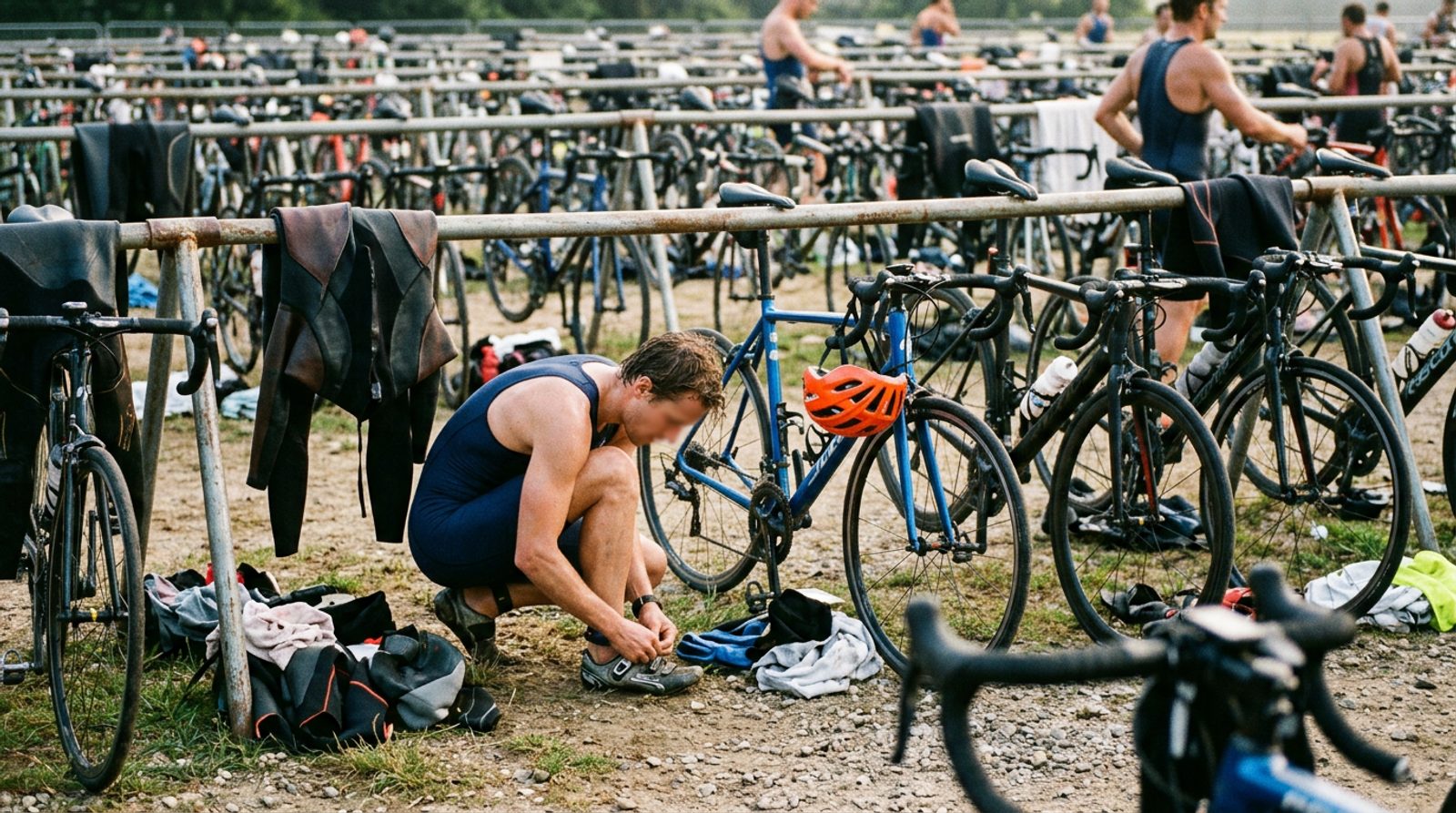

Most amateurs ride “however it goes”: every ride at the same pace, a bit faster than comfortable and a bit slower than hard. For the first months this brings progress, then results stall while fatigue stays. Cycling training works differently: each workout has its own purpose and intensity, and the week is built so that hard days alternate with easy ones. Below are six main types, how to control the load and how to spread them over three, four or five days.
In short: what you need to know
- The base is easy rides. Most of your time in the saddle is spent in the easy zone, where you can talk. These rides build the endurance everything else rests on.
- One or two hard workouts a week. Intervals, tempo or climbs. More than that is usually hard for an amateur to recover from.
- Intensity by heart rate, power or feel, not by speed: wind, terrain and surface change speed more than fitness does.
- Volume grows gradually, and every third or fourth week is an easier one.
- If you need a ready-made programme for a goal, the cycling training plans section has plans for road, indoor trainer, a first century and the mountains.
Six types of bike workouts
| Workout | What it is for |
|---|---|
| Long easy ride | Endurance, getting used to long hours in the saddle, efficient riding |
| Tempo | Holding a steady, confident pace for a long time without fading |
| Intervals | Threshold and maximal aerobic power — what gives you speed |
| Cadence and technique | Smooth pedalling, saving energy over long distances |
| Climbs | Strength on the pedals and sustained efforts |
| Recovery | Unloading after hard days without full rest |
Long easy ride
The main workout of the week by time. Zone 2: breathing is steady, you can speak in full sentences, and by the end your legs are tired but not “burning”. The duration depends on your level and goal: an hour and a half is enough for a beginner, while when preparing for a hundred kilometres the long ride gradually grows to four or five hours. On rides longer than an hour and a half take water and food — how many carbohydrates to take on a long workout is covered in the article on nutrition for long workouts.
Tempo workout
Efforts in zone 3, at the border with zone 4: already demanding, you can speak in short phrases. The classic version is two or three 15–20-minute efforts with 5 minutes of easy riding between them within a one-hour to ninety-minute ride. Tempo teaches you to hold a steady effort in a group, into the wind and on a long flat stretch.
Intervals
There are two main kinds. Threshold intervals are 2–3 efforts of 8–20 minutes in zone 4: hard but steady, without an “explosion” at the end. Short intervals are 4–6 efforts of 3–5 minutes in zone 5 with equal rest: breathing at the limit, and the last effort should be no weaker than the first. Before intervals do a 15–20-minute warm-up, afterwards 10–15 minutes of easy riding. If power or pace drops by the middle of the set, it is better to stop early than to “grind it out”.
Cadence and technique
An easy ride with inserts: several 1–2-minute efforts at a high cadence — 100–110 revolutions per minute — without rocking the upper body, or single-leg pedalling on the trainer for 30 seconds. The goal is to remove the “dead spots” of the pedal stroke and learn to spin smoothly. The intensity is low, so this workout is easy to place between hard days.
Climbs
Repeats on a long climb: 4–6 times 4–8 minutes, seated at a lower cadence or alternating seated and standing, with the descent as rest. By effort this is zone 4, sometimes zone 5. If there are no hills nearby, a headwind, a bridge or a trainer with higher resistance will do; a plan focused on the mountains is preparation for mountain climbs.
Recovery ride
30–60 minutes in zone 1 in an easy gear: low heart rate, a feeling of “almost doing nothing”. Such riding gets the blood moving after a hard day and adds no fatigue. If a recovery ride turns into a normal one, it is better to replace it with full rest.
How to judge intensity: heart rate, power or feel
The heart rate zones are the same as in the article on heart rate zone training, as a percentage of maximum heart rate. For power, Andrew Coggan’s model is the most widely used: zones as a percentage of FTP — the power you can sustain for about an hour.
| Zone | Heart rate · power · feel |
|---|---|
| 1 — recovery | 50–60% HR · up to 55% FTP · almost no effort |
| 2 — endurance | 60–70% · 56–75% FTP · you talk freely in sentences |
| 3 — tempo | 70–80% · 76–90% FTP · you talk in short phrases |
| 4 — threshold | 80–90% · 91–105% FTP · hard, talking is difficult |
| 5 — VO2max | 90–100% · 106–120% FTP · at the limit, short efforts only |
Each method has its weak spots. Heart rate lags: on a three-minute effort it reaches the target zone only towards the end, and in the heat or when tired it drifts upwards. Power shows effort instantly, but you need a power meter. Feel is always available: if you cannot talk on an easy ride, it is no longer an easy ride. A combination works best — for example, intervals by power and the long ride by heart rate and feel.
How to find your FTP and maximum heart rate
The most common field FTP test is 20 minutes of maximal, even effort after a good warm-up: your average power over those 20 minutes multiplied by 0.95 gives an FTP estimate. Do it on fresh legs, on the trainer or on a long climb without stops, and repeat every 6–8 weeks — the zones shift with your fitness. Maximum heart rate is more reliably taken from real hard rides, for example the highest value in recent months at the top of a climb, than from age-based formulas: they vary a lot between people.
Where to start if you ride “however it goes”
For the first three or four weeks you don’t need to introduce all six types at once. Three rides are enough: two easy ones and one long one, all of them truly in the easy zone. This is a test of whether you can ride slowly while you still have energy. From the third or fourth week replace one of the easy rides with a tempo workout, and a couple of weeks later with short intervals. If your legs are “empty” by the weekend, there is too much hard work, and it is worth bringing back an easy day.
How to build a week: three, four or five days
| Days per week | How to arrange them |
|---|---|
| 3 days | One weekday — intervals or tempo, 60–75 minutes. Another weekday — an easy ride with cadence work. Weekend — the long easy ride. |
| 4 days | The same three plus a recovery ride the day after the intervals or the long ride. |
| 5 days | Two hard workouts (intervals and tempo or climbs) not on consecutive days, the long ride at the weekend and two easy rides in between. |
- Don’t put hard days back to back, and don’t do intervals the day after a long ride.
- Put the long ride on a day when you have time, usually at the weekend: it is the hardest one to shorten without losing its point.
- Add volume little by little: for example, 15–30 minutes to the long ride every week or two, not a whole hour at once.
- Every third or fourth week is an easier one: duration about a third shorter, intensity kept in a short form.
- If cycling is not your only sport, the rules for combining it with running, swimming and strength work are covered in the article on a weekly plan for several sports.
If you missed a workout, are tired or the weather is against you
- Missed a hard workout — don’t move it to the next day if another hard or long session is already there. It is better to shift it to a free easy day or skip it this week.
- Your legs haven’t recovered — your heart rate on an easy ride is noticeably higher than usual and the power isn’t there — replace intervals with easy riding. One missed hard day costs almost nothing, while training through fatigue takes away several.
- Rain or wind — the long ride can be replaced with the trainer, shortened, or swapped with the nearest easy day.
Road, gravel and indoor trainer: what changes
- Road. The most convenient for any workout, but do intervals on a stretch without traffic lights and junctions. Group rides often turn into a race — treat such a ride as a hard day and plan rest after it.
- Gravel. Rolling resistance is higher and the terrain is broken, so power and heart rate jump around. Long rides here are slower in speed for the same time and effort, and intervals are easier to do by feel or on smooth stretches. A separate task is technique on loose surfaces and descents; a ready-made programme is training for a gravel bike.
- Indoor trainer. There are no descents, traffic lights or pauses, so an hour on the trainer feels harder than an hour outdoors. Intervals on the trainer are the most precise, while it makes sense to shorten long rides and replace them with two medium ones. You need a fan, water and a towel: overheating reduces power sooner than muscle fatigue does. The winter programme is the indoor trainer plan.
Common mistakes
- All rides at one pace. Easy days are too fast, hard days are not hard enough — results stall.
- Too little recovery. Progress happens on rest days and easy rides, not during intervals.
- A sharp increase in volume. Trying to double your mileage in a month usually ends in fatigue that sets you back.
- Judging by average speed. Wind and terrain change it more than fitness; compare heart rate and power on similar rides.
- A long ride without food. Running out of energy in the third hour is more often a matter of fuelling than of fitness.
When to stop
Heavy legs, laboured breathing during intervals and fatigue the next day are a normal reaction to training. Chest pain, feeling faint or fainting, numbness in an arm or the face are a reason to stop the ride immediately and see a doctor.
Ready-made plans by goal
- Road cycling: 12 weeks of training — endurance and road rides.
- Your first 100 km on a bike — if your goal is your first century.
- Indoor trainer in winter — if you ride at home in winter.
Frequently asked questions
How many times a week should I ride a bike?
For noticeable progress three or four rides are usually enough for an amateur: one or two hard ones and the rest easy. A fifth day makes sense when recovery keeps up and there is a goal such as a long distance.
Can I train on the bike every day?
You can if most days are easy and short. Riding hard every day is not an option: without easy days and rest, fatigue builds up faster than fitness grows.
Is it worth training on an indoor trainer in winter?
Yes, the trainer lets you keep your fitness in the season when riding outdoors is difficult. Do intervals and medium-length rides on it, and long rides when the weather allows.
Do I need a heart rate monitor or a power meter?
You can start by feel and the talk test. A heart rate monitor helps keep easy days easy, a power meter helps you do intervals precisely. If you choose one, a heart rate monitor is usually enough to begin with.
How long should one bike workout last?
A recovery ride is 30–60 minutes, an interval or tempo workout with warm-up is about 60–90 minutes, and a long ride is from an hour and a half and longer as you get fitter.
How can I tell that training is working?
Compare similar rides: if on the same route and heart rate your power or speed in calm weather goes up, and the long ride feels easier, your fitness is rising. Measure every few weeks, not on every ride.
If you want a plan for your bike, goal and schedule, get a personal plan from the AI cycling coach at 1trAIner. Tell it about your bike, riding experience, goal and free days — the AI will put together a plan from the season down to individual workouts. Connect Garmin or Apple Watch through the app, or describe your rides in the chat if you have no watch. Every morning you get your plan, after a ride — a review, and you can write about missed sessions and schedule changes in plain words, and the week will be adjusted. The first 7 days are free.