
Discipline
Triathlon training: a preparation plan from sprint to Ironman
Where to start
Triathlon training combines swimming, cycling, running and brick sessions in one weekly rhythm with easy days and rest. Volume increases gradually, while race distance sets the priorities: from learning transitions for a sprint to sustained endurance and fueling for Ironman.
1trAIner is an AI coach that combines swimming, cycling and running into one weekly plan and adjusts it using watch data, chat reports and your recovery.
Distances and preparation time
Sprint — 750 m / 20 km / 5 km
The priority is completing all three legs confidently and learning transitions. With a basic fitness foundation, allow roughly 8–12 weeks; starting from zero takes longer.
Prepare for a sprintOlympic — 1.5 / 40 / 10 km
You need consistent swim technique and energy left to run after cycling. Allow roughly 12–20 weeks with a regular foundation in all three sports.
Olympic-distance planHalf distance — 70.3 / 113 km (1.9 / 90 / 21.1 km)
Focus on long rides, standalone long runs and fueling. After an Olympic-distance race, allow roughly 4–6 months, depending on the volume you already tolerate.
Prepare for a half-distance raceIronman — 226 km (3.8 / 180 / 42.2 km)
The key is tolerating successive high-volume weeks, your bike position and fueling. Allow roughly 6–12 months after an Olympic or half-distance race, without a full race rehearsal.
Prepare for Ironman 226 kmA triathlete’s weekly structure
- Swim 2–3 times a week: technique and endurance while maintaining stroke quality.
- Cycle 2–3 times: an easy ride, intervals or tempo work when ready, and a long ride.
- Run 2–3 times: easy running, quality work when ready and a long run; the short brick run counts toward this volume.
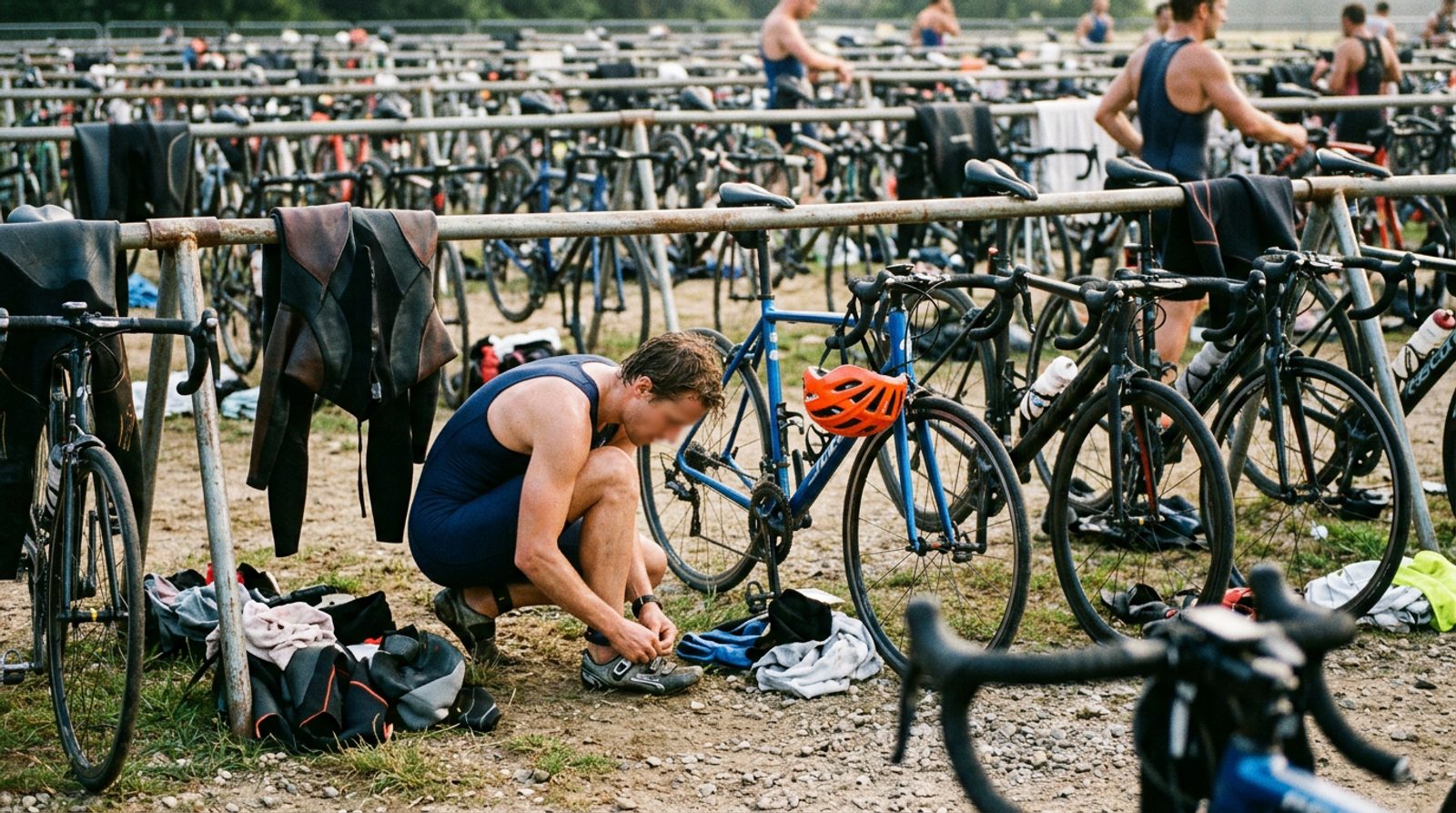
- A brick is a bike-to-run session once a week after establishing each sport separately. Beginners start with 10–15 minutes of easy running every 1–2 weeks.
- Keep 1 rest day; optionally add 1–2 short strength sessions without compromising the next key workout.
- Limit hard work to one session per sport, with easy days between hard days. This is a ceiling: beginners need only 1–2 key efforts in total, including demanding long sessions; switching sports does not replace recovery.
A basic week for an Olympic-distance beginner
Figures are guidelines, not mandatory targets. This example assumes an established training routine: increase one variable at a time. Do not push through pain; reduce the load.
| Day | Workout | Details | Duration |
|---|---|---|---|
| Mon | Rest | No training; an optional walk | — |
| Tue | Swim + easy run | Pool technique for 30–45 min; easy run for 20–30 min | 50–75 min total |
| Wed | Easy ride | Conversational effort, steady pedaling | 45–60 min |
| Thu | Swim | Endurance: easy sets with breaks, keeping technique consistent | 45–60 min |
| Fri | Easy ride | A short easy ride before the weekend; rest if tired | 45 min |
| Sat | Long ride + brick | Easy ride for 75–105 min, then easy run for 10–15 min; do not extend both parts at once | 85–120 min total |
| Sun | Long easy run | Stay within a familiar duration; shorten or replace with rest after a demanding Saturday | 45–60 min |
Ironman preparation
- Ironman preparation usually takes 6–12 months after an Olympic or half-distance race: timing depends on experience and tolerance of training in all three sports.
- Long rides and runs grow gradually, not simultaneously: experienced athletes may work toward 4–6 hours cycling and 2.5–3 hours of standalone running; these are not beginner targets.
- Practice race fueling and drinking on long sessions in advance: check familiar foods and tolerance, without experimenting on race day.
- Plan an easier week roughly every 3–4 weeks, sooner if fatigue builds; do not make up removed volume in another sport.
- Allow roughly 2–3 weeks to taper: reduce volume across all three sports together, keeping short familiar sessions and recovery.
How AI coordinates the three sports
The AI coach sees workouts from your watch: distance, time, heart rate and power if you have a power meter, and also uses chat reports. It distributes load across all three sports and moves key workouts after missed sessions or fatigue, reviewing the rest of the week. Missed volume is not piled onto the weekend; report how you feel and whether you can access a pool or indoor trainer.
Choose your triathlon goal
Triathlon preparation questions
How do I build a triathlon training plan?
Choose a distance, race date and available days. Set rest and the weekly priority first, then fit swimming, cycling, running and a brick around your established volume; review total load rather than three separate plans.
How much should I train each week for triathlon?
A guide is 2–3 sessions per sport and a rest day; double days and bricks combine sessions. The basic example here totals about 5–7 hours for an Olympic-distance beginner who already trains regularly. If this exceeds your base, shorten the week rather than chasing a quota.
How do I prepare for Ironman?
After an Olympic or half-distance race, allow roughly 6–12 months. Build long sessions gradually, practice fueling early, ease off every third or fourth week and leave 2–3 weeks to taper; assess readiness in each sport separately.
Can I train for triathlon from scratch?
Yes: start with a manageable sprint goal and regular short sessions. Learn swimming and bike handling first, then combine the sports; practice open water in a safe place with support. Timing depends on your starting skills.
What is a brick workout?
It combines two sports consecutively, usually cycling followed by running. Start with 10–15 minutes of easy running after a familiar ride every 1–2 weeks, then move to a weekly brick when ready; its run counts toward total running volume.
How long does Olympic-distance preparation take?
With regular base training, allow roughly 12–20 weeks. If one sport is unfamiliar or you have had a long break, allow longer. Progress to the next block based on consistent completion and recovery, not only the calendar.
-
Triathlon: regular workouts for 12 weeks
Three sports in one week is a matter of priorities and recovery, not the number of hours.
Open the plan → -
Sprint distance triathlon preparation: 12 weeks of training
Sprint 750/20/5 — a fast-paced format and a real challenge for your triathlon debut.
Open the plan → -
Olympic distance preparation: 12-week training plan
Classic 1.5/40/10: a 12–16 week plan focused on your weak link.
Open the plan → -
Complete the 113 km distance after 28 weeks of training
A half-iron-distance triathlon means 5–7 hours of sustained effort — practising your race nutrition is essential.
Open the plan → -
Complete a 226 km distance in 28 weeks of preparation
A year of preparation fits into clear blocks: base, volume, intensity and taper.
Open the plan → -
First triathlon: 12 weeks of preparation
Work towards your first race finish from "I can swim and ride a bike" — step by step, without overdoing it.
Open the plan → -
Bike-run bricks and transition zones: 12 weeks of preparation
Running feels different after cycling — brick workouts are how you practise that transition.
Open the plan → -
Winter base training for triathletes: 12 weeks of preparation
The off-season lays the groundwork for summer: swimming technique, indoor cycling and strength training.
Open the plan → -
Work towards finishing a full-distance triathlon of 226 km in 12 months, starting from scratch
A year of training from scratch towards a full-distance triathlon: health and skills first, then training volume.
Open the plan → -
Aim to finish a 113 km half-distance triathlon in under 5 hours after 20 weeks of training
A 5-hour half-distance triathlon calls for even pacing on the bike and the ability to run afterwards.
Open the plan → -
Train for 20 weeks with the goal of finishing your first half-distance 113 km triathlon in under 6 hours.
Your first half distance with a target of finishing under 6 hours: the priority is reaching the finish line with energy left.
Open the plan → -
Aim to finish a 226 km full-distance triathlon in under 12 hours after 28 weeks of training
Twelve hours at the full distance is a goal for an experienced triathlete with a dialled-in nutrition plan.
Open the plan →
In the blog
From reading to workouts