
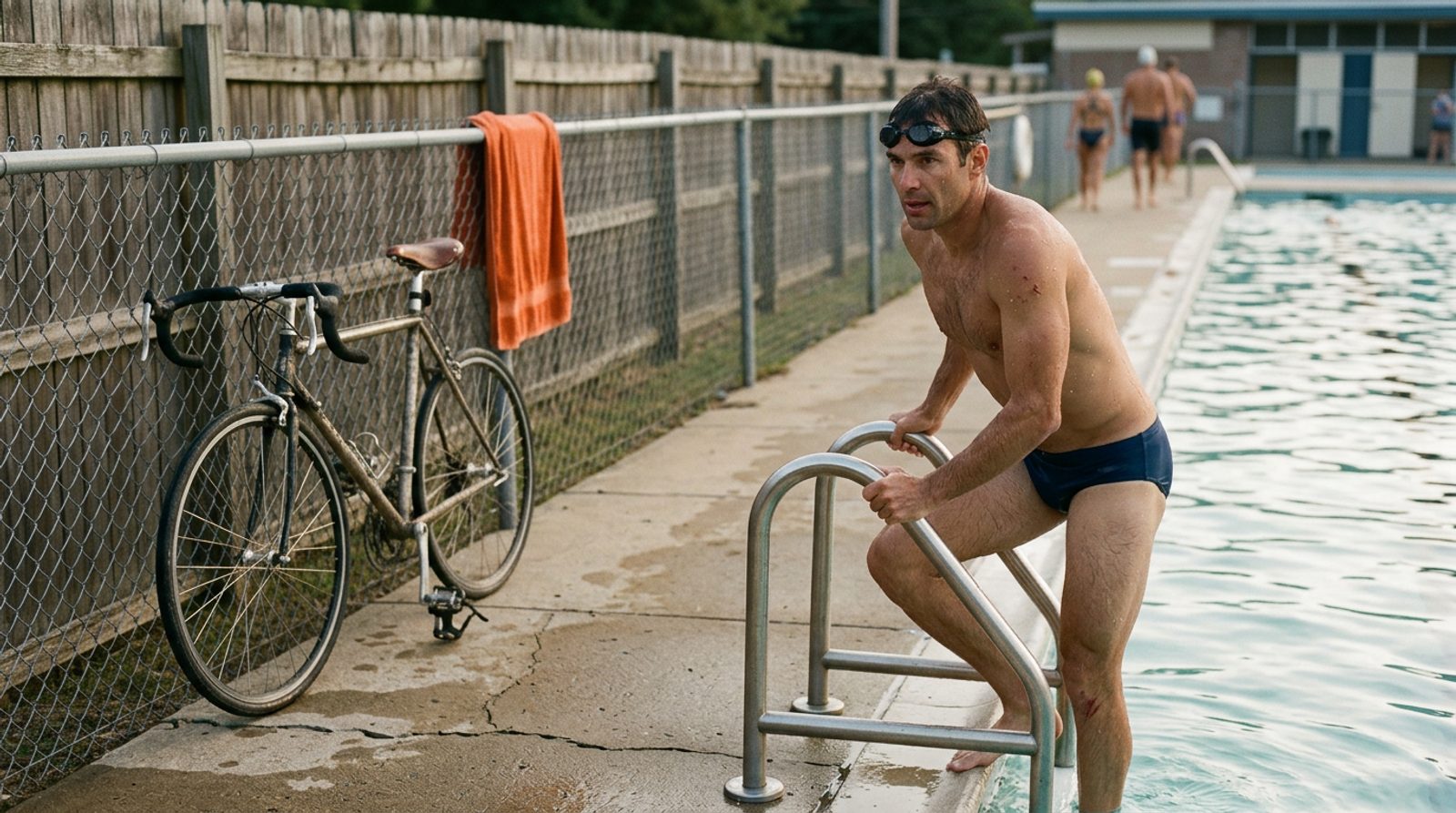
An amateur rarely has more than 5–7 hours a week for sports. The question isn't how to cram in as much as possible, but how to keep workouts from cancelling each other out. A strength session placed on the wrong day can ruin a long run; swimming, on the other hand, can speed up recovery.

Priorities first
Decide on the main sport for the coming months. If the goal is an autumn half marathon, running gets three workouts, swimming and strength get one each. If the goal is health and fitness, the distribution can be even. Trying to improve everything at once usually ends up improving nothing.
Combination rules
- Schedule quality workouts in your main sport on fresh legs. Intervals after yesterday's heavy strength session are a wasted workout.
- Leg strength and a long run shouldn't be back-to-back. Leave at least a day between them, preferably two.
- If you have two sessions in one day — do the priority one first. Run in the morning, strength in the evening, not the other way around.
- Swimming is the best recovery tool. A calm 30–40 minutes in the water the day after a hard session speeds up recovery and adds no impact load.
- Two days a week without running impact. Ligaments and tendons recover slower than muscles.
A ready-made template for six workouts
Running priority, about 6 hours a week:
- Monday. Swimming 40 minutes easy — recovery after the weekend.
- Tuesday. Running: intervals or tempo work, 50–60 minutes including warm-up.
- Wednesday. Strength 40 minutes: squats, pulls, lunges, plank, foot and glute exercises.
- Thursday. Easy run 40 minutes in zone 2 or rest if Tuesday felt hard.
- Friday. Swimming 45 minutes with technique drills or rest.
- Saturday. Long run 70–100 minutes.
- Sunday. Complete rest or a 40–60 minute walk.
If you only have four workouts
Drop one of the supporting disciplines, not the main one: quality running, long running, strength training, swimming. This minimum keeps you in shape and prevents imbalances.
Strength for endurance is not bodybuilding
The goal is not hypertrophy but the ability of your muscles to hold good form longer. Hence the requirements: basic movements, 3–4 sets of 6–10 reps, moderate working weight, full rest between sets. Nobody needs legs taken to failure before a running week. Be sure to add foot and calf work — it prevents the most common running problems.
When the week falls apart
A business trip, a sick child, a crunch at work — the plan will fall apart, and that's normal. The rule is simple: if you miss one workout, don't try to "catch up" by adding two in the following days. Just continue from where you are. If you miss a week, go back to the volume of the previous week, not the one you were building toward.
Keeping all these rules in your head and reshaping the schedule every week around real life is tiring. 1trAIner builds a weekly plan based on your available days, time limits, and recovery data from Garmin, and when the week falls apart, it rebuilds the rest without guilt and without "catch-up" workouts. You can write "I can't on Thursday, move the long run to Sunday" right in Telegram. The first 7 days are free.
This material is for informational purposes only and does not replace a doctor's consultation. If you have health problems, pain, or chronic conditions, consult a specialist before starting training.