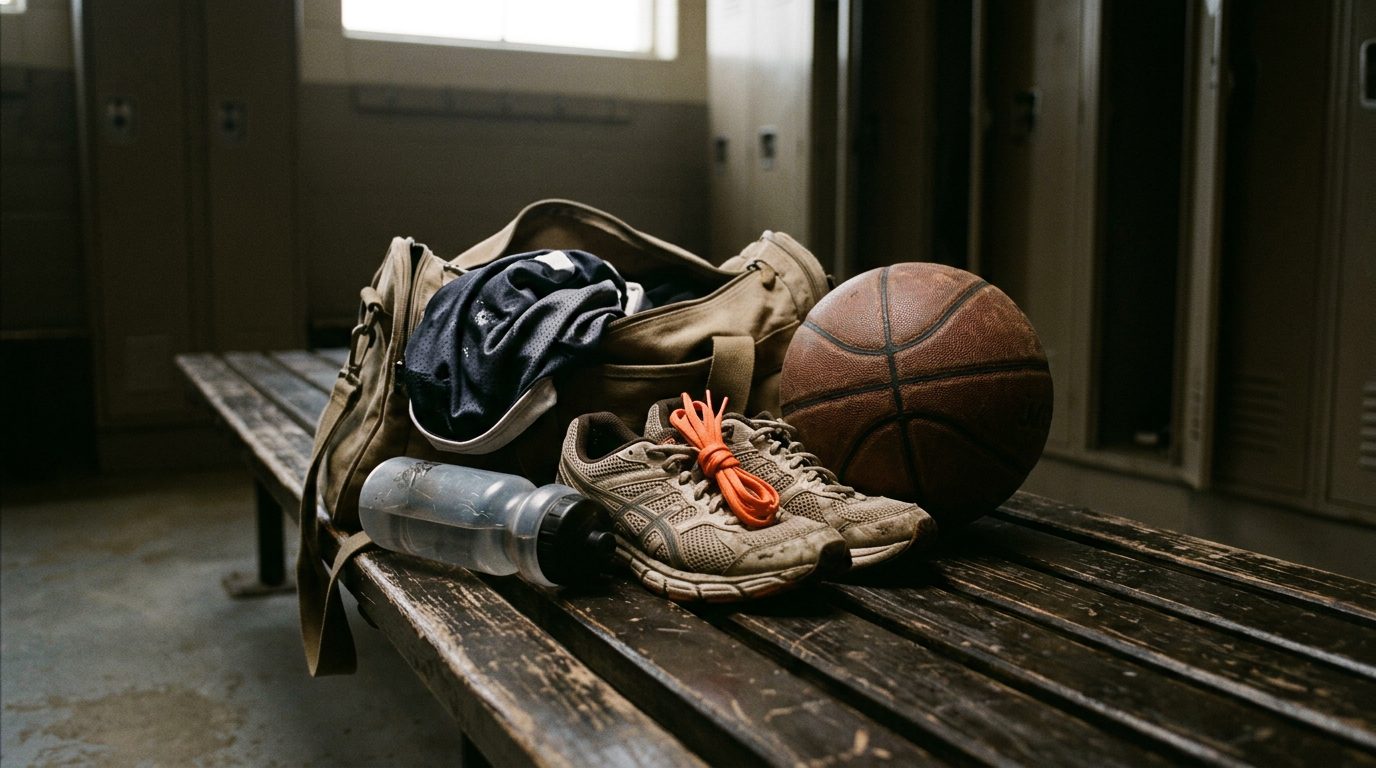
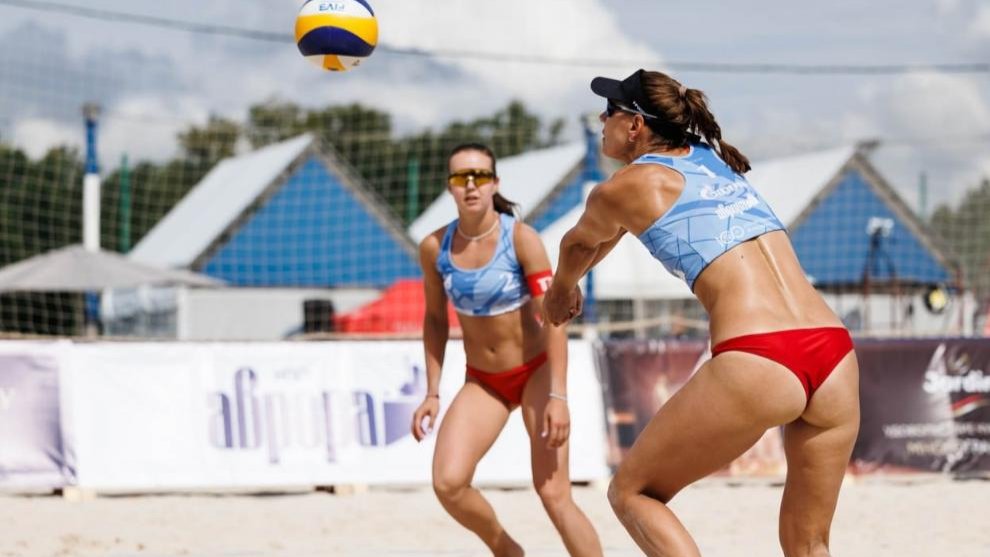
Starting a workout straight away with a maximum sprint, jump or kick is like accelerating a car while skipping the first gears. A player has to accelerate, brake, change direction, jump, land, engage in duels and make quick decisions at the same time. All of this requires not only warm muscles but also an activated nervous system.
An experienced volleyball, basketball or football player never starts with the most difficult episodes. First easy running and general movement work, then movement patterns, joint mobilisation, coordination, technique — and only at the end jumps, accelerations and game situations.
How a game differs from running
Running, cycling and swimming are cyclic: the rhythm is predictable, the range of motion repeats, heart rate zones rise smoothly. Even without a warm-up, the first kilometres serve as a warm-up themselves.
In a game that won't work. The match starts with the first play, and a sprint, jump or change of direction may be needed in the very first second. Heart rate jumps up and down within seconds, and the load hits specific spots: landing after a block on bent knees, a rebound on the wrong foot, a lunge with torso rotation. Every such movement must be absorbed instantly by a ligament or tendon — and if the tissues are cold, the cost of a mistake is higher.
Six stages of a warm-up
The content depends on the sport, but the logic is the same: from general to specific, from slow to fast, from simple to complex.
The warm-up starts with easy running. Then side steps, backward movement, short accelerations, stops and changes of direction are added. After that — dynamic work on the ankles, knees, hips, shoulder girdle and thoracic spine. Then activation: glute bridge, hip abduction, plank, single-leg stability movements — the goal is not to get tired but to switch on the stabilisers that will support the knees and lower back.
The second-to-last stage is technique: passes, receiving, throws, kicks, defensive work at half speed. The last one is almost a game: jumps, accelerations, short episodes. Intensity rises until the warm-up turns into the workout.
Static stretching is not part of this. Holding a stretched position for a long time before explosive work temporarily reduces strength and reaction speed. Its place is in the cool-down or on a separate day when you can calmly work on stretching and flexibility.
Volleyball
A volleyball warm-up best shows the overall structure. First, easy running, moving forward, backward and sideways, side steps, running with changes of direction, short accelerations. Then dynamic work: ankle circles, heel raises, light squats, lunges, leg swings, hip work, shoulder and thoracic spine mobilisation, coordination and balance exercises.
After that — partner work: overhead and forearm passes, receiving, defensive movement drills, actions at the net, blocking, attacking hit, serving. The path from calm movement with a small range of motion to actions as close to the game as possible.
The area of special attention is the calf, Achilles and foot: series of jumps and landings transmit forces through the Achilles that are multiples of body weight. Second place — the shoulder: serving and blocking after a day at a desk load the rotator cuff.
Basketball
Here short accelerations, sharp stops, changes of direction, jumps and landings matter most. The warm-up should prepare not only the muscles but also the ability to quickly control body position.
A typical sequence: easy running around the court with gradual acceleration, side steps, backward movements, 5–10 metre accelerations, stops and turns, lunges and dynamic squats, ankle, knee and hip mobilisation, balance exercises, low jumps with soft landings. Then the ball: passing in pairs, dribbling, shots from close distance, shots after movement, game combinations and defensive actions.
Basketball players don't start with maximum jumps and long shots: first the legs and torso are activated, and only then are the ball, speed and resistance added.
Football
Football requires a large number of accelerations, decelerations, openings and kicks, and the work is often asymmetrical — one leg kicks, the other is the support leg. Plus the need to react instantly to teammates and opponents.
The warm-up uses easy running, running with changes of direction, sideways and backward movement, short accelerations with gradual decelerations, forward and sideways lunges, leg swings, heel raises, ankle, knee and hip mobilisation, balance exercises. Then passes in pairs and threes, receiving the ball on the move, one- and two-touch passes, low-power kicks, kicks after dribbling and acceleration, game episodes.
A feature of a football warm-up is the gradual activation not only of the body but also of attention: already during passing the player starts assessing space, choosing position and reading teammates. The weak spot is the hamstring: most muscle strains happen in sprinting on insufficiently warmed-up muscles.
What changes with age
The foundation doesn't change: general warm-up, increasing range of motion, mobilisation, coordination, accelerations, sport-specific actions. Claiming that a warm-up is exactly the same at any age would be untrue — duration, intensity, number of repetitions, exercise complexity, recovery time between elements, and the volume of jumping work all change.
A young and well-conditioned player needs a more dynamic warm-up with accelerations, jumps, and complex coordination tasks. After 35, tendons lose some of their water and collagen and become less elastic, while the nervous system switches on more slowly: to reach the same working tissue compliance, you need more time. Add a sedentary job, which shortens the hip flexors and limits thoracic mobility, and it becomes clear why an evening match after a workday starts with a body that is already in a "compressed" state.
In practice this means: not a different warm-up, but a longer and more attentive one. More time for the ankle, knee, pelvis, and shoulder; more repetitions to activate core muscles and stability; a gradual rather than abrupt increase in intensity. Age doesn't cancel the principles — it doesn't forgive violating them.
Landing and braking — a separate skill
A soft landing doesn't happen on its own. Jumping and landing should be trained: on two legs, knees slightly bent, foot active, weight distributed rather than falling onto the heel. Braking is the same: stop over three or four steps while keeping a low centre of gravity, so that the legs work as shock absorbers rather than as a rigid brace.
The same principle applies to lateral movements: if the hips and glutes aren't ready for a low stance, the load shifts to the lower back and adductors. A few minutes of lateral lunges and side steps in the warm-up removes a noticeable part of the risk.
When a warm-up doesn't save you
A warm-up reduces risk, but doesn't eliminate it. Lack of sleep, a hard workday, returning after a two-week break — on such days it doesn't compensate for accumulated fatigue. Here it's more honest to reduce the intensity of the match, cut time on the court, or replace the game with a light workout; it's also useful to look at recovery metrics if you track them.
Returning after a break is tricky because the muscles seem ready — you remember how it used to be — while ligaments and tendons adapt more slowly. The first game after a vacation or illness should be at half effort.
And separately about the place of the game in the week: a match is a full intensive day, not active rest. If you combine games with running training, the weekly layout, the intervals between the game and hard work, and the taper are covered in the article about combining games and running. With two games a week, strength training is placed further from the match: the framework of the "two strength sessions a week" plan works, but the main day is the game, and strength training is moved two days away from it. In between, light movement works: walking, swimming, a short bike ride, or joint mobility for 20–30 minutes, and if you want to add an aerobic base without impact load, the logic of the "start running after 40" plan will work.
In 1trAIner, the AI coach builds a plan as a cascade Season → Month → Week → Day, counts the game day as intensive, and pulls in Garmin and Apple Watch data automatically. The first 7 days are free.
This material is for informational purposes only and does not replace consultation with a doctor. If you have pain or suspect an injury, the decision about permissible load and return to training is made by a doctor.