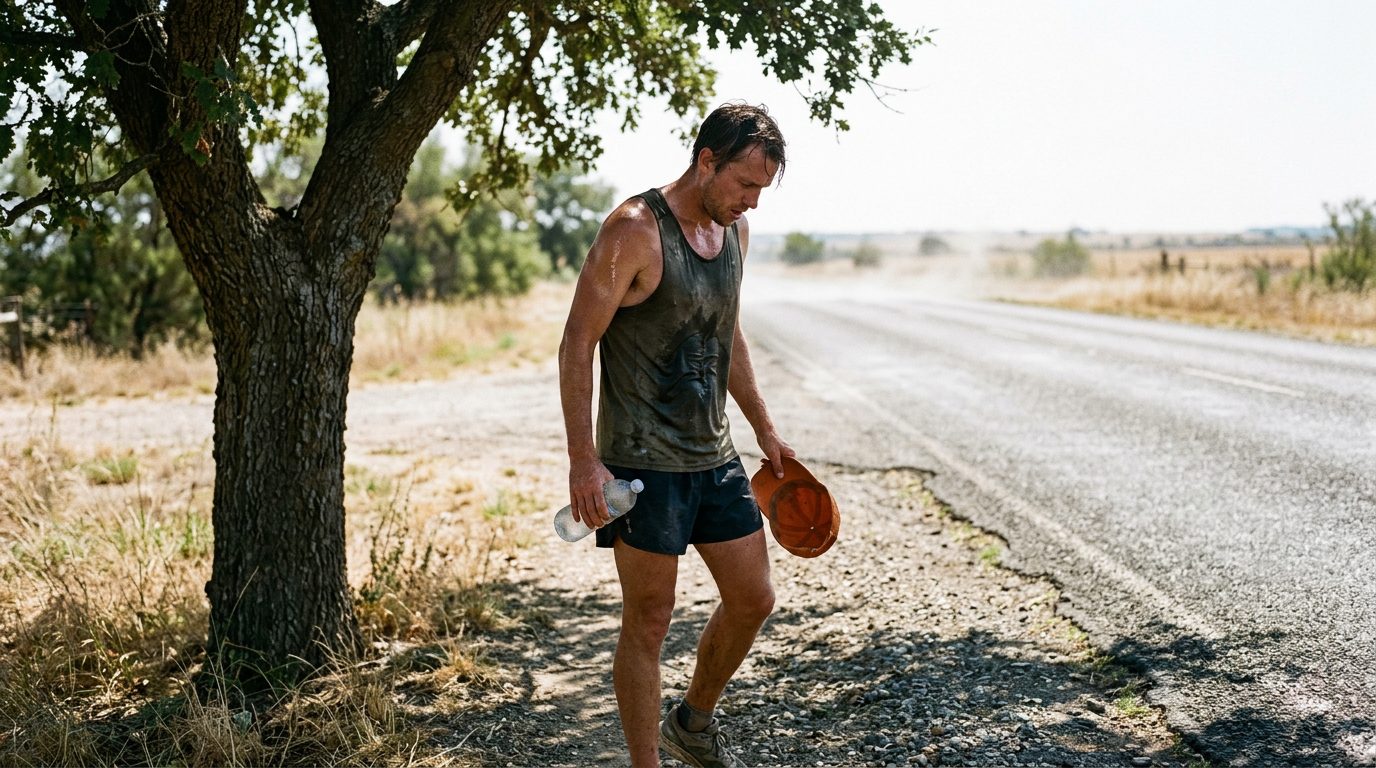
Heat is the weather condition in which a plan honestly followed brings noticeably less benefit than the same plan in comfort. In freezing cold you dress up and run; in rain you get wet and run. At +32 the body diverts part of the blood flow to cool the skin, leaving less for the working muscles — and your usual pace suddenly demands the heart rate of a tempo workout.
The good news: the body adapts to heat faster than to any other external factor. The bad news: adaptation requires exactly those workouts in the heat that go worst in the first days.
What happens to the body in the heat
Only 20–25% of the energy spent becomes useful mechanical work; the rest is heat. In comfort, this heat leaves through the skin and breathing almost unnoticed. When the air is hot, the temperature difference between skin and environment shrinks, and only one working mechanism remains — sweat evaporation.
This leads to two consequences that ruin the workout. First: part of the blood volume goes to the skin to release heat, and the heart has to beat faster to pump the same volume through the muscles. This is "cardiac drift" — heart rate creeps up at an unchanged pace. Second: water is lost with sweat, plasma volume drops, blood thickens — and the drift accelerates.
Humidity makes things worse more than temperature. In dry +35, sweat evaporates and cools. At +28 with humidity above 70%, evaporation slows sharply, and a noticeable part of sweat just drips off: you lose water but get almost no cooling. Add direct sun — it adds another 2–4 degrees to the perceived temperature. That's why looking at a thermometer alone is not enough — also check humidity, as with adjustments for wind and rain.
How the body adapts
Heat acclimation is a fast process with a clear sequence of events. About three quarters of the effect (75–80%) is gained in the first 4–7 days; full adaptation takes 10–14.
What exactly changes:
- Plasma volume grows — by 5–15%, peaking on the fifth or sixth day. More blood means the heart can serve both skin and muscles at the same time more easily.
- Heart rate at the same effort drops — the first noticeable sign, usually by the end of the first week.
- Sweating starts earlier and becomes more profuse, while salts in sweat decrease: the body learns to cool down while losing fewer electrolytes.
- Resting body temperature decreases — the slowest adaptation, by the end of the second week.
The condition under which all of this works: the workout must actually heat you up. The working protocol is 60–90 minutes of easy or moderate effort in the heat, 10–14 days in a row or almost in a row. Not "a jog in a T-shirt at +24", but real heat stress, after which you're wet and more tired than usual.
Adaptation fades faster than it comes: a break of three to four days costs about a quarter of what you've gained. That's why the heat block is placed right before the race, not "a month out, just in case".
Pace adjustment: let's be honest about it
The main mistake in the heat is holding your planned pace at any cost. Your heart rate goes two zones higher, an easy run turns into a tempo workout, and recovery stretches out over two days. The right move is to slow the pace and keep the effort the same.
| Feels-like temperature | Pace adjustment per kilometre | What to do with the plan |
|---|---|---|
| up to +18 | none | everything as planned |
| +18…+23 | 5–10 seconds | intervals are fine, long run slower |
| +23…+28 | 15–25 seconds | intense work — early morning |
| +28…+33 | 30–45 seconds | aerobic work only, volume down by 20% |
| above +33 | pointless to calculate | move to morning, indoors, or the water |
Humidity above 70% shifts you down a row: +26 in Sochi feels closer to +31 in a dry climate in terms of load.
In hot weather, the most practical approach is to stop looking at pace altogether and run the workout by heart rate and feel: keep the same zone you planned, and let the pace be whatever it turns out to be. How zones relate to actual load is covered in the article on heart rate zones; it's also worth remembering that recovery metrics during a hot week will honestly show a longer return to normal — that's not a breakdown, it's the price of cooling down.
Water and salt
Sweat takes water and sodium with it. Losses are individual: some lose half a litre an hour, some a litre and a half, and heavy sweaters on a long run in the heat can rack up three litres. There are no universal numbers here, but there's a simple way to find yours: weigh yourself before and after a workout. Every kilogram lost is roughly a litre of fluid.
Working guidelines:
- Under an hour in the heat — plain water beforehand is enough, drink to thirst.
- One to two hours — 400–800 ml per hour, water or an isotonic drink.
- Longer than two hours or losing more than 2% of body weight — only a drink with sodium: 300–700 mg per litre. Drinking litres of plain water on a long run in the heat can lead to hyponatremia, which is more dangerous than dehydration.
Losing more than 2% of body weight noticeably drops performance; losing more than 4% is a reason to stop the workout, not to "tough it out". If you're drinking and eating on a long run, the logic of carbs stays the same — there's a separate breakdown on doses and gut training.
When a workout is cancelled
There is a line beyond which the discussion is not about pace but about whether to go out at all. Heat stroke is a life-threatening condition, and it develops faster than how you feel suggests.
Stop immediately if you notice: chills or goosebumps in the heat, cessation of sweating while still exercising, headache with nausea, slurred speech or disorientation, sudden weakness and unsteadiness. All of these are signs that thermoregulation is failing; in such a situation, move into the shade, remove extra clothing, cool down with water and ice over major blood vessels, and call for help. A person with these signs should not be left alone.
Prevention is simpler: at +30 and above, move your workout to 6–7 a.m., plan a route in the shade and near water, skip intervals, and don't run new long routes alone. A separate risk group is those who have returned from a vacation in a cool climate: adaptation is gone, but the habit of running fast remains.
How to fit it into the plan
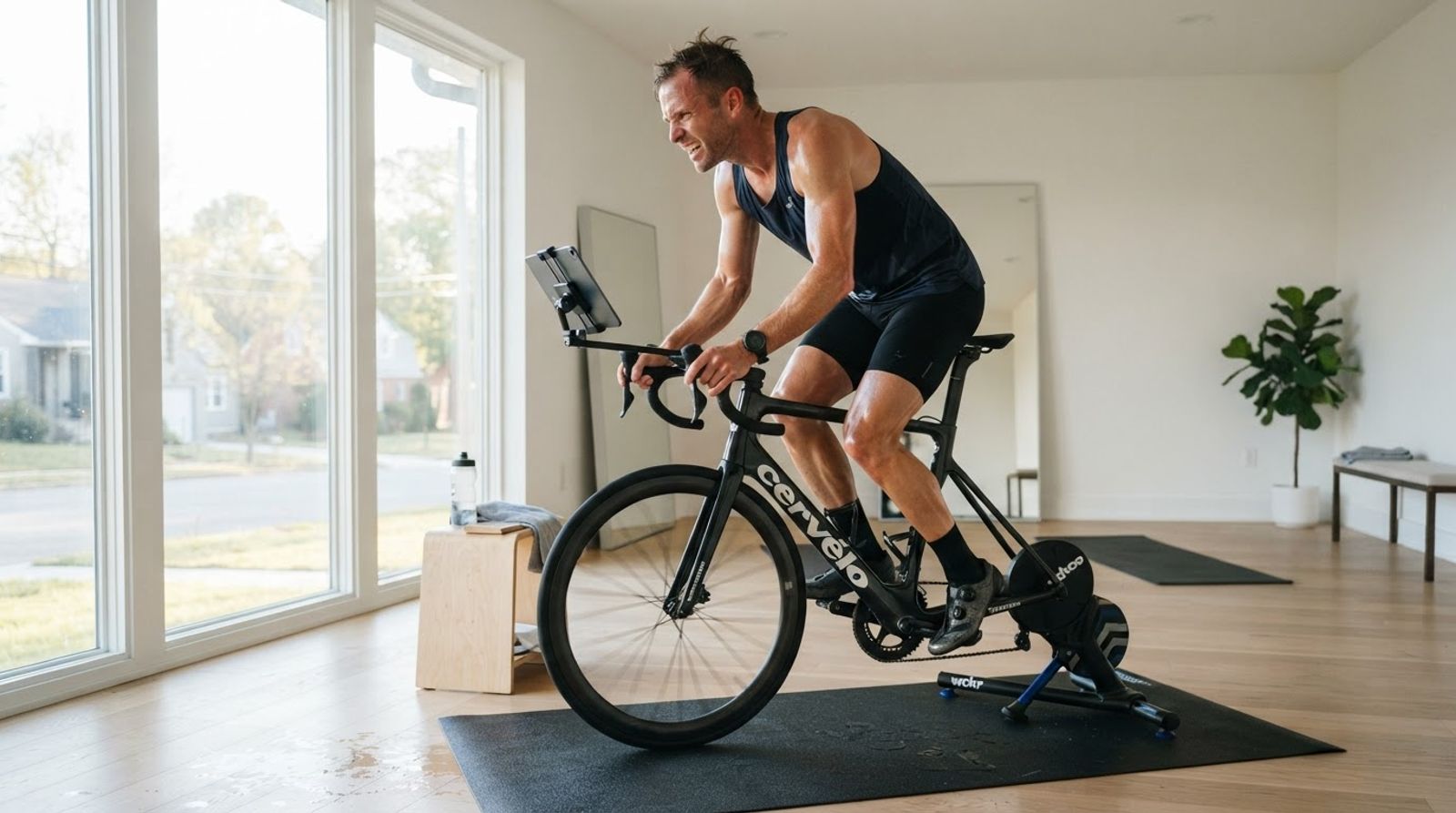
If your race is in a hot climate but you train in a cool one, the adaptation block is placed 2–3 weeks before the race: 10–14 days with heat exposure, and the last three days are a taper. It is done either by training during the hottest time of day, or by wearing an extra layer on an easy run, or by a sauna after a workout. A sauna is a workable but not free option: it also costs recovery, and you shouldn't schedule it after a key workout.
If the heat comes to you on its own, the task is the opposite — to get through it without losses. Key workouts move to the morning, volume is maintained, intensity temporarily drops. In a week or a week and a half, you'll find that the same loop takes a heart rate 8–10 beats lower than on the first hot day — that's adaptation, and in cool weather it will come back to you as a gain.
In 1trAIner, the AI coach sees the forecast for the workout day and reschedules in advance: intense work to the morning, long runs to a cooler day of the week, and in extreme heat it suggests a replacement instead of cancellation. First 7 days free.
This material is for informational purposes and does not replace a doctor's consultation. Heat stroke is an emergency; if it is suspected, medical help is needed, not self-treatment. People with cardiovascular diseases should agree on their workout regimen in the heat with a doctor.