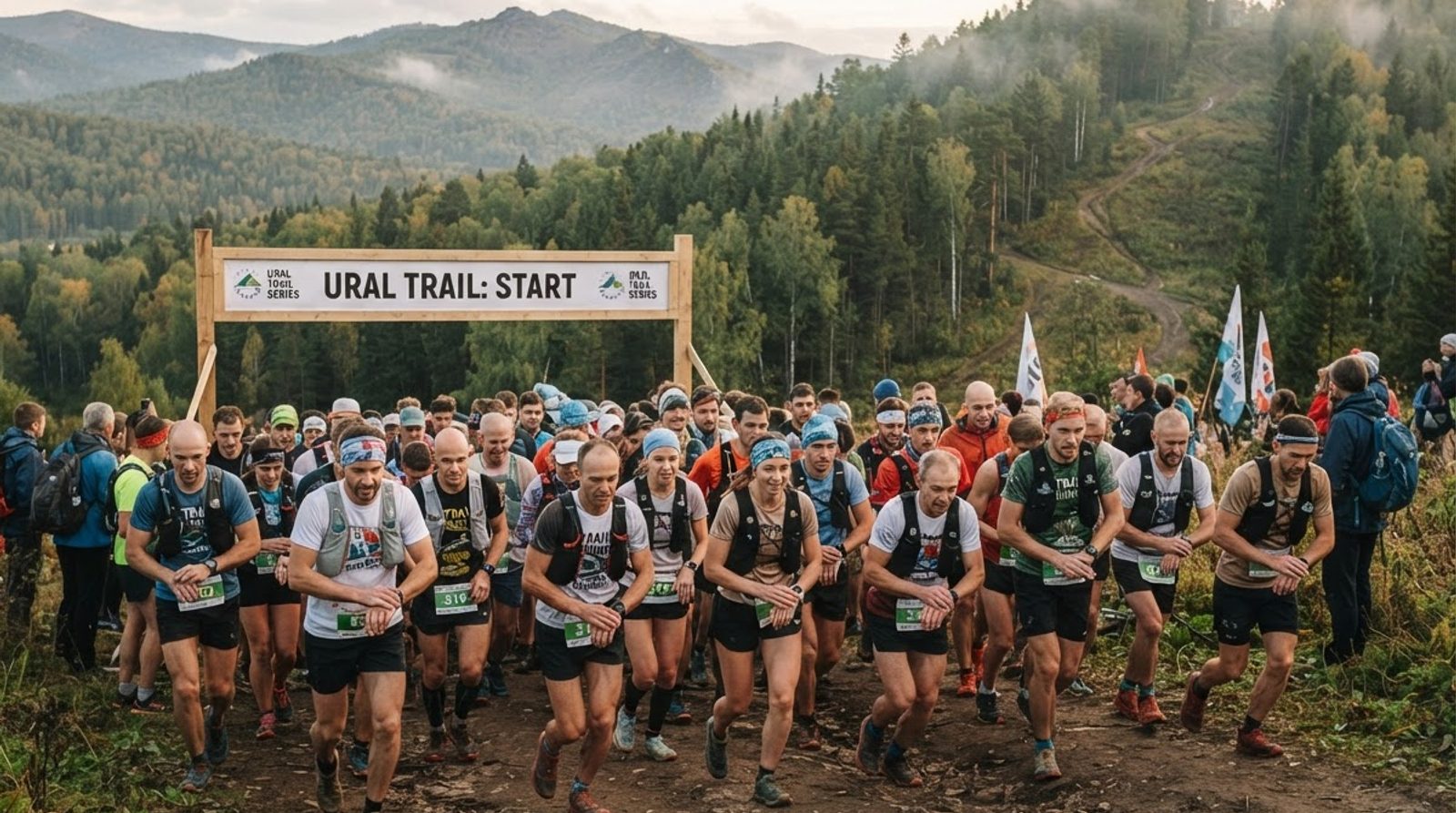
Your first mountain trail running race of 20–30 km should be planned not by road pace, but by time on your feet, elevation gain, and the difficulty of the descents. On one course you will run almost the whole way, on another you will walk uphill for a long time and move carefully over rocks. Over 12 weeks, the task is to get used to this kind of work, test your gear, and learn to pace yourself. The goal of "finishing without suffering" here means managed effort, not a promise of an easy race.
Who the plan is for and what to find out about the course
Your starting base is regular running three times a week and roughly 25–30 km per week for at least the last few weeks. It's important that this volume is familiar, not a one-off achievement. Ideally, you can already spend about 75–90 minutes on your feet comfortably. If every outing still requires a long recovery, build your base first: adding kilometres, hills, and strength training all at once isn't worth it.
Before starting the cycle, look at the course profile and the race rules. The distance alone says little about the load: 25 km on wide trails and the same distance on steep technical sections are different challenges. This plan is designed for a route accessible to a beginner, not for mastering difficult high-altitude terrain in three months.
- Elevation gain and how it's distributed. One long climb requires continuous effort; a series of short ones means frequent switching between running and walking.
- Surface and altitude. Rocks, mud, exposed ridges, and unfamiliar altitude change your pace and the experience required. Check the description against course videos and the organiser's information.
- Cut-offs and aid stations. Estimate how long the slowest section might take and how long you'll have to carry water and food without resupply.
If the route already looks noticeably harder than anything you've done, it's wiser to choose an easier race or extend your preparation time. The plan doesn't replace mountain movement skills and navigation.
12 weeks: four blocks and a separate recovery rhythm
Let's divide the cycle into four meaningful blocks of three weeks each. Recovery follows a different grid: every fourth week, that is weeks 4, 8, and 12. So the start of the second block will be lighter, and the last recovery week will coincide with race week. These aren't four identical cycles of "two hard plus one easy": the block goals and the recovery calendar overlap.
- Weeks 1–3: adaptation. Keep your usual three runs. Add gentle climbs to one of them and small doses of descents. Gradually extend your long run from about 80–90 to 100–110 minutes if your starting level allows. Don't increase its duration and steepness at the same time.
- Weeks 4–6: development. In week 4, cut your running time by about 20–30% compared to week 3 and reduce elevation gain. In week 5, return to a tolerable load; in week 6, you can do a long run of about 110–130 minutes with alternating running and walking.
- Weeks 7–9: specificity. In week 7, do a long run on terrain similar to the race. In week 8, reduce time and vertical load again. In week 9, do a rehearsal with your vest, nutrition, and poles if you need them. Aim for 2–2.5 hours, but not at the cost of several wrecked days.
- Weeks 10–12: consolidation and taper. In week 10, do the last substantial specific work without a volume record. In week 11, the taper begins; in week 12, only short easy outings and the race remain. Missed workouts are no longer made up.
The time ranges are guidelines, not mandatory steps. They depend on the duration of your usual runs, sleep, terrain, and expected race time. On a particularly slow course, experience of a longer hike is useful, but turning the long run into a full rehearsal of the distance and elevation gain isn't necessary. If the race is substantially longer than anything you've done, reconsider your choice of race rather than doubling the load at the end of the cycle.
The scheme shows the principle of gradual growth with step-backs, not a mandatory percentage increase. Count running minutes, elevation gain, and descent time separately: the same kilometres can cost completely different efforts. If easy outings no longer feel easy or fatigue accumulates from week to week, repeat the previous tolerable week or reduce it.
How to put together a regular training week
The foundation is three runs, one or two short strength sessions, and days without training load. A long run with hills already counts as serious work. Leave at least one easy day between it and the vertical session, and more if you feel noticeably tired. A fourth run is optional: add it only instead of part of another volume if you recover well.
- Monday — rest. Normal everyday activity, sleep, and a chance to recover after the weekend. There's no need to fill a free day with extra training load.
- Tuesday — easy run and strength. About 35–50 minutes at conversational effort, then a short strength session, or leave a few hours of break before it.
- Wednesday — recovery. Rest or a calm walk. If you feel good, you can place a second short strength session here, without duplicating heavy leg work.
- Thursday — vertical session. After a warm-up, do, for example, 4–6 climbs of 2–3 minutes at controlled effort. Come back calmly and finish with an easy run. The climbing time counts toward the total workout volume.
- Friday — rest. If the week has been hard because of work or lack of sleep, shorten the upcoming long run rather than trying to complete the plan at any cost.
- Saturday — long run with elevation gain. Move easily and walk the steep climbs. Choose the duration based on your training block, and pick a route where you can finish earlier.
- Sunday — recovery. A calm walk if you want. For a first race, two long workouts in a row are not a mandatory element.
A vertical session is not a sprint uphill. Start with the lower end of the repetitions; later you can replace them with a continuous climb of running and walking for 15–25 minutes. Keep a reserve of effort. If there are no hills nearby, an accessible slope or a treadmill with incline will do, but climbing on a treadmill does not prepare your legs and technique for real descents.
Allow roughly 20–30 minutes for strength: squats, lunges or step-ups, torso-controlled bends, calf raises, and stability exercises. Start with one or two sets of familiar movements, without working to failure. Its job is to support running, not make the next workout impossible.
Descents, poles, nutrition, and mandatory gear
Learn descents separately and little by little. First attempts — on a short, gentle section with clear footing, while you are still fresh. Use comfortable short steps, look a few metres ahead, and choose your line in advance. Don't try to gain time with a long stride and sharp braking. First increase total descent time, and only then the difficulty of the surface or speed.
Poles are not useful on every course. Check whether they are allowed by the rules, and walk a long climb with them several times. Practise folding them, attaching them to your vest, and accessing food without stopping. If poles get in the way on a narrow trail or require constant attention, don't take them for the first time at a race.
- Food on a long run. On outings longer than about 90 minutes, start trying 30–45 g of carbohydrates per hour. For a longer race, the guideline may be around 40–60 g if you already tolerate that amount comfortably. Count carbohydrates by packaging, including your drink, not by the number of gels.
- Drinking. An approximate range for initial testing is 400–800 ml per hour, but in cool or hot conditions your needs may go beyond that. Consider thirst, weather, the length of the outing, and your experience; don't drink by force just to hit a number. Test a drink with electrolytes in advance too.
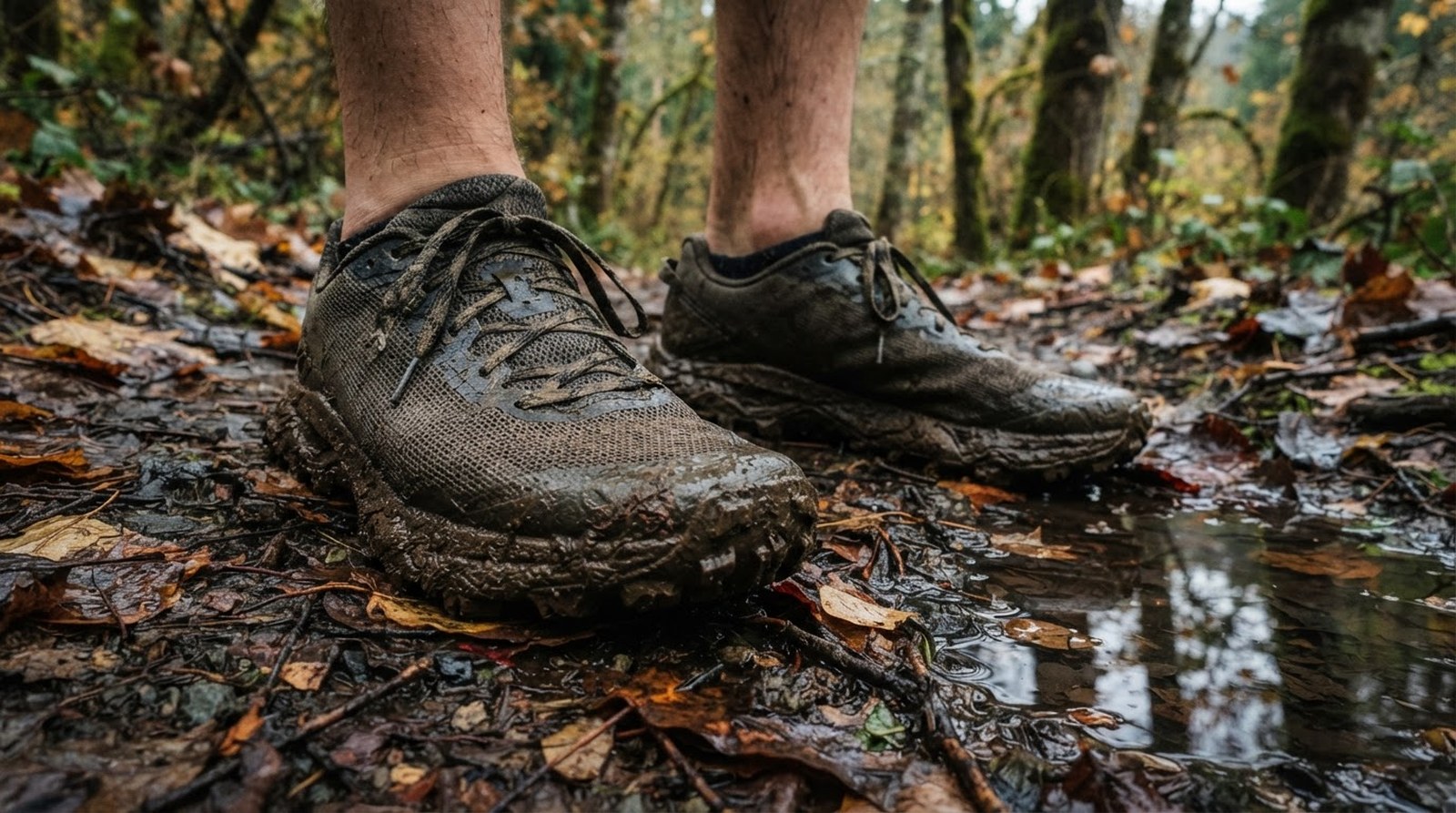
- Shoes and vest. Do several workouts in your race kit. Check grip on similar terrain, foot lockdown on descents, chafing, and access to pockets. We covered separately how to choose tread and when a membrane does harm.
- Kit according to the rules. Gather the organiser's entire mandatory list, even if the forecast is favourable. Check the vest's fit with a full load, that your headlamp works if required, and that your phone is protected from water.
At the rehearsal, note not only the kilometres but also what you ate, what you drank, how comfortable the gear was, and how you felt by the end. It's better to change one nutrition element per workout: that way it's easier to understand what works. On a technical section, first choose a safe place to eat rather than trying to open a package and jump over rocks at the same time.
The last two weeks and race day
At week 11, roughly reduce running time by 25–35% compared to a normal loading week; at week 12, before the race, leave about 30–50% of that usual volume. Do not include the race itself in these percentages: race week is reduced in workouts, but not necessarily in total load. The reduction depends on accumulated fatigue; keep the usual rhythm of short outings, but remove heavy strength work and long descents.
In advance, break the course into segments between summits, aid stations, and checkpoints. For each, estimate the time with a margin and check it against the cutoffs. Start the first long climb at an effort where you can say a phrase without gasping. Switch to walking before running turns into a struggle; on the descent, don't try to win back all the lost minutes.
On race day, use a familiar breakfast and proven food. It's convenient to plan the first portion at about 20–30 minutes, then eat in small portions according to your practiced schedule, without waiting for strong hunger. Carry a supply to the next aid station, accounting for possible slowdowns. If heat, surface, or how you feel differ from expectations, change your pace and stop plan rather than sticking to the calculation at any cost.
In 1trAIner, the AI coach builds the plan as a cascade Season → Month → Week → Day. Data from Garmin and Apple Watch watches sync automatically, and after each workout the week is recalculated. The first 7 days are free.
This material is for informational purposes and does not replace a doctor's consultation.