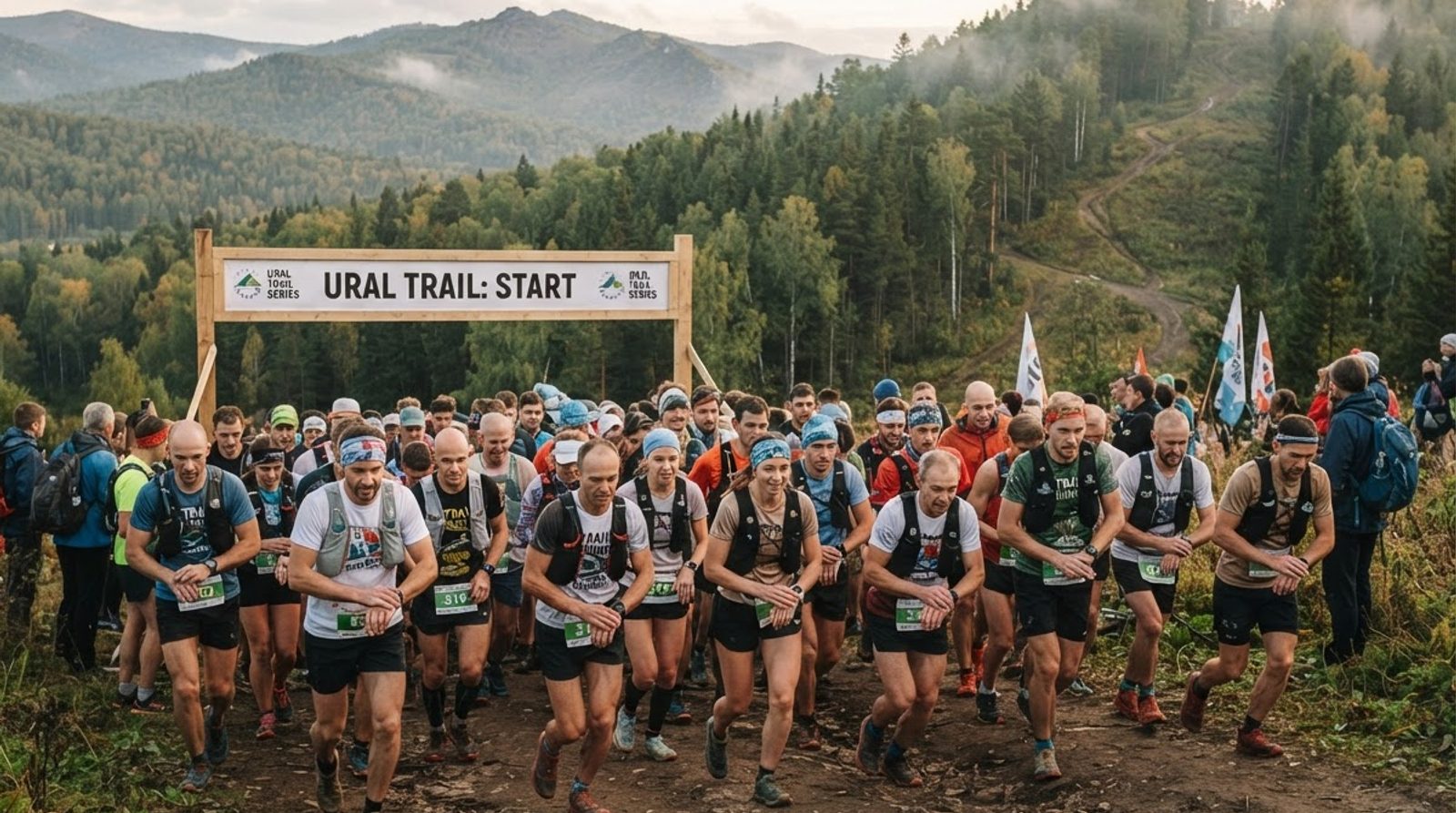
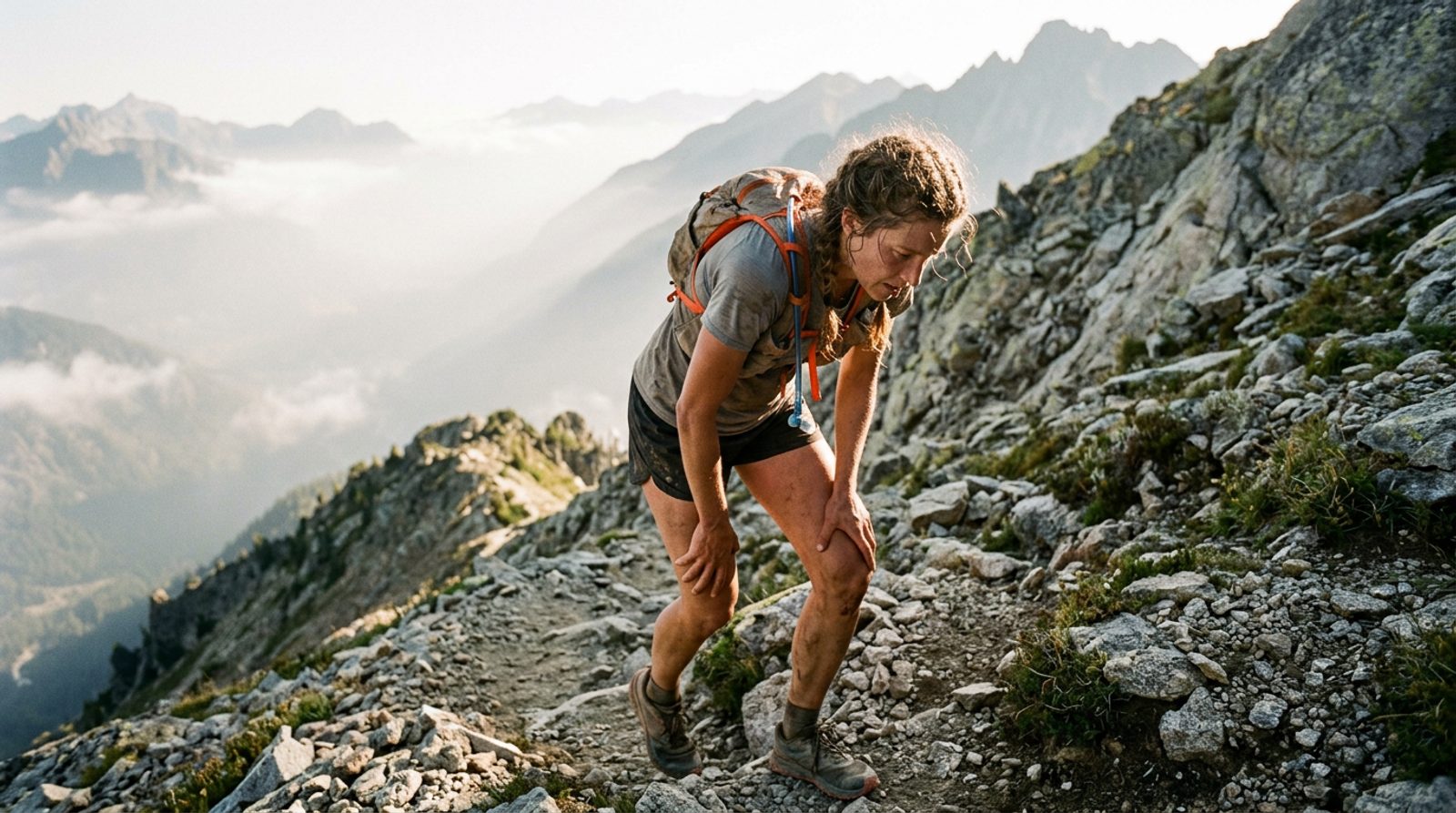
A road runner who tries trail running for the first time is usually shocked: the usual 5:30 per kilometre turns into 9:00, heart rate spikes, and legs hurt more after the descents than after a marathon. It's not about fitness — trail running just follows different rules.
Forget pace, count time
On the trail, pace per kilometre is useless: it depends on gradient, surface and rocks more than on your fitness. The main units here are time on your feet and elevation gain (D+). A workout of "3 hours with 800 metres of gain" makes sense, "20 km" — almost none.
The practical takeaway: plan long runs by hours. If your race will take 4 hours, your longest run should be 2.5–3 hours — that's enough.
Walking is a skill, not a shame
On climbs steeper than 10–12%, fast walking is energetically more efficient than running for almost all amateurs: speed is about the same, but heart rate is 10–15 beats lower. Professionals at ultra distances walk for hours and don't consider it a weakness.
Walking needs to be trained separately: uphill with a powerful stride and arm work, 6–10 repeats of 3–5 minutes. If there are no hills nearby — a treadmill with a 10–15% incline or stairs.
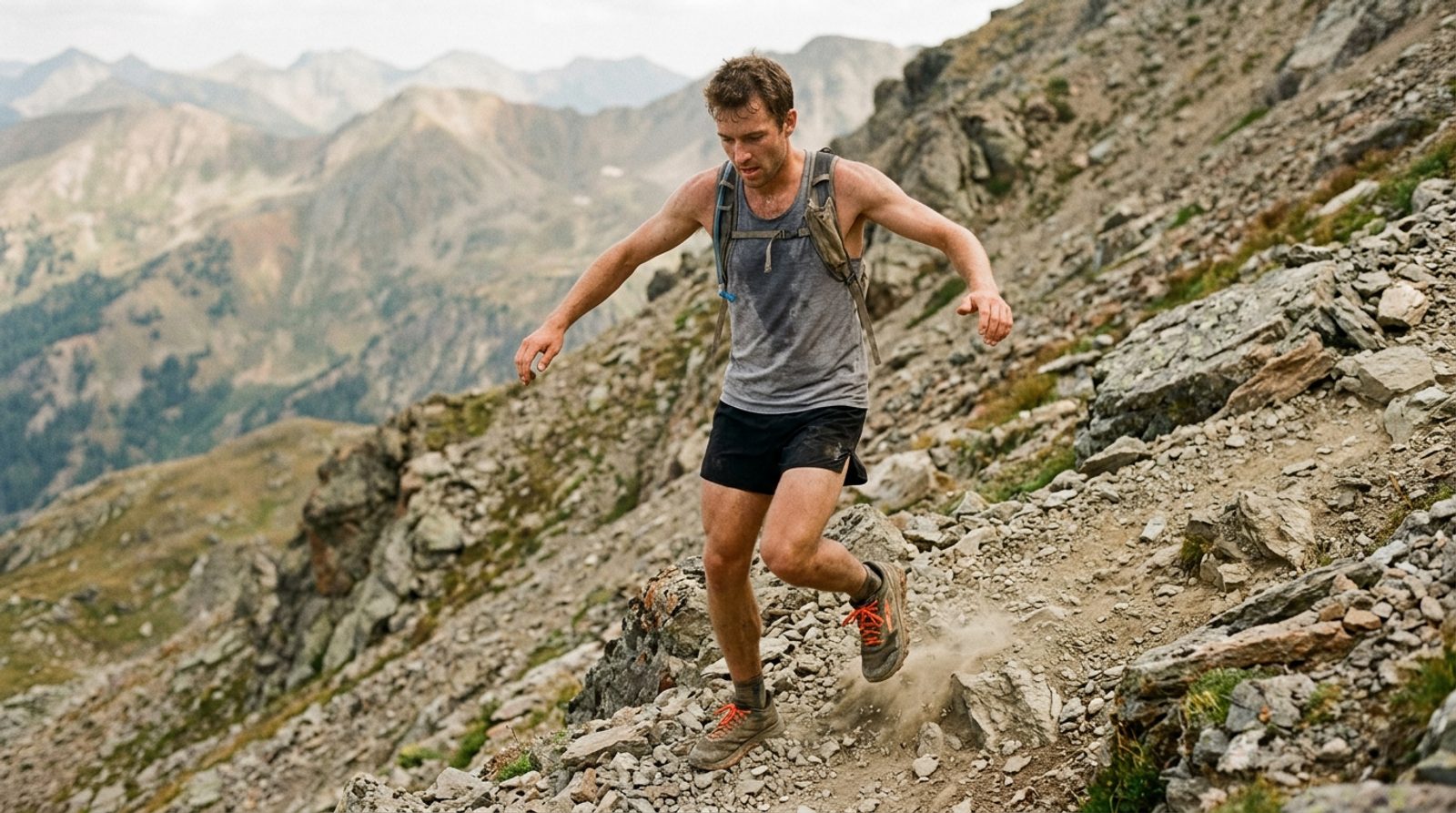
Descents hit harder than climbs
Climbs load the heart, descents load the muscles. Eccentric work of the quadriceps on descents causes microdamage, which makes it hard to go down stairs the next day. You need to prepare your legs for this in advance:
- include descents in your workouts gradually — starting with gentle ones;
- run downhill with a quick, short stride, torso slightly forward, gaze 3–5 meters ahead;
- once a week do slow squats and lunges with an emphasis on lowering — that's the same work as on a descent.
Gear you actually need
- Trail running shoes with an aggressive tread. Road shoes turn into skates on wet grass.
- A vest pack with soft flasks: on many trail running courses, aid stations are 8–12 km apart.
- Poles if the elevation gain is more than 1000 metres. They take some of the load off your legs, but they require training: trying them for the first time in a race is a bad idea.
- Mandatory gear as required by the rules: a windbreaker, a whistle, a phone, a first aid kit. At mountain races, this is checked.
Nutrition and water
Trail running lasts longer than a road race of the same distance, so you'll have to eat more and more often. A guideline is 200–300 kcal per hour after the first hour. Gels work, but by the fourth hour they usually make you nauseous: add salty and solid foods — cheese, nuts, salty crackers, baby puree. Drink 400–600 ml per hour, more in the heat, and don't forget about salt: over long distances, sodium loss leads to cramps.
A 12-week plan for a road runner
- Weeks 1–4. Keep your running volume, but move one run per week to dirt. Add strength training for legs and core twice a week.
- Weeks 5–8. The long run goes to the hills: 2–3 hours with 500–800 meters of elevation gain. Add a specific uphill workout.
- Weeks 9–10. Peak: the longest workout is 3 hours, preferably on a course similar to the race. Rehearse nutrition and gear fully.
- Weeks 11–12. Taper: volume minus 40%, keep the hills but in short segments.
Safety
In the mountains, the weather can change in half an hour, and there isn't always a signal. Always share your route, take a charged phone and a windbreaker even in the heat, and on an unfamiliar trail don't run alone in the dark. Dropping out of the race when you feel unwell is not a defeat but a grown-up decision.
Accounting for elevation gain, time on feet, and recovery in one plan manually is hard. 1trAIner can do it: the coach sees the real D+ of every workout from Garmin, tracks training load, and builds preparation for a specific race, not just "in general." You can ask "will I be ready for a 30 km trail in two months" right in Telegram — the first 7 days are free.
This material is for informational purposes only and does not replace a doctor's consultation. If you have health problems, pain, or chronic conditions, consult a specialist before starting training.