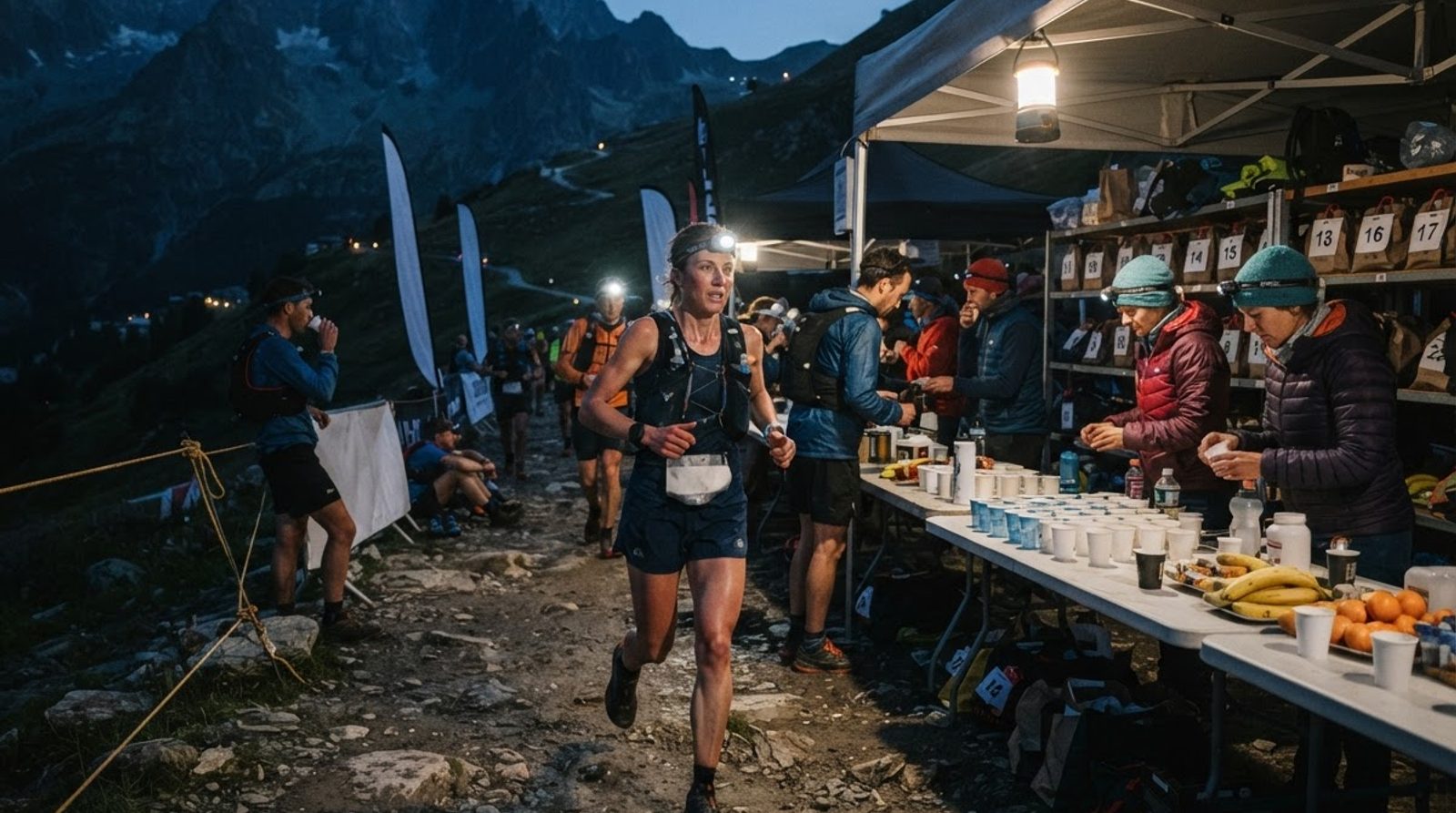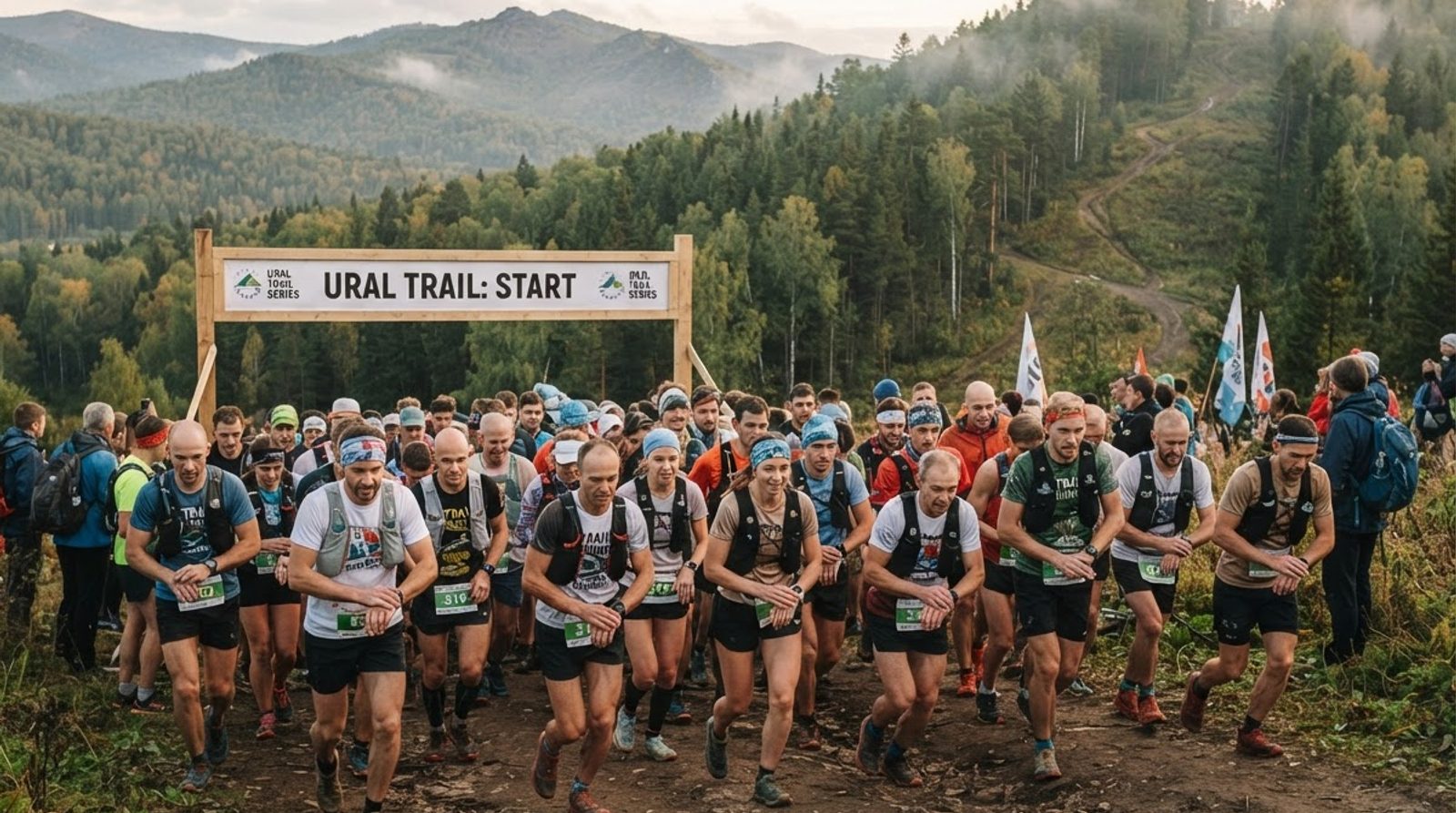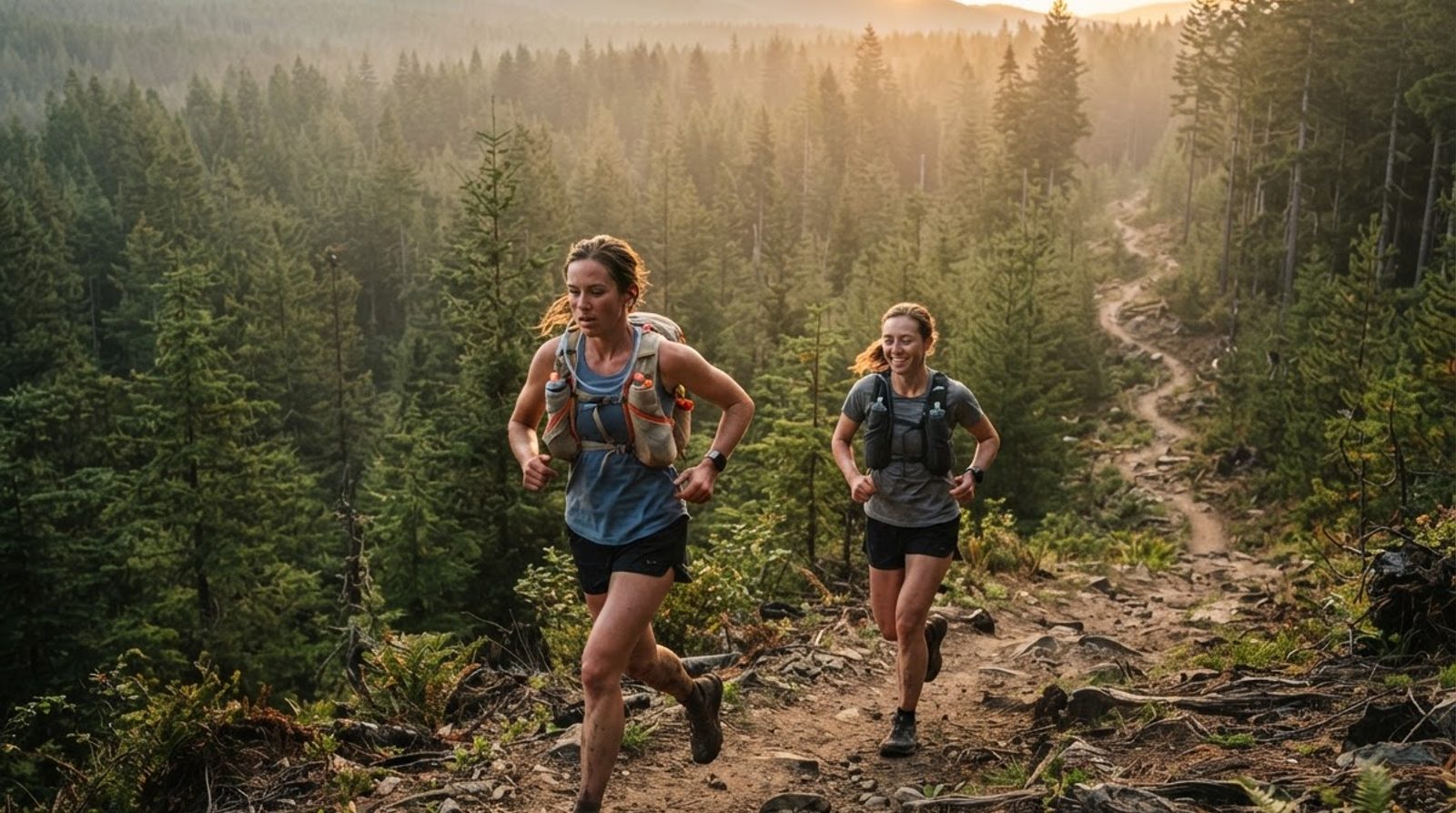
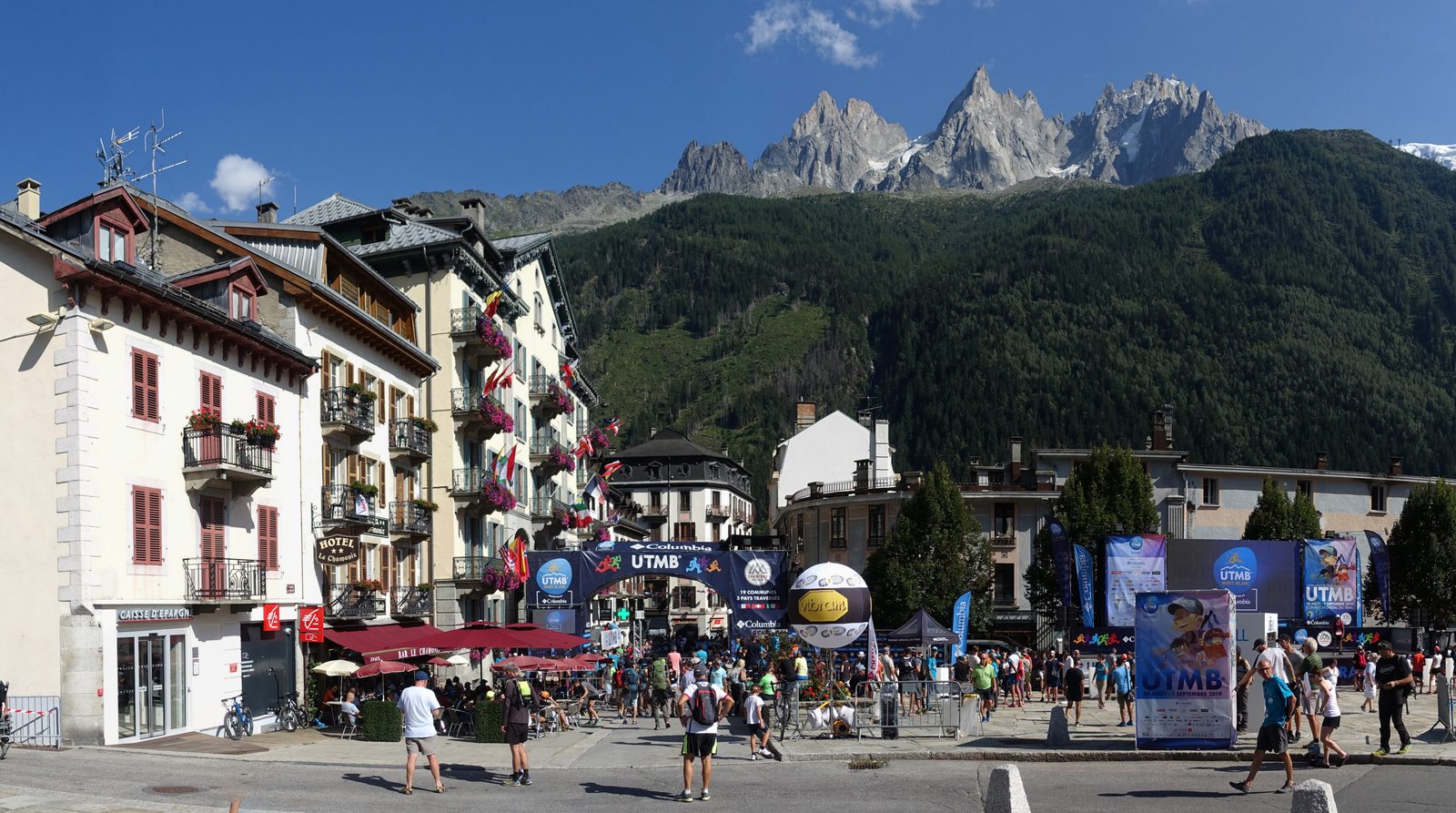
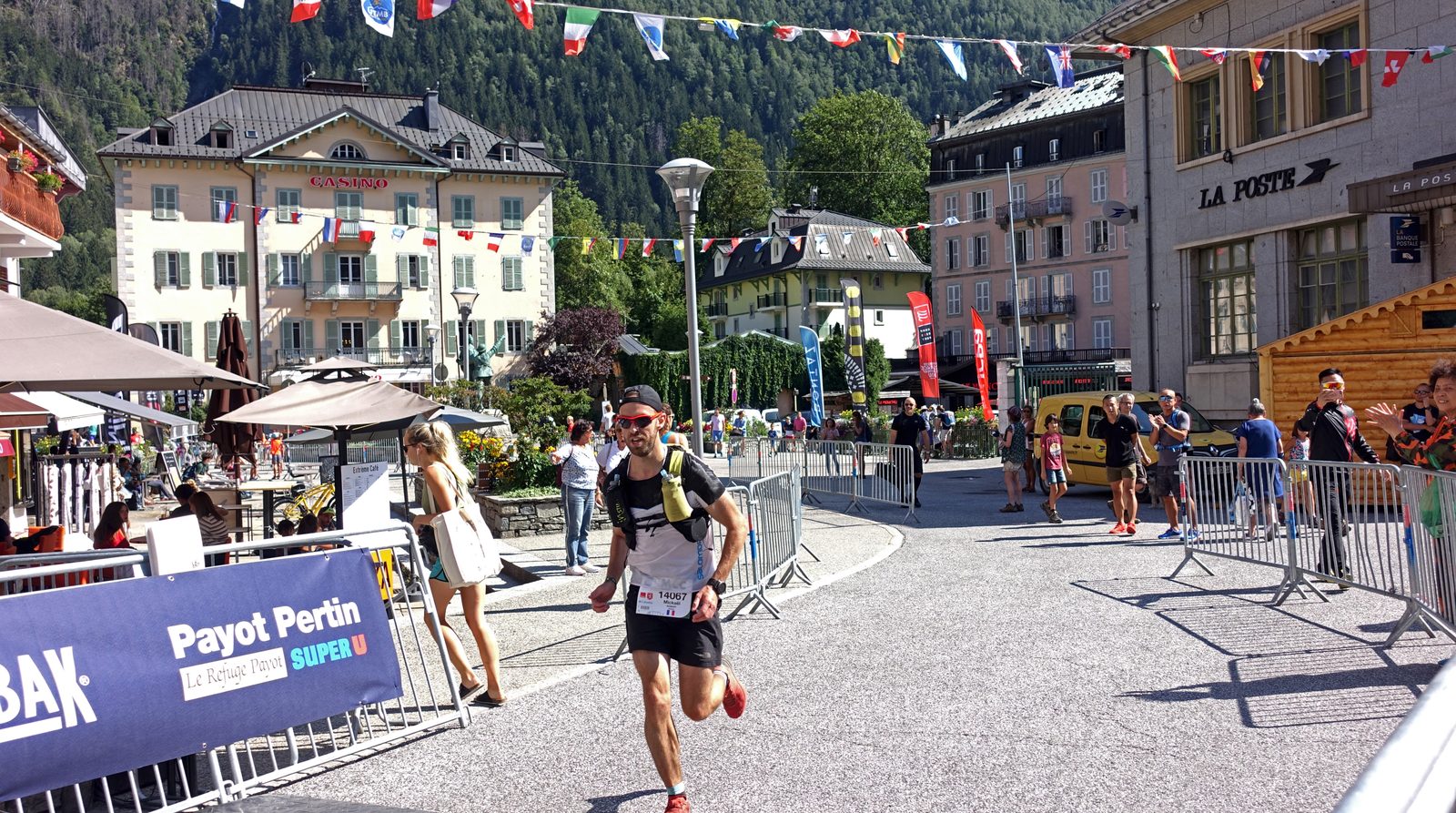
On 29 August 2026, Ben Dhiman finished in Chamonix — 174 kilometres around Mont Blanc in 18:16:29. This is the first sub-19-hour result in UTMB history and the second American win after Jim Walmsley in 2023. Frenchman Baptiste Chassagne took second (18:47:38), and American Caleb Olson third (18:48:24). In the women's race, Frenchwoman Blandine L'Hirondel won in 21:54:49, also the fastest women's time in the race's history.
Why this is not a course record
The organizers changed the route a day before the race: due to a thunderstorm forecast, they removed the Pyramides Calcaires section — the most technical on the loop — and moved the start by two hours, to 19:45 on Friday. The loop ended up being about 173.6 km with roughly 9700 metres of elevation gain instead of 9900. That is why Dima's time is not officially counted as a course record, although it is faster than anything run at UTMB before: last year's winner Tom Evans won in 19:18:58, meaning Dima would have been more than an hour faster.
It's also worth keeping the field in mind: Kilian Jornet skipped the race due to knee surgery, Jim Walmsley withdrew with an injury, and reigning champion Tom Evans pulled out of the start in August. This doesn't diminish the result — 18 hours and change had to be run regardless — but it explains why the battle wasn't against the biggest names.
How the race unfolded
- Dhiman moved ahead on the climb to La Balme, kilometre 41, and ran the remaining 132.5 km alone.
- He steadily outpaced his own schedule from last year: at Les Contamines (32 km) by 3:53, at Courmayeur (81 km) by 31:26, at Champex-Lac (127.5 km) by 1:05:04.
- Total time stopped at aid stations — 9 minutes 23 seconds versus 13:04 a year earlier. Over such a distance, that's a discipline in itself.
- With 10 km to go he took a hard fall but held his pace: his lead over second place was more than 31 minutes.
- The prize for the win is €20,000.
Who he actually is
Dima is 34 years old, born and raised in Cincinnati, Ohio, and graduated from Sycamore High School in 2010. He was not a runner: he played football, made the team at Emory University as a walk-on, but left after two seasons due to a conflict with the coach. Then came several months working at Chipotle and a decision that changed everything: in 2012 he completed the Appalachian Trail (about 3500 km) in half a year, in 2016 the Continental Divide Trail (about 4800 km), and in 2018 he hiked in Nepal. It was those months on his feet, not a running section, that became his endurance base.
He now lives in the French Pyrenees with his French wife and three children and runs for the ASICS team; his partners also include Amazfit, 226ers and Leki. The French public sees him almost as one of their own — he trains in the same mountains as the local pros and races in Europe year-round.
What he won before
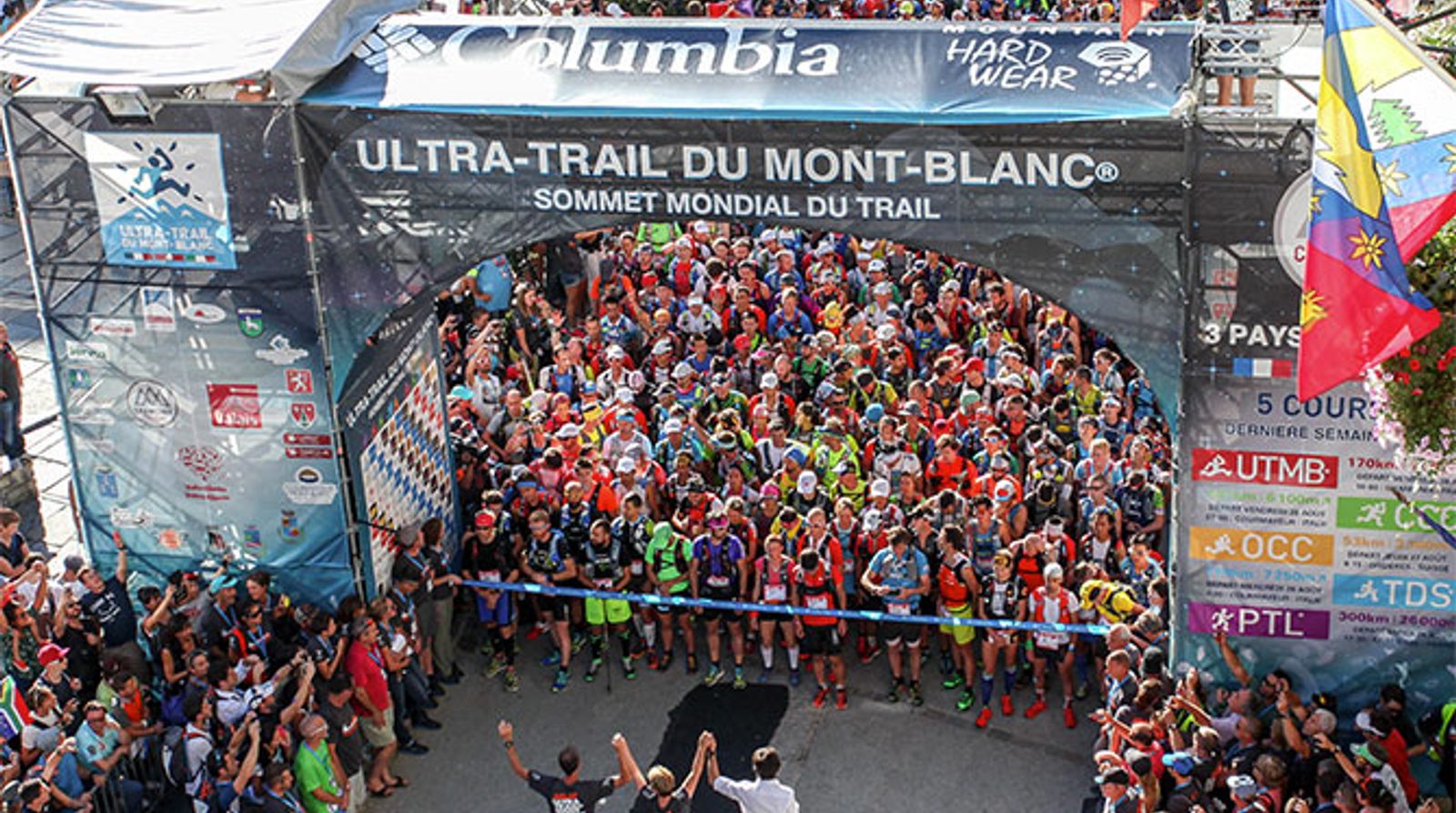
UTMB yielded on his fourth attempt: 2023 — DNF, 2024 — DNF, 2025 — second place (19:51:37) behind Tom Evans, 2026 — victory. And his track record before Mont Blanc is long:
- 2025: won Lavaredo 120K (11:49:16) and Grand Raid Ventoux 100K (7:35:47).
- 2024: won MIUT 100M (13:52:46), 3rd at La Diagonale des Fous (24:42:53), 2nd at Trail 100 Andorra, 2nd at SaintéLyon.
- 2023: won Trail 100 Andorra (13:36:38) and Penyagolosa Trails 100K (10:35:48), 3rd at Festival des Templiers.
- 2022: 3rd at La Diagonale des Fous (24:20:52) — one of the toughest hundred-mile races in the world.
- 2026 before Mont Blanc: 5th at Transvulcania (6:48:42) and 2nd at the 90-kilometre Marathon du Mont-Blanc (9:38:02).
His UTMB index at hundred-mile distances is 969, one of the highest in the world.
Coaching staff: he has none
The most curious thing about this story is that Diman has no coach. He explained it this way: a coach would only make sense if he could see him in person several times a week, come to workouts, assess his condition and change the plan on the fly; he considers remote plans "by the table" useless for himself, and in the remote Pyrenees there simply is no such specialist. He puts the plan together himself on Sundays: he looks at the past week and lays out the next one in broad strokes — easy day, long day, easy, tempo, long, recovery, "sharp". The specifics (which route, what surface, how much elevation gain) emerge as the week goes on, based on how he feels.
The role of a staff is effectively filled by the ASICS team (training camps, gear, testing), his family at aid stations and his own diary: he runs the newsletter The Speedhiman, where he talks through his months of training out loud — volumes, mistakes, self-criticism, books. This is a rare case of an elite ultramarathoner publicly explaining why he did a particular week.
Methodology: what he changed before the victory
His main work was not on speed but on his weak spot — elevation gain. By the start of 2026 he had run 30% more vertical than at the same point in 2025. The second focus was technical terrain: according to him, training on the difficult trails of the Pyrenees made him faster and more confident on descents, and descents at UTMB decide no less than climbs.
The other principles are simple and repeatable:
- Easy is truly easy. Most of the week is run by feel, not by pace.
- Improvisation within a rigid framework. The types of days are set in advance, the content — by condition.
- No attempts to "catch up" on what was missed. A missed workout stays missed, the week is not rewritten retroactively.
- Racing as training. He ran Transvulcania and 90K du Mont-Blanc not for the podium but as a systems check before Mont Blanc.
Strava and where to follow him
Dhiman has a Strava profile with Pro Athlete status — strava.com/athletes/102936151. Workouts and numbers (volumes, elevation gain, heart rate) are visible only to authorized followers: without logging in, the page shows only the name. He posts detailed reviews in his newsletter, and race results are collected in his UTMB Index profile.
Five facts to wrap up
- He came to running from football and hiking. Before his first ultras — 8000 kilometres of trails on foot over two seasons.
- His first two UTMB attempts ended in DNFs. Between the first DNF and the win — three years and a move to the mountains.
- He lost less than ten minutes at aid stations over the entire race. That's less than many amateurs spend at a single station.
- He fell 10 km before the finish — and still beat second place by more than half an hour.
- He has no coach, but he does have a public training diary. Planning takes him one evening a week.
What an amateur can take from this
Three things transfer to any level. First: work on your weak spot, not your favourite one — for Dhiman that was elevation gain, for most runners it's long runs or strength training. Second: keep the weekly framework, but don't cling to specific numbers if your body disagrees. Third: count not only kilometres but also time spent at stops, if your goal is a long race.
Building such a framework and recalculating it weekly is exactly what the AI coach does in 1trAIner: the plan is built as a planning cascade Season → Month → Week → Day, data from Garmin or Apple Watch syncs automatically, and after every workout the week is rebuilt around what actually happened, not the original table. The first 7 days are free.
Sources
- iRunFar: 2026 UTMB Results
- Marathon Handbook: UTMB 2026 splits and podium
- Live for the Outdoors: men's race report
- Canadian Running: Dhiman's win and the course change
- Yahoo Sports / Cincinnati Enquirer: biography
- UTMB Index: all results
- iRunFar: pre-UTMB 2026 interview (on training and having no coach)
- Marathon Handbook: women's race
This material is for informational purposes. A professional ultramarathoner's training volumes don't transfer directly to an amateur: consult a specialist before a sharp increase in load.