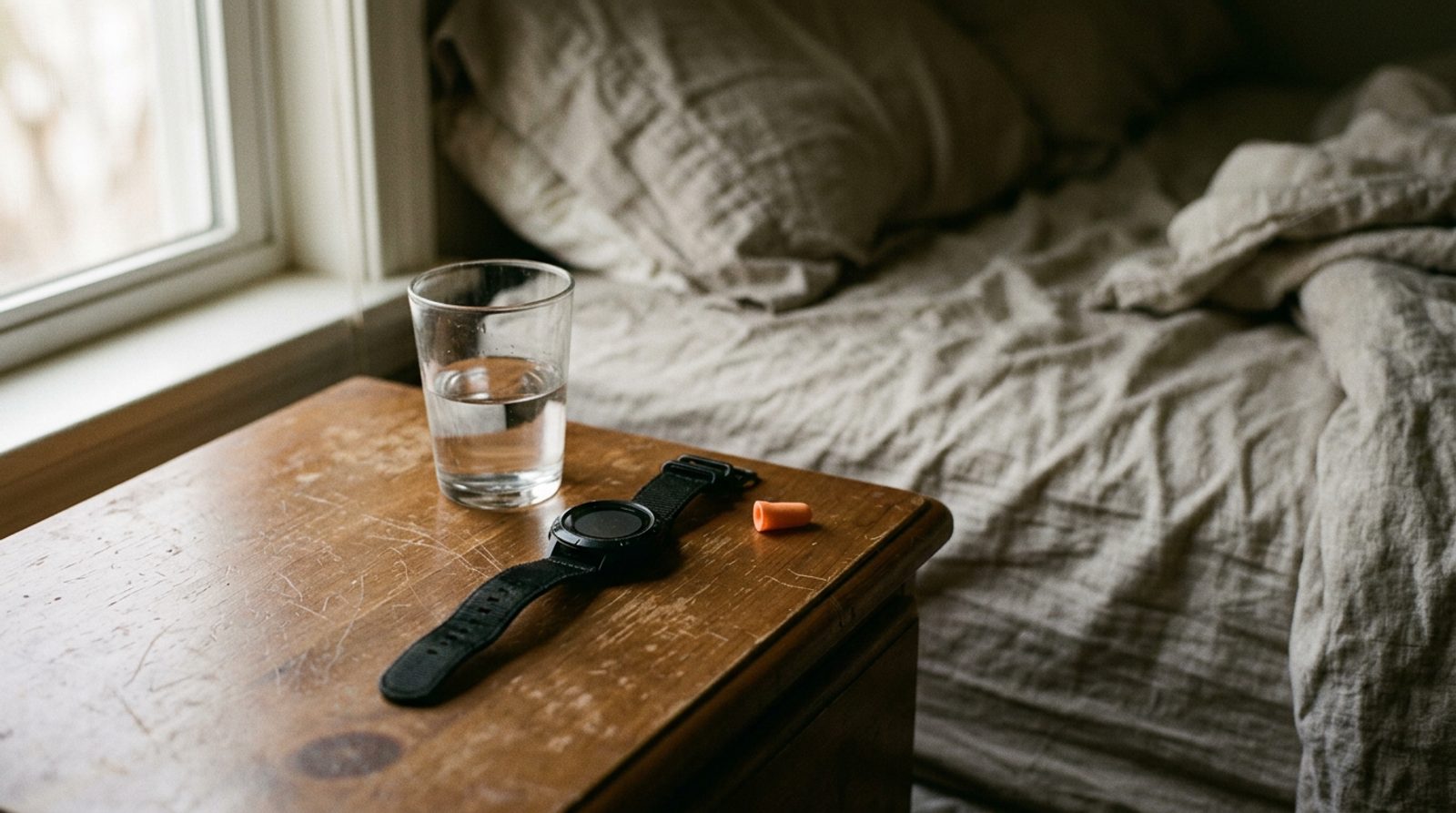
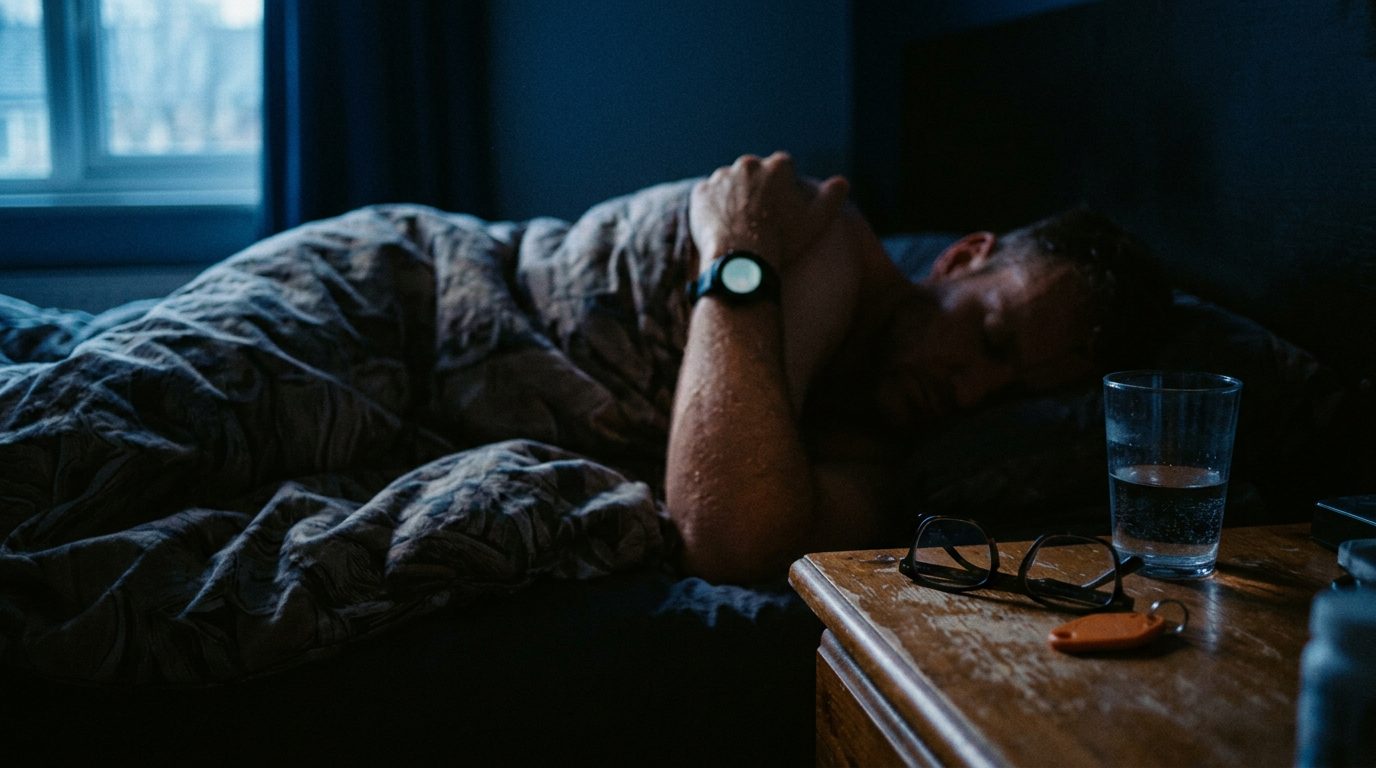
Sleep is the most underrated part of preparation: it can't be replaced by supplements or extra training. Yet the sleep report on your watch is read more often than any other screen, and almost always incorrectly: people look at deep sleep minutes, get upset, and draw conclusions. Let's figure out what in this report is measurement, what is estimation, and what is a matter of habit.
What the wrist sensor sees
The watch has exactly two sources of data about your night: an accelerometer that picks up movement, and an optical heart rate sensor that provides heart rate, variability, and respiratory rate. Neither measures sleep directly.
Then a model takes over. Based on long motionless stretches with steady heart rate, the algorithm decides you've fallen asleep. Based on a combination of low variability, steady breathing, and almost complete stillness, it concludes this is deep sleep. Based on movement plus heart rate spikes, it decides this is REM sleep. All of this is educated guessing, not a recording of brain activity: in a lab, stages are determined by electroencephalogram, eye movement, and muscle tone, and none of these signals reach the wrist.
In validation studies, wearable trackers reliably distinguish sleep from wakefulness: sensitivity is around 95%, and total sleep duration usually matches lab results within a few tens of minutes. However, the breakdown by stages matches much worse: agreement with lab analysis for the best models is rated as moderate, and for the rest as weak. Simply put, "43 minutes of deep sleep" is an estimate with an error comparable to the number itself.
Another typical sensor error: it often counts calm lying without sleep as sleep. If you lay awake with your thoughts for half the night without moving, the watch will honestly show "eight hours of sleep" and a high score—but you know for sure you weren't sleeping.
What to trust and what to look at
Trust three things: sleep duration, bedtime and wake-up time, and their consistency from night to night. These metrics are accurate, and their contribution to recovery is the greatest.
Look at the trend, not a single night, for nighttime heart rate, variability, and respiratory rate. A nighttime heart rate 5–7 beats above your usual, and variability below your range, is a reliable sign that your body is dealing with something else: infection, stress, alcohol, or yesterday's load it wasn't ready for.
Ignore as a reason for action the minutes by stages and any total sleep scores for a specific night. It's useful to compare them monthly: if the proportion of deep sleep has been creeping down for three weeks in a row, that's a signal. One night with bad numbers means nothing.
Understanding a device's limits doesn't devalue it — on the contrary, it saves you nerves. The same principle applies to daily metrics: how to read readiness, Body Battery and variability is covered in the article on recovery metrics, and how brands' approaches differ is in the sports watch review.
How much sleep an amateur athlete needs
An adult needs 7–9 hours, and someone who trains needs closer to the upper limit. The reason is simple: recovery after a load happens during sleep, and the bigger the load, the more time is required, not just quality.
Well-known studies on sleep extension in athletes give the same result: if you move someone who sleeps 6.5–7 hours to 8.5–9, after a few weeks speed, accuracy and reaction time improve, while subjective fatigue drops. The reverse experiment is also described: several nights of five hours worsen load tolerance and increase perceived effort at the same work — the workout "becomes harder" even though the plan hasn't changed.
A practical guideline: add 30–60 minutes of sleep for each hard training day of the week. The easiest way to add them is by moving bedtime, not wake-up time: morning hours are usually protected by work and the start of training.
Sleep debt accumulates. Three nights of six hours when you need eight is six hours of debt, and one "catch-up" Saturday doesn't clear it, though it does help. Naps work: 20–30 minutes take the edge off the deficit and don't interfere with falling asleep at night if you nap before 3 p.m.
What actually improves sleep
The list is short and boring, but it works better than any gadget.
- A consistent wake-up time, including weekends. Regularity matters more than duration: your body adjusts melatonin production to your schedule, and a shifting routine breaks it every week.
- A cool bedroom, 18–20 °C. Falling asleep is physiologically tied to a drop in body temperature, so a hot room gets in the way more than noise does.
- Darkness. Even dim light at night worsens sleep structure.
- Alcohol is the main enemy of quality. It speeds up falling asleep but suppresses REM sleep, raises nighttime heart rate and tanks variability. This, by the way, is exactly the case where the tracker is right: after two glasses, nighttime heart rate is 8–10 beats higher, and you'll see it.
- Caffeine stays in your body for 5–7 hours. Coffee at 16:00 is coffee in your blood at midnight.
- An intense workout less than 2–3 hours before sleep shifts when you fall asleep. A light one doesn't interfere.
Separately about competitions: the night before a race is almost always bad, and that's normal. The result is affected by sleep two nights before the race — that's the one worth protecting, and before the start itself it's enough to just go to bed on time and not panic about insomnia.
How this changes the training week
A rule that removes most questions: the decision is made based on the sum, not a single number. A night an hour or an hour and a half shorter than normal with a calm nighttime heart rate — train according to plan. Two or three short nights in a row, nighttime heart rate above usual, variability at the bottom — the key workout is moved, replaced with an easy run. A week of that — the question is no longer about the plan, but about lifestyle or a doctor.
What you should not do: swap a workout for "sleeping in longer" because of one bad sleep score; go to bed two hours earlier than usual trying to "stock up" on sleep before a race; and definitely don't measure progress in minutes of deep sleep.
In 1trAIner, the AI coach receives sleep data along with the rest of your Garmin and Apple Watch stats and factors it into the daily plan: after several short nights, the week is rebuilt rather than a single workout. First 7 days free.
This material is for informational purposes only and does not replace a doctor's consultation. Wearable devices are not medical instruments: snoring with pauses in breathing, daytime sleepiness, and chronic insomnia are reasons to see a sleep specialist, not to change your watch settings.