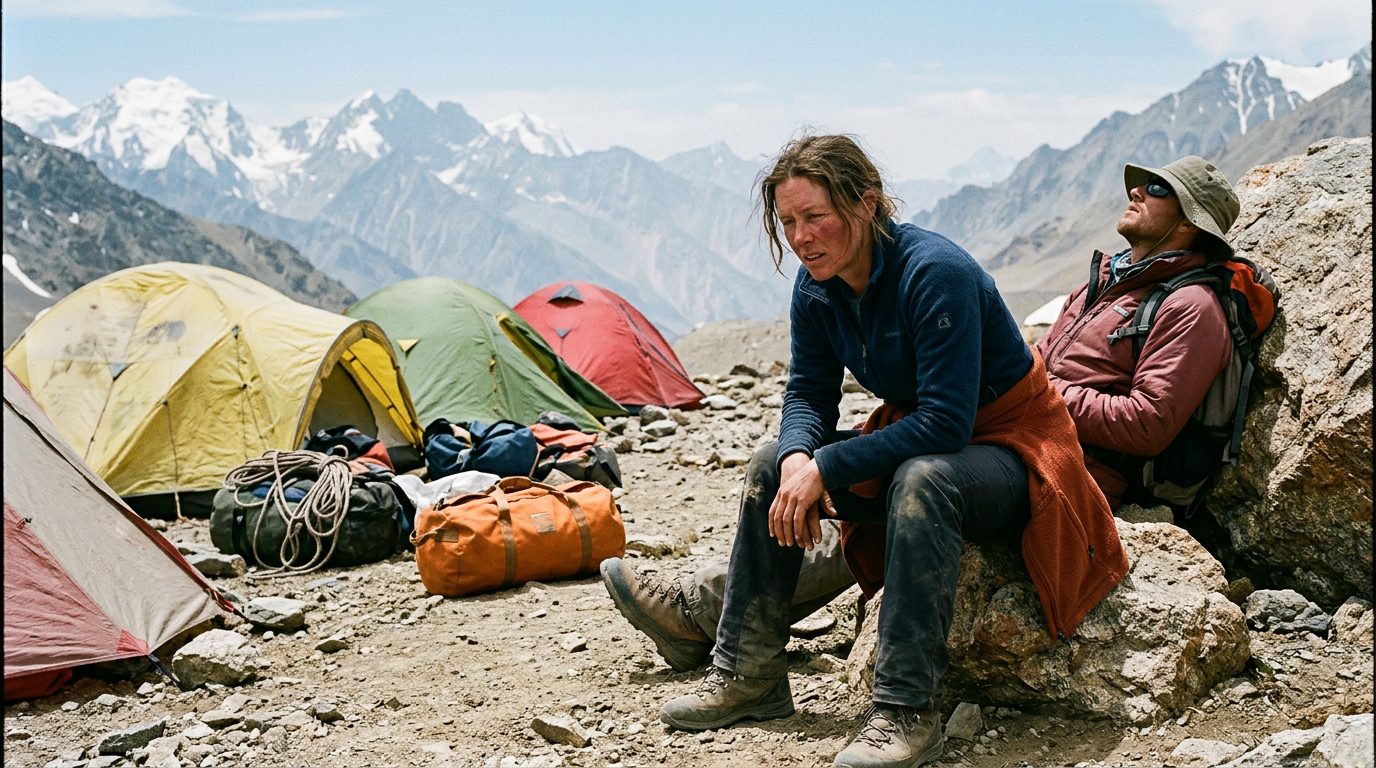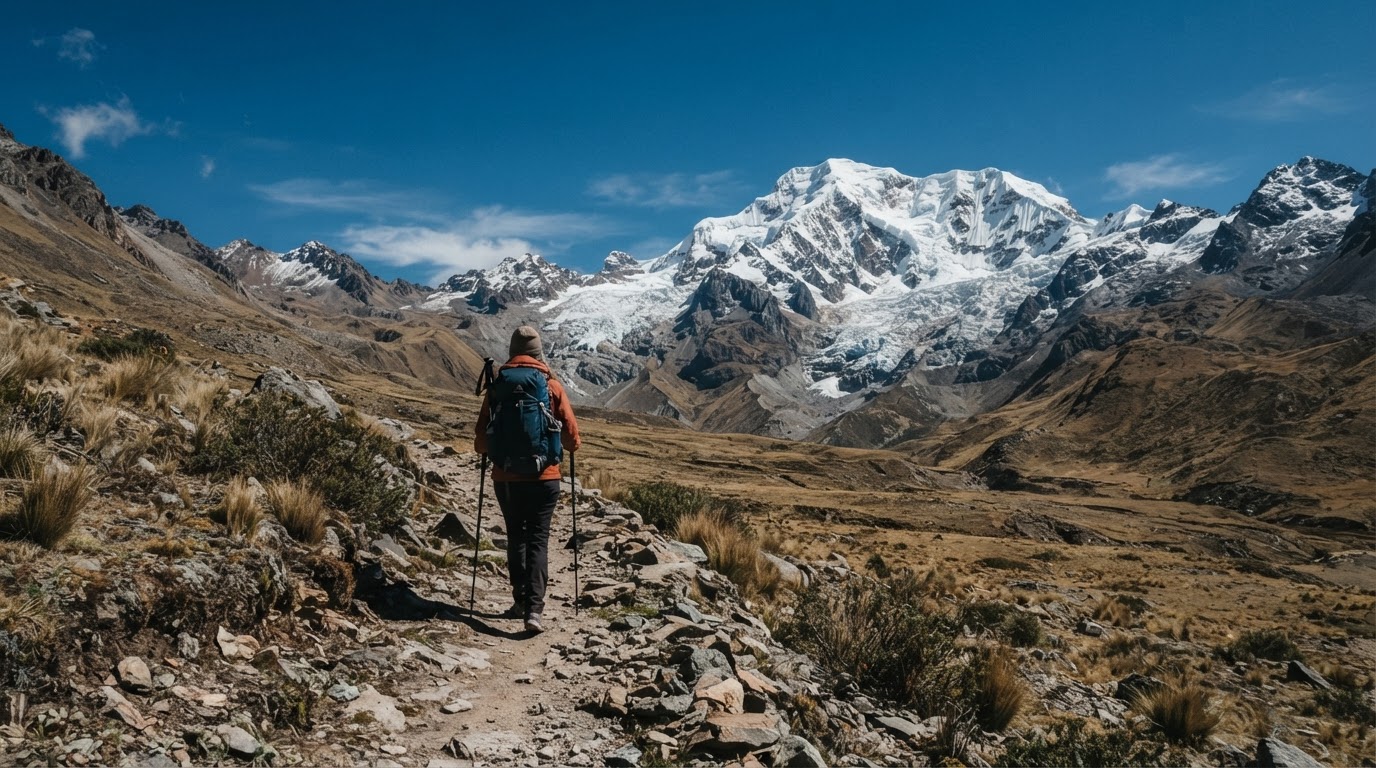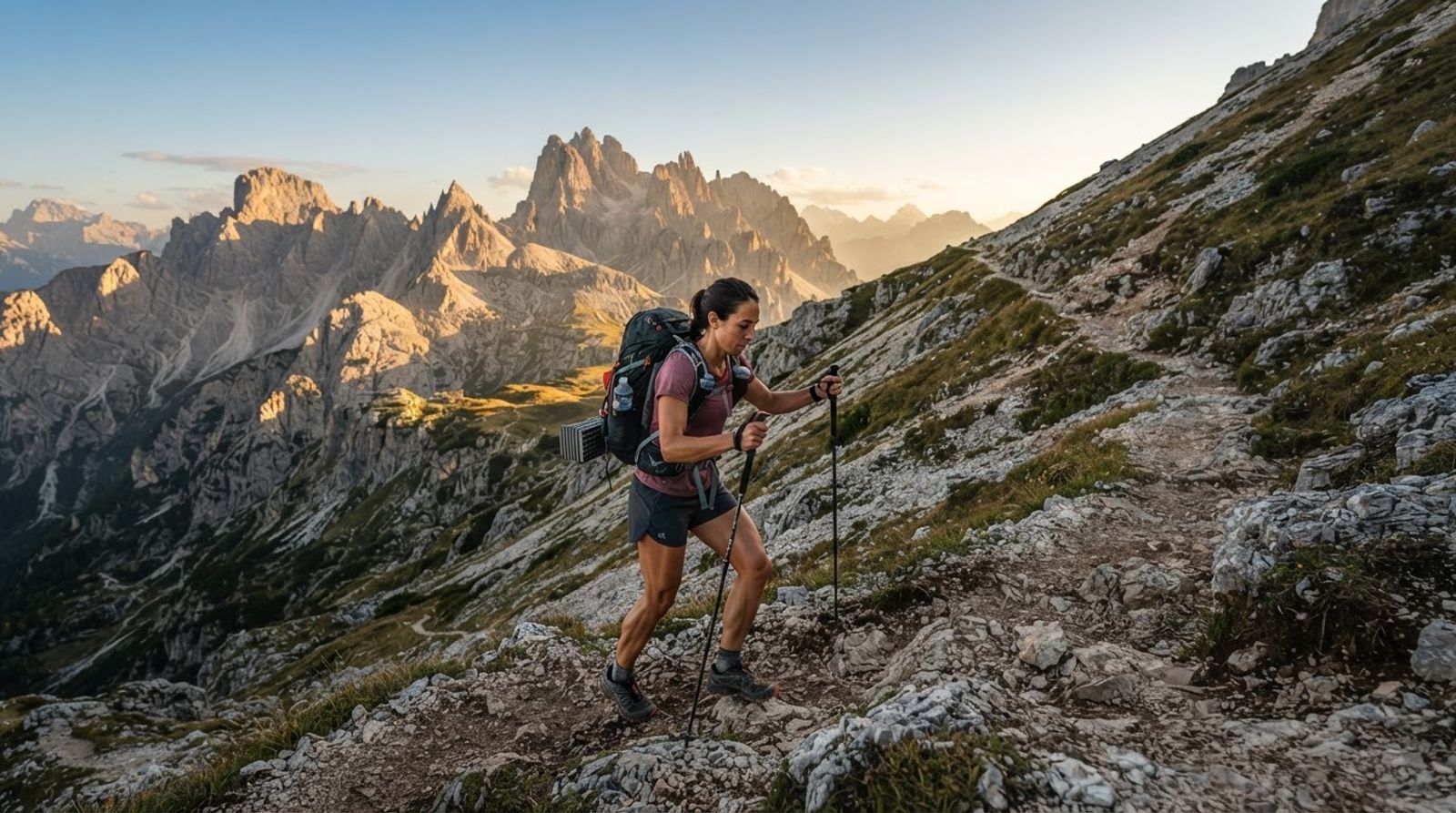
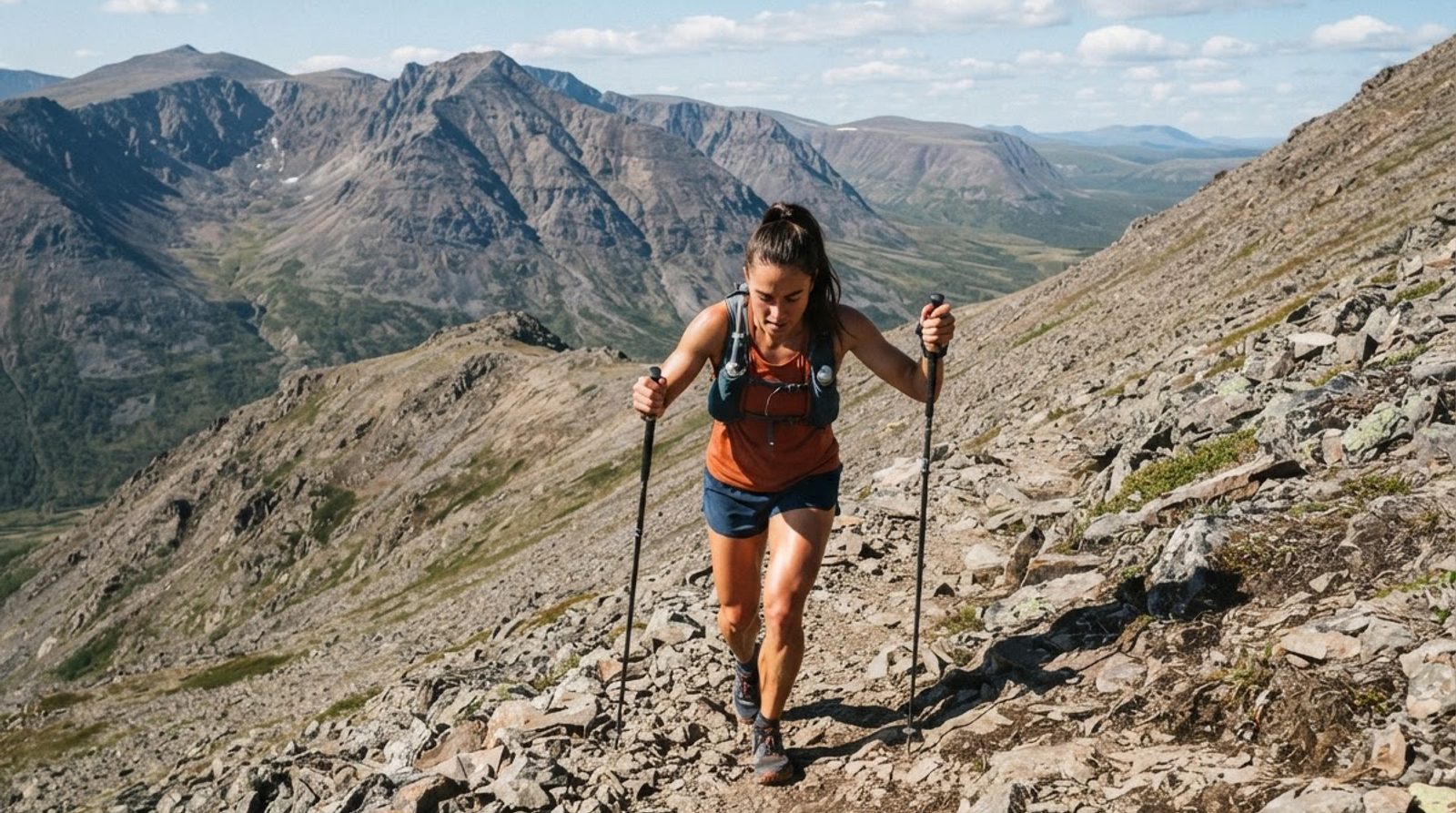
If on a steep climb running is barely faster than walking and your breathing is already ragged, there's usually no point in running just for the sake of running. Power hiking is a brisk, purposeful walk uphill, not a rest stop. It lets you choose your effort for the whole distance, not just for the nearest summit. On a trail, knowing when to switch to walking is just as important as being able to hold pace on flat sections.
Where the line between running and walking lies
A gradient of about 15–20% is a useful benchmark to check whether walking has become more economical than running. It's not a universal threshold: the choice is influenced by speed, fitness, climb length, grip, and accumulated fatigue. Percentages here aren't the same as degrees: a 15% gradient means about 15 metres of elevation gain per 100 metres of horizontal distance. On the trail, you don't need to estimate it to the decimal.
On a short, smooth climb, a fit runner may benefit from continuing to run even at a steeper gradient. On a loose, rocky trail or after several hours of movement, walking can be smarter at a lower gradient. On a long distance and prolonged steep climbs, walking should almost always be considered the first option, but don't turn this rule into a ban on running.
- Speed barely changes. You switch to walking, but the person still shuffling ahead hardly pulls away.
- Effort grows faster than pace. Breathing becomes noticeably heavier, while upward progress speeds up only slightly.
- Technique stops being stable. Extra bouncing, slipping, and tension appear that weren't there when walking.
Don't wait until you're completely exhausted. Switch to walking for a few dozen seconds and compare speed, breathing, and movement control. Return to running where the slope eases and running again gives a noticeable speed gain without a sharp jump in effort.
Why walking is tactics, not weakness
You have to lift your body to the same height whether running or walking. The saving comes not because walking cancels out work against gravity, but because the two movement patterns have different costs at a given speed and steepness. On a steep slope, trying to maintain a running form may require more energy than a steady walk at a similar upward speed.
Compare the modes honestly. A lower heart rate at a much slower walk doesn't by itself prove its economy. In practice, it's more useful to assess what effort is needed for a comparable rate of elevation gain. If walking lets you move almost as fast but breathe more calmly and strain less, for a long trail that's a strong argument.
Poles engage your arms and shoulders, provide extra points of support, and can redistribute some of the load from your legs. However, total energy expenditure doesn't have to decrease: the upper body is working too. Without skill, poles sometimes just add fuss. Their benefit lies in controlled movement and effort distribution, not in a guaranteed low heart rate.
Ahead there is usually also a descent, where your legs will have to brake your body and maintain stability. A restrained climb does not cancel out that load, but it helps you avoid reaching it already fatigued. The benefit of the tactic is judged over the whole distance: a few seconds at the summit mean little if afterwards you have to recover for a long time while moving.
Technique: short steps and support without unnecessary tension
The goal of power hiking is to maintain continuous forward movement, not to make every step as powerful as possible. Choose a cadence at which you don't have to linger on one leg for long and then yank yourself upward. Step length changes with the terrain: a high step on the trail doesn't oblige you to climb onto it in one motion every time.
- Short step. Place your foot close enough to your body to shift your weight without a deep lunge. Where possible, choose small, stable steps. Don't reach for a distant rock just because it looks like a convenient target.
- Body position. Lean your torso slightly toward the slope while keeping your back extended. On a steep section the lean will be greater, but don't fold so much that you compress your abdomen and hinder your breathing. Direct your gaze at the nearest path ahead, not constantly at your toes.
- Hands on thighs. Without poles, you can rest your palms on the front of your thighs above the knees and help extend your legs. This is a workable option for a steep slope, not a mandatory pose for the entire climb.
- Poles. Plant the tips on reliable support without reaching your arms far forward. The pressure should help you move forward, not slow you down. At a steady rhythm, alternating poles is convenient; on steep steps, planting them simultaneously is sometimes easier.
- Breathing. Find a repeatable rhythm, for example inhale for two steps and exhale for two or three. This is a way to notice increasing effort, not a mandatory pattern. If the rhythm breaks, first reduce the intensity rather than trying to keep the count at any cost.
On slippery ground, traction matters more than step frequency. Check your footing before a strong push-off, and don't count on a pole holding on any rock. In a group, leave room for pole work and don't point the tips toward people behind you.
How to control effort: heart rate together with how you feel
For individual workouts, power hiking often suits Z2–Z3: from calm aerobic work to moderate effort that you can sustain without constantly straining. Here the familiar five-zone model is meant. Zone boundaries depend on the setup method and individual data, so the same number of beats per minute can mean different loads for two people.
In Z2 you can usually still speak in sentences; closer to Z3 your speech becomes shorter and your breathing noticeably more active. This is an approximate check, not a precise zone meter. If your watch shows the usual number but the climb already feels too hard, don't speed up just to hit the plan.
Heart rate responds with a delay, especially when the gradient changes abruptly, so the first seconds of a climb are easy to start too fast. Heat, altitude, fatigue, and sensor errors also change the picture. Look at the combination of heart rate, breathing, and stability of your step. On a long climb, a steady effort with varying speed is more useful than trying to hold one pace on any terrain.
How to incorporate power hiking into training
Uphill walking is worth training separately, rather than only remembering it after a bad start to a race. First find a predictable slope where you can focus on movement. Choose the volume according to your current fitness: being used to running on flat ground doesn't mean you're ready to immediately gain a lot of elevation on foot.
- Separate session in Z2–Z3. After an easy warm-up, do, for example, 3–5 climbs of 4–8 minutes at a brisk walking pace. This is a guideline for someone already used to hills, not a starting norm for everyone. Between repeats, walk back down calmly; the descent also counts toward the load.
- Long climb on foot. In your usual long run, pick one long slope in advance and walk it at a steady effort. With suitable preparation, this can be 15–30 minutes of continuous walking; on short terrain, a few smaller segments are enough without chasing elevation gain.
- Practice with poles. Start with a short section on a familiar trail. Work on placement, changing rhythm, folding and taking out the poles. Increase the duration once the movements stop distracting you from choosing your footing.
- Transitions between modes. On varying gradients, alternate walking on steep sections and easy running on gentle ones. Look for the moment when running becomes comfortable again, rather than speeding up after every transition.
This kind of work should replace part of your existing load, not be added on top automatically. Take into account time on your feet, elevation gain and descents. For observations, you can sometimes cover the same familiar climb at a similar effort in different ways and record the time, heart rate and how you feel. A single result proves nothing: weather, terrain and your condition noticeably affect the comparison.
Mistakes that make a climb cost more
- Running the first climb with the crowd. Fresh legs and starting excitement hide the price of the pace. Choose an effort benchmark in advance and switch to walking before your breathing becomes unmanageable. Someone else's speed doesn't have to match your distance and fitness.
- Switching from walking to running for the shot. A short burst of speed in front of the camera doesn't improve your tactics if you have to slow down afterwards. Keep your chosen mode where it's justified by the terrain, not by how it looks to others.
- Taking too long a stride. Trying to tackle a slope with lunges increases the effort of every movement and often breaks your rhythm. Shorten your stride and check whether you can move just as fast with a smoother weight transfer.
- Turning walking into a separate race. Walking can also be too intense. If your heart rate and breathing keep rising above your chosen level while walking, slow down instead of considering the task solved just by not running.
The main criterion for a successful transition is not how many people you passed on the slope, but whether you can keep moving after the summit without a forced pause. Power hiking is useful precisely as a controlled mode: switch to it in time, hold a suitable effort and return to running when the terrain allows.
In 1trAIner, the AI coach builds your plan as a planning cascade Season → Month → Week → Day. Data from Garmin and Apple Watch syncs automatically, and the week is recalculated after every workout. First 7 days free.
This material is for informational purposes only and does not replace a doctor's consultation.