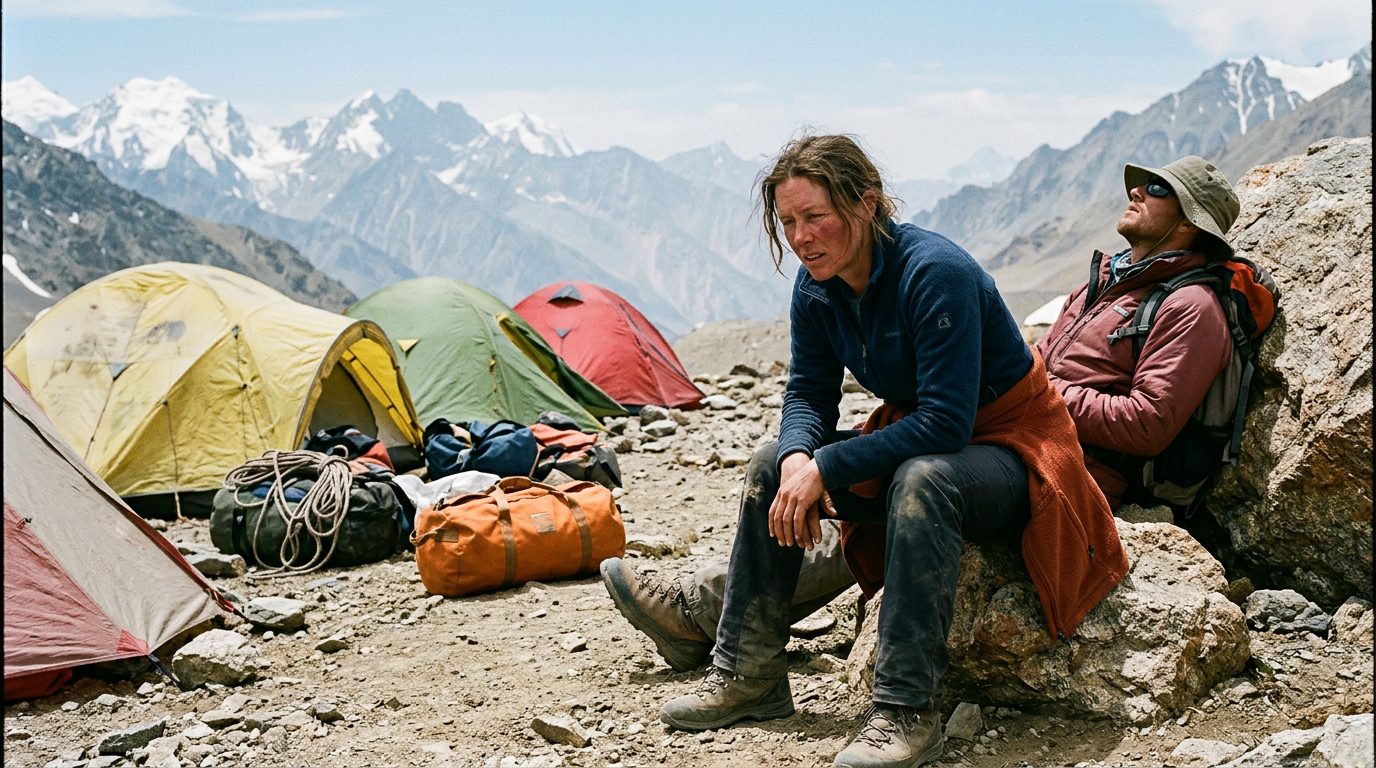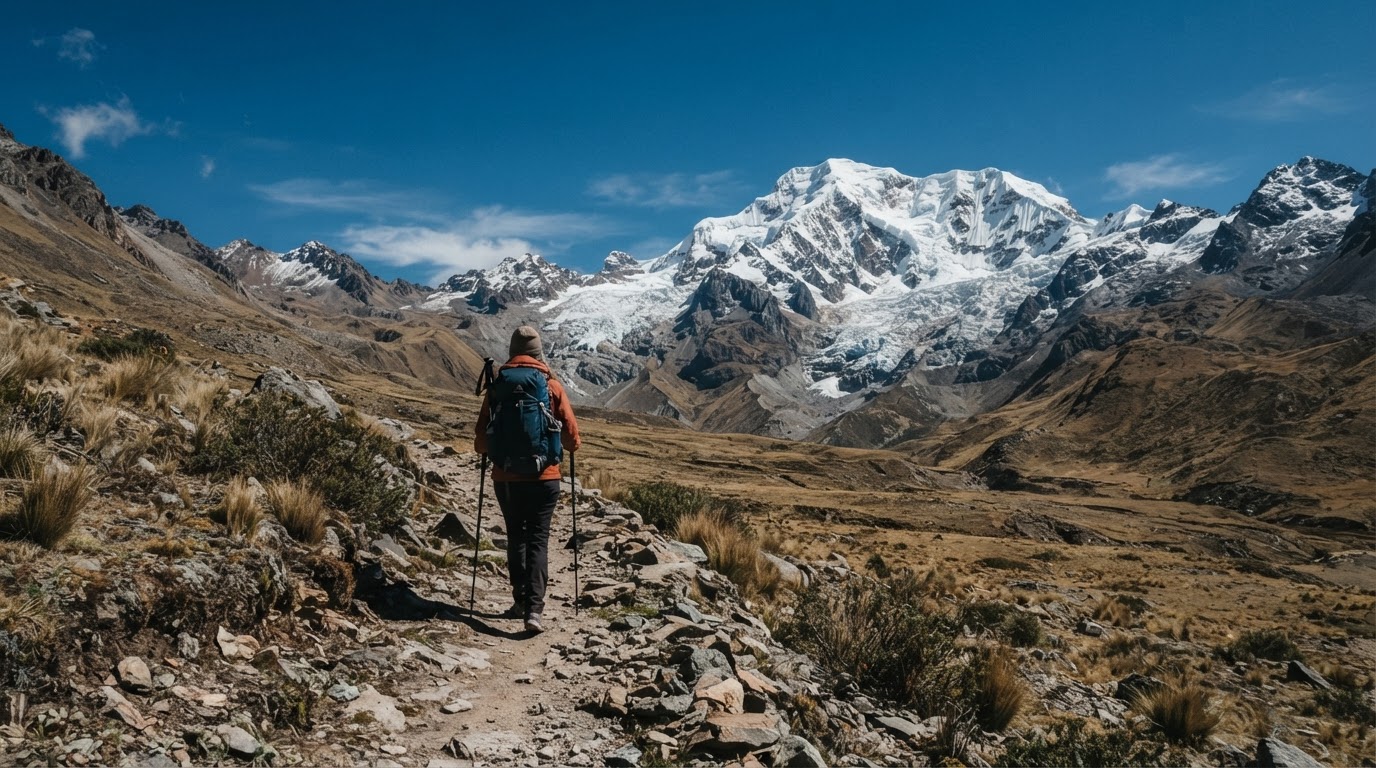

On race day, long climbs and descents await, but at home you have a flat park, stairs, and a gym. You can rack up running kilometres in these conditions, but they don't replicate all the mountain work: walking uphill, prolonged leg effort, and braking on the descent. Cross-training helps close part of that gap. The stepper and incline treadmill provide work against gravity, cycling builds strength endurance without running impacts, and hiking gives you contact with terrain. This is a supplement to running, not a replacement for the long run and other key sessions.
Stepper and incline walking: climbing without a mountain
When the gradient gets steep, switching to brisk walking is often smarter than trying to keep running. This is power hiking: short steps, a stable torso, consistent leg extension, and continuous upward movement. The stepper and incline treadmill directly mimic this movement pattern, though they don't replicate uneven trails, changing footing, or descending work. They're most useful for the long climbs you plan to walk during the race.
A guideline for a familiar exercise is 30–60 minutes in zone 2–3, with most of it usually staying in zone 2. The lower end works for a short addition to your running week, the upper end for an already familiar volume with good recovery. If the format is new, start shorter and easier. Zone 3 isn't a mandatory goal: if you have to hang on the handles or break your stride to reach it, reduce speed or resistance.
- On the stepper. Place your foot firmly, move without jumping, and don't shift your body weight onto your arms. Handles are for balance, not for unloading your legs.
- On the treadmill. Choose an incline that lets you keep a natural short stride. Don't reach for the belt or hold onto the panel: speed and incline should match your technique.
- By intensity. Check your heart rate against breathing and perceived effort. Running zone boundaries don't always fit other activities precisely; during easy work you should be able to speak in sentences.
Stairs are also useful, but they give a different session structure: the climb is interrupted by landings, and going back down adds braking work. Don't treat it as free rest. In your first sessions, limit the total number of repeats, especially if descents are unfamiliar. Better 30 minutes of pure movement than 90 minutes with a collapsing torso and random foot placement.
Standing hill cycling: strength endurance without running impacts
Climbing on a bike while standing lets you work longer with noticeable pedal force and load your quads without the impact typical of running. But no impact doesn't mean no load on joints and tendons. Too heavy a gear, rocking the bike, and losing control turn a useful exercise into a questionable fight against resistance. Hill cycling doesn't teach you how to land on trails and doesn't replace uphill running.
A practical format is sets of 1–5 minutes at a low cadence relative to your usual riding. For example, after an easy warm-up you can do 4–6 repeats of 1–2 minutes, separating them with light pedalling until your breathing recovers to an even rhythm. This is a guideline for someone who already rides out of the saddle confidently, not a starting task for everyone. Longer segments require familiarity with the bike and a place in the overall training load of the week.
- Resistance. Choose a gear where the effort is noticeable but the pedal stroke remains smooth. Low cadence here isn't a competition for the fewest revolutions.
- Position. Keep your torso engaged, your grip relaxed, and your knees tracking in line with your feet. If the movement becomes jerky, ease the gear or end the interval.
- Location. A safe hill without heavy traffic or a stable trainer designed for standing riding will work. Mastering technique matters more than interval length.
Treat hard cycling climbs as a quality session, even if your average heart rate for the workout ends up low. Local fatigue in the legs can be significant. This kind of cross-training is needed no more than once a week and not on the eve of a key run. If running intervals and the long run already require a lot of recovery, keep cycling easy, without strength sets.
Power hiking and descents: the most specific work
Hiking is often underestimated precisely because it looks too simple. But for mountain trail running, walking over terrain, especially with poles, is the most specific option of those listed. You learn to choose your step, shift your weight, navigate around rocks, and maintain pace where running becomes inefficient. Even a small slope can be used repeatedly, and a long walk can be built around several accessible hills.
It's worth learning to use poles in advance if they are allowed at your distance and you plan to use them. Choose your pole placement based on the steepness of the slope: on a moderate incline it's convenient to alternate arms, while on a steeper one a simultaneous push may be appropriate. Don't reach your arms too far forward and don't make every step a forceful jerk. Folding and retrieving poles safely without losing control on the trail is a separate skill.
Descents add something that is almost absent in the stair climber and cycling: repeated eccentric work, where muscles generate force while simultaneously lengthening and braking the body's movement. Neither a climbing machine nor cycling climbs can replace it. For specific eccentric endurance on the descent, you need experience of the descents themselves. Strength exercises can also develop the eccentric capacity of muscles, but they don't fully reproduce the choice of footing and the thousands of braking actions on terrain.
- Start. Choose a short, gentle descent with predictable surface and walk it calmly. Don't begin your introduction to terrain with a long, steep drop in elevation.
- Movement. Maintain a controlled stride length, look ahead along your path, and avoid constantly leaning your torso back. Speed is secondary to stability.
- Progression. First increase your usual volume, then the difficulty of the surface or the pace, not everything at once. Assess not only the session but also how your legs feel the next day.
Heart rate on a descent can be moderate while the muscular load is high. So hiking with a long descent for you shouldn't automatically be filed under recovery days. For a first introduction, a few controlled outings matter more than a set number of metres. The duration of the route and the elevation gain depend on experience, surface, backpack, and how much running work is scheduled alongside.
Mountain biking: terrain at a different speed
Mountain biking develops the habit of looking beyond your front wheel, choosing a line, reacting in advance to changes in surface, and dosing your braking. It's useful practice for attention on terrain, but the transfer to trail running is limited: on a bike the speed, support, and mechanics of movement are different. If the goal is easy aerobic volume, choose a familiar, uncomplicated route where zone 2 doesn't turn into a series of sharp accelerations and stops.
Technical sections add a risk of falls that is hard to justify before an important race. As a guideline, drop technical mountain biking 2–3 weeks before the race, replacing it with easy riding on safe surfaces or an indoor bike. This is not a guarantee of safety and not a universal timeframe: with little experience, a difficult course, or a high cost of missing the race, it makes sense to exclude such cross-training earlier.
A helmet, working brakes, and a route matched to your skills matter more than training numbers. Don't learn jumps and difficult descents to prepare for a running race. Tired legs after a long run and slowed reactions are a poor basis for a technical ride, even if you planned to call it easy.
How to put the week together without doubling the load
Use the 3:1 rule as a frequency guideline: for three running days — one cross-training session, for four to five running days — up to two. This is not a ratio of hours and not an obligation to fill every free day. First schedule the key running sessions and recovery, then find a place for cross-training. If the week is already packed, don't add a second session just to follow the pattern.
Build volume from the load you can tolerate. Start with a short easy session, then, with normal recovery, a little more time. Don't increase running mileage, minutes on the stepper, and descent volume at the same time. The progression pattern is a principle, not a mandatory percentage increase: after a hard week or with accumulated fatigue, volume can be maintained or reduced.
- Base mode. Do most sessions in zone 2. Incline, a heavy gear, or a long descent can make a session hard regardless of its name.
- Quality. No more than one quality cross-training session per week, and only if it doesn't interfere with your running goals. This is an upper guideline, not a required minimum.
- Spacing. Don't put two hard days in a row. Between bike hills and a key run you need an easy day or rest; after unfamiliar descents, recovery may take longer.
- Monitoring. If your legs are constantly heavy on an easy run you're used to and your form is getting worse, reconsider the added cross-training. Its job is to support the plan, not to win a single workout.
In a week with three runs it might look like this: an easy run, an easy stepper session on another day, a key running session, and a long run with recovery between hard efforts. Hiking with significant descents needs its own place, not to be added on top of this pattern. Cross-training technique itself can be a source of injury; if you're injured, the decision on permissible load and return to activity is made by a doctor.
In 1trAIner, the AI coach builds your plan as a cascade Season → Month → Week → Day. Data from Garmin and Apple Watch watches syncs automatically, and the week is recalculated after every workout. The first 7 days are free.
This material is for informational purposes and does not replace a doctor's consultation.