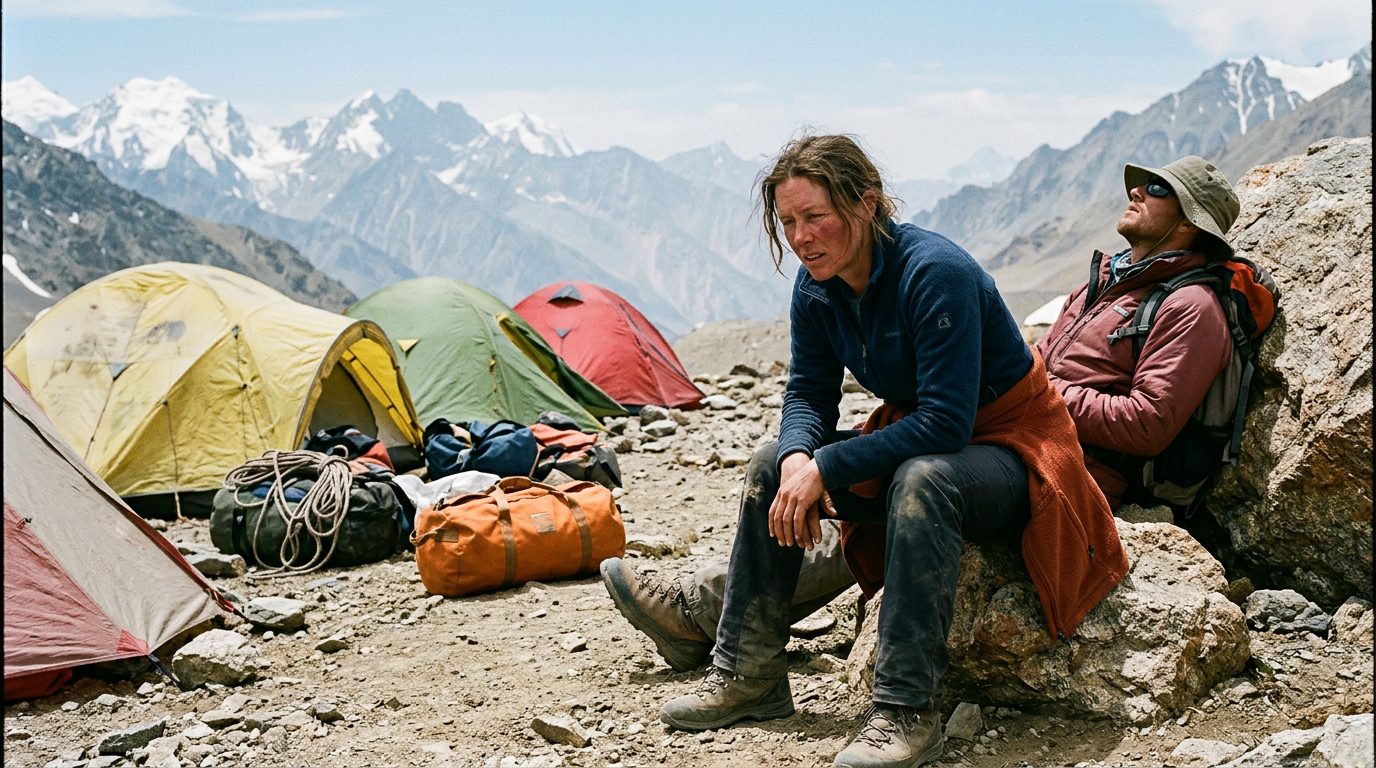
In winter, you don't have to choose between slippery asphalt and a break until spring. Skiing, snow climbs, and the rowing machine let you continue aerobic work while changing the nature of the load on your legs. For a runner, this is a window to expand the base without constantly adding running kilometres. The condition is simple: cross-training complements running rather than replacing key sessions and recovery between them.
Winter is a window for the base, not a break
Aerobic capacity can grow not only on runs. The heart, breathing, and working muscles get a training stimulus both on skis and on the rower. At the same time, there are fewer repeated landings. This allows you to distribute the load differently, but it doesn't make alternative training free: a long climb or energetic pole work also require recovery.
The transfer to running is incomplete. Cross-training supports overall endurance but doesn't fully replicate running economy, the elastic work of the foot, and the habit of impact. Therefore, accessible easy runs and key running sessions remain in the plan. In winter, part of the volume changes, not the goal of training itself.
- Main mode — zone 2. Here it's easy aerobic work where you can speak in full sentences. Zone numbers on your watch depend on settings, so check heart rate against breathing and how you feel.
- Heart rate isn't copied automatically. Arm involvement, body position, cold, and technique proficiency change the response to effort. Running zone boundaries for a new type of load are only a starting point.
- Volume grows gradually. First find the duration after which the quality of your next run is maintained, and only then add time.
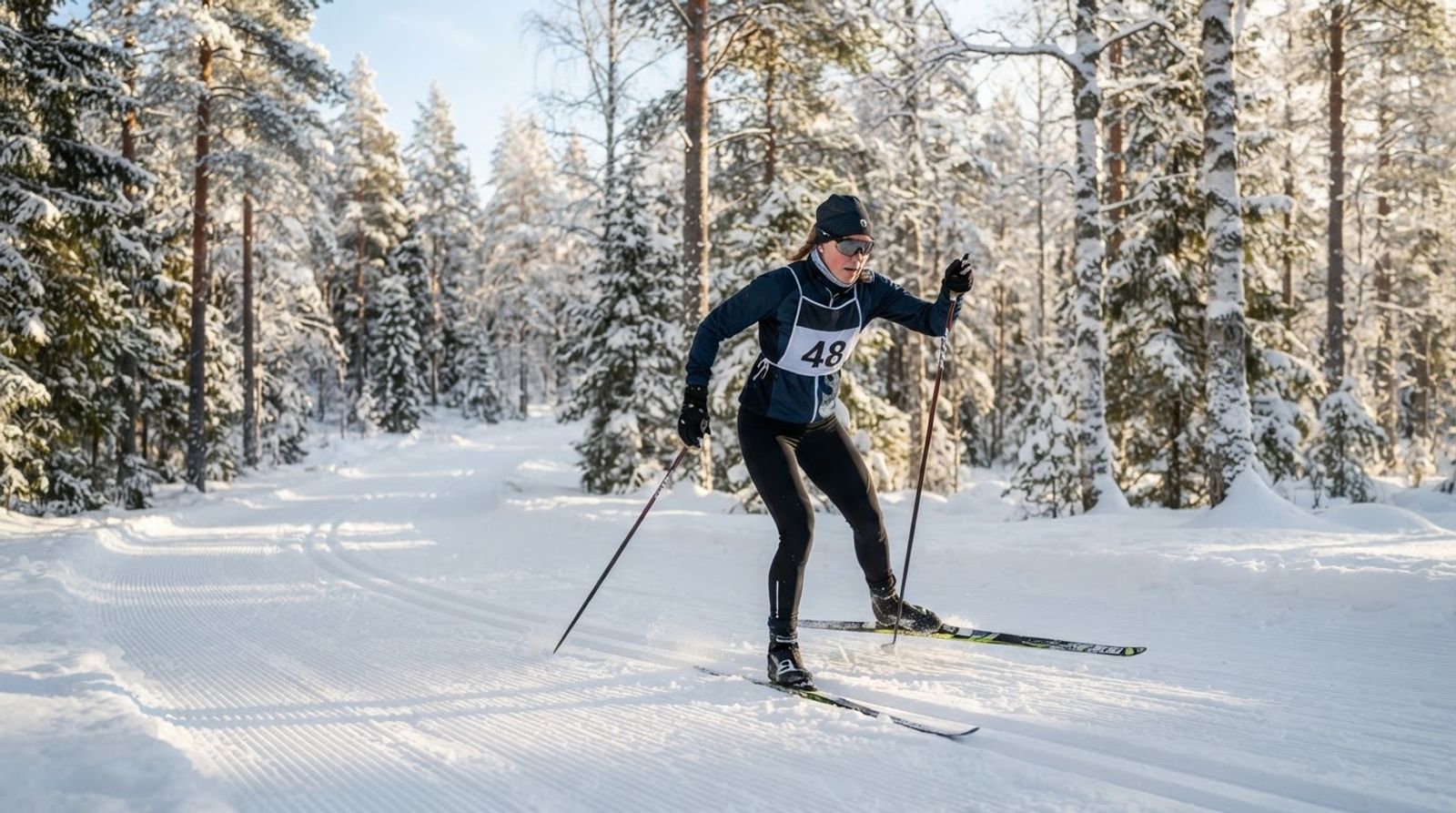
Cross-country skiing: full body without running landings
Skiing engages the legs, core, shoulders, and arms. Pushing with poles turns a walk into a full-body load. The so-called 'zero impact' means the absence of the usual running landing phase with each step, not the absence of load altogether. Falls, hard trails, and descents remain separate risks.
Skate skiing is close to mountain running in some pattern elements: weight transfer to one leg, extension of the support leg, and coordinated work of the core and arms. This is especially noticeable on climbs with poles. But lateral push-off and gliding differ from running, so ski hours can't be considered an exact replacement for mountain kilometres.
For base training, choose terrain where you can maintain easy effort. If every climb turns into a struggle for breath, the route is still too difficult for an easy session. You can slow down, switch to a simpler technique, or choose a flat loop. Your neighbour's speed on the track is not a reference here.
- Start. About 30–45 minutes on an easy route may be enough for a first session. Duration depends on technique, snow conditions, and how unfamiliar arm work is.
- Long easy work. After adaptation, 60–90 minutes can be a guideline if the effort remains steady and your next running workout isn't affected. This is not a mandatory norm.
- Technique before volume. A few sessions with an instructor help you master weight transfer, braking, and pole work. Better 30 minutes done well than 90 done haphazardly.
Ski touring, ski mountaineering and snowshoeing: the winter vertical
For summer mountain races, these are among the closest in character to winter cross-training. A long climb demands steady effort, glute and hip work, a stable torso and arm engagement. Snowshoes let you go where regular shoes sink, while ski touring lets you climb on skis with skins and then descend. For winter running on snow and slush, the pair is chosen differently than in summer: how to choose tread and when a membrane does more harm than good.
Ski mountaineering adds technical elements, transitions and, depending on the route, sections with skis on your backpack. This is no longer just an aerobic stroll. The difficulty of movement, gear and conditions can determine the load more than the planned duration. For a running base, an accessible controlled climb is usually more useful than a technical task at the limit of your skills.
The transfer is especially noticeable in the ability to walk uphill for a long time, pace your effort and use poles. But skiing downhill does not replace running downhill: the muscles work differently, there is no same sequence of braking and impacts. Before summer mountains, you will still have to gradually bring back running vertical and descents.
- Count time and elevation gain. Kilometres say little about the load in deep snow. Consider duration, elevation change, backpack weight and subjective difficulty.
- Leave a margin. Even a short route on the map can drag on because of snow, wind or transitions. Turning back on time is more useful than trying to close the gain at any cost.
- Separate fitness and safety. Good running form does not give you skills to assess avalanche terrain. Off prepared trails, you need appropriate training, assessment of local conditions, gear and the ability to use it; if you lack experience, a qualified guide.
For a first introduction, choose prepared safe routes and moderate duration. A hike of several hours does not become recovery just because you did not run anywhere. If your legs are heavy afterwards, in the weekly plan this is a significant load, not rest.
Rowing machine: posterior chain and pull
Rowing is convenient when there is no snow or the weather keeps you indoors. It combines leg drive, hip work and arm pull. Glutes, hamstrings and back muscles get a load that is often lacking in ordinary running movement. At the same time, rowing does not fully replace strength training: its task here is to diversify aerobic work and movement patterns.
Sequence matters more than power on the screen. The drive starts with the legs, then hip extension joins in and it finishes with the arm pull. The return goes in reverse order: arms, torso lean, leg bend. The torso stays controlled, and the movement does not turn into a lower-back yank or excessive leaning back.
- Long easy session. After mastering technique, aim for 25–45 minutes at conversational effort, continuously or in calm blocks. A beginner may need only 10–15 minutes with pauses to check movement.
- Short powerful sets. For a trained person, for example, 6–8 repeats of 20–30 seconds with 90–120 seconds of easy rowing between them are possible. This is a quality workout, not a sprint at any cost; the number of repeats depends on experience and maintaining technique.
- Resistance is not equal to benefit. Maximum setting is not needed by default. Choose resistance at which you can smoothly accelerate the flywheel and control the return.
Before powerful sets you need an easy warm-up, after them a calm finish. If your legs drive but your lower back rounds and takes the yank, it is too early to add effort. Stop the set when you lose control, even if the plan on the screen is not yet complete. Tired technique does not become more useful from a few more repeats.
What we pay for variety
Skiing depends on snow, trail grooming, and travel time. Ski touring requires more gear, skills, and attention to the weather. The rowing machine is more accessible schedule-wise, but monotony and an unfamiliar position can limit duration before your breathing does. These costs are worth considering before a cross-training session takes up half your weekend.
The common limiter is technique. In skiing, loss of control on a descent and fatigue that makes it hard to brake are dangerous. In rowing, a repetitive faulty stroke, especially with a rounded lower back and a sharp pull, can increase the risk of overload and injury. An instructor and a short side-view video of your movement are more useful than trying to fix everything by increasing volume.
Pain shouldn't be considered a normal price for taking up a new sport. If you have pain or suspect an injury, don't push through the load: a doctor decides whether you can train and when to return. Cross-training doesn't become a treatment just because it involves less impact.
How to fit cross-training into your running week
A practical guideline is the 3:1 rule: for three running days, one cross-training day; for four to five running days, two. This is a distribution scheme, not a requirement to add sessions immediately. If your week is already full, first review the overall volume and keep your rest. Key running sessions remain the priority.
- Example with three runs. Monday — rest, Tuesday — key run, Wednesday — rest, Thursday — easy run, Friday — easy skiing or rowing, Saturday — rest, Sunday — long run. Choose the cross-training duration so that no fatigue remains by Sunday.
- Quality is dosed. Intense cross-training — no more than once a week and not the day before a key running workout. This is an upper limit, not a goal: with a packed running plan, all cross-training can stay in zone 2.
- No two hard days in a row. A long ski tour, intense rowing, and a difficult ski trail count as hard loads. After them, you need an easy day or rest, not intervals on your usual schedule.
Check your plan by its consequences: does easy running still feel light, can you complete the key session, is fatigue accumulating week after week. If cross-training interferes with these tasks, reduce its duration or intensity. A winter base is useful not for the number of disciplines you try, but for the load you can regularly absorb and recover from.
In 1trAIner, the AI coach builds your plan through the planning cascade Season → Month → Week → Day. Data from Garmin and Apple Watch watches syncs automatically, and the week is recalculated after every workout. First 7 days free.
This material is for informational purposes and does not replace a doctor's consultation.