Fitness tests, GTO and pull-ups
How to learn pull-ups from zero: an 8-week program
From dead hangs and negative reps to five clean pull-ups.
Quick answer
How to learn pull-ups from zero: start with active hangs and preparatory exercises, then progress to your first clean reps. Train three times a week with rest between sessions; 6–10 weeks is a guideline depending on your starting strength and recovery.
1trAIner is an AI coach that builds a pull-up program around your current level and available bar or resistance band, adjusting the next session after every workout.
- Training timeframe
- 8 weeks
- Price
- 450 ₽ per month or 4999 ₽ per year
Said it out loud
And it's in progress
The first 7 days are free, no card needed. No automatic charges: you renew your subscription manually.
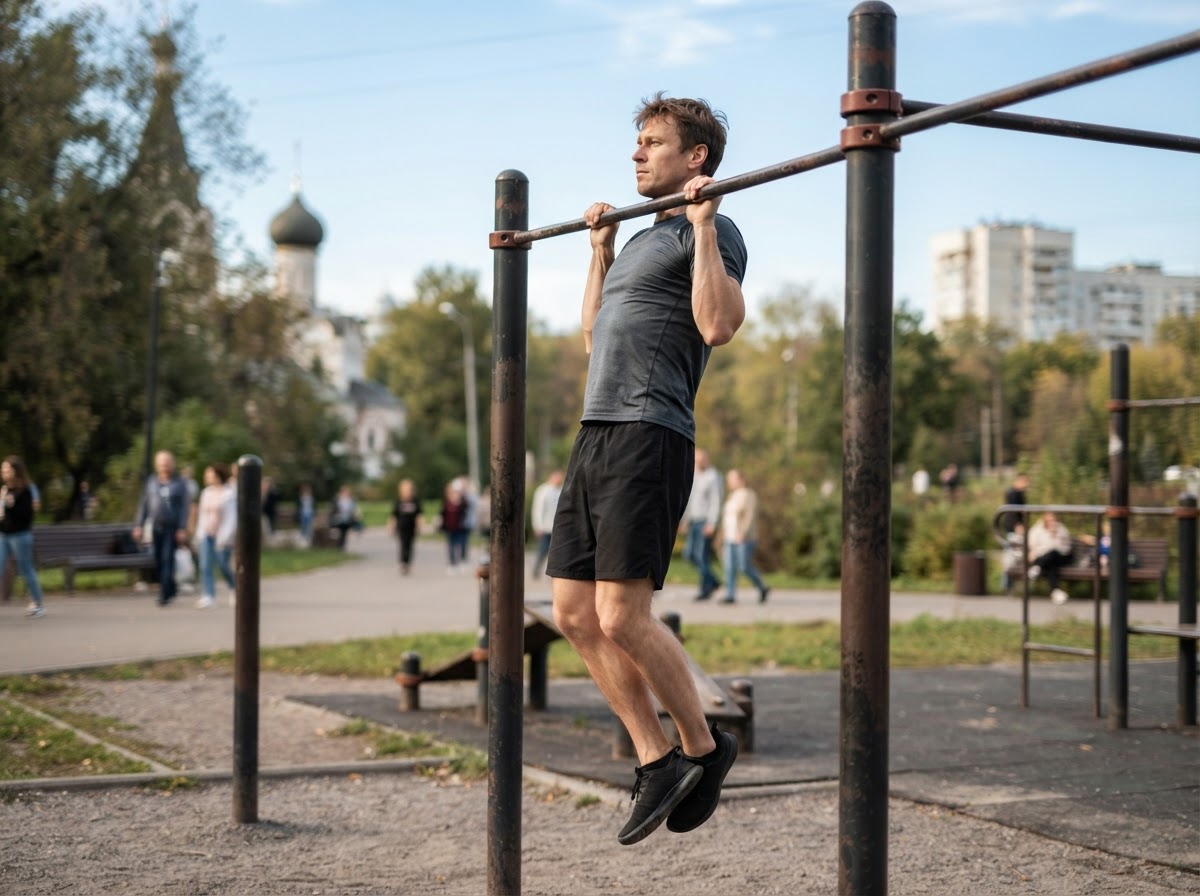
To get your first five clean pull-ups, you need to master the dead hang, pulling up without swinging, and lowering under control until your arms are straight. An example start from zero is 3 sessions a week, including an easy technique session, with 3 sets of 2–4 band-assisted pull-ups and 2–3 minutes of rest between sets. Part of the band work can be replaced with negative reps: you get to the top position from a support, then lower yourself slowly, without adding this load beyond the plan. Short ladders are first done with band assistance, and unassisted reps are counted separately.
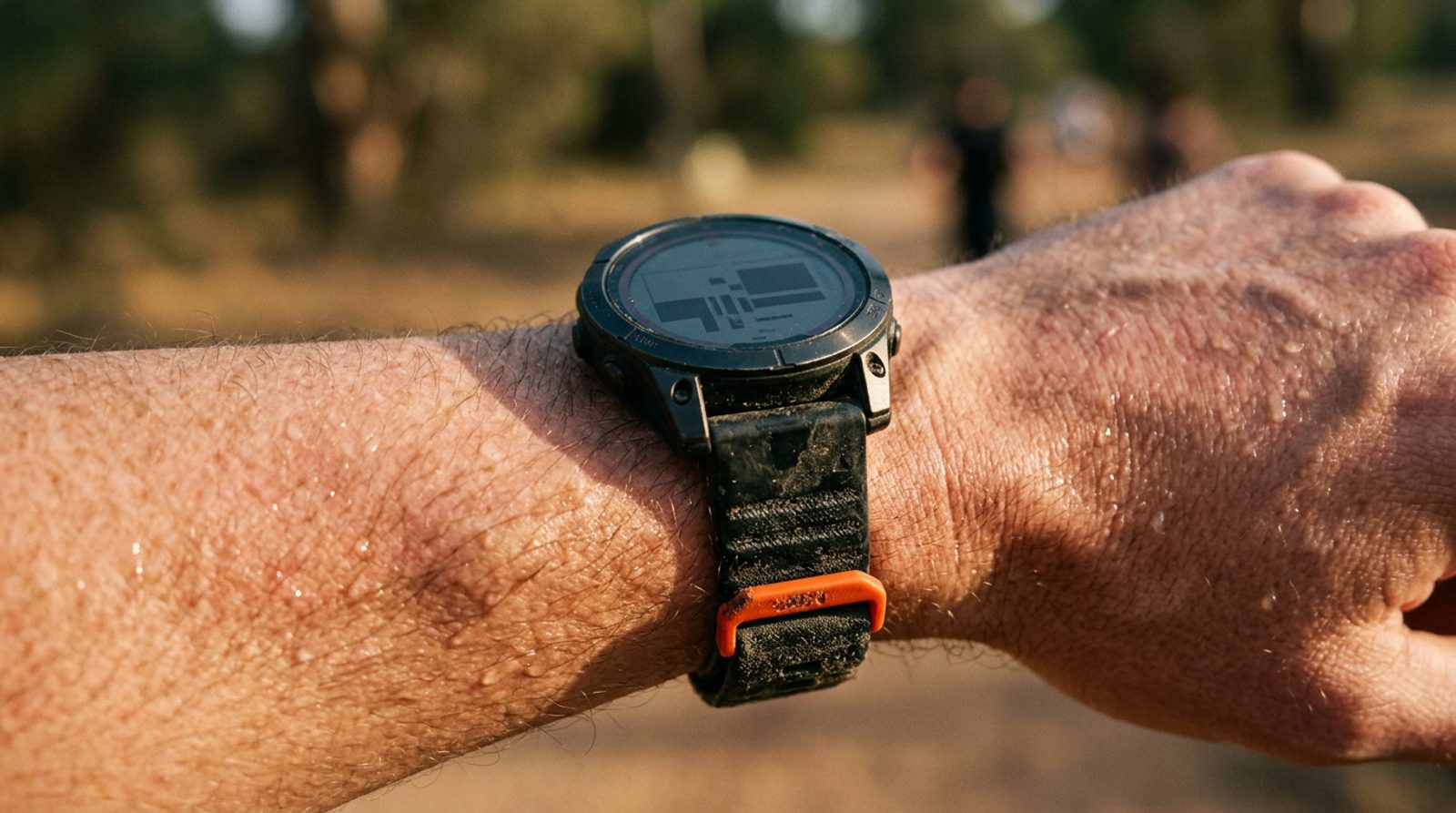
In 1trAIner, your coach is an AI: it builds a plan around your current result, the bar you have available, and your schedule. Data from a Garmin or Apple Watch syncs automatically, and you log your rep count and the band you used in the report. After every workout, the plan is recalculated based on what you did and your notes about fatigue. The first 7 days are free, then a subscription costs 450 ₽ per month or 4999 ₽ per year, with no automatic charges.
In weeks one and two, you learn to hang and perform assisted pull-ups. In week three, band assistance is gradually reduced if you can maintain good technique. Week four is lighter; in weeks five to seven, your readiness determines when to add single unassisted pull-ups and build them into short sets. Volume is reduced before the test in week eight, but five reps by then are not guaranteed. Eight weeks is a guideline: your starting level determines how long the preparatory phase takes, body weight affects the load in each rep, and recovery determines how quickly that load can increase.
Progression stages
Active hangs and shoulder blades
Learn to control your shoulders and move your shoulder blades without bending your elbows or swinging.
Australian (horizontal) pull-ups
Pull your chest toward a low bar with a straight body; choose an angle you can manage.
Negative reps
Use a step to reach the top and lower for 3–5 seconds. Replace some existing work with these reps rather than adding them after failure.
Band-assisted pull-ups
Reduce band assistance gradually, only while maintaining full range and control.
First clean reps and short sets
Start with single reps without jerking, then combine them into short sets with reps in reserve.
Weekly structure
- Three sessions a week with a rest day between them.
- Do 3–5 sets per session with 2–3 minutes of rest; choose exercises for your stage rather than doing every variation.
- Keep 1–2 reps in reserve instead of taking every set to failure.
- Take a lighter week every 3–4 weeks, or earlier if fatigued.
- Dumbbell or barbell bent-over rows are optional additions within your overall workload.
Week-by-week plan
The numbers are guidelines: progress when ready and repeat a stage if fatigued. Do not push through pain; reduce the load.
| Week | Stage | Exercises | Sets and reps |
|---|---|---|---|
| 1 | Learning to hang | Active hangs, scapular movements | 3 × 10–20 sec or 3 × 4–6 movements |
| 2 | Horizontal pulling | Australian pull-ups | 3 × 6–8 |
| 3 | Lowering control | Negatives of 3–5 sec or band assistance | 3 × 2–4 |
| 4 | Lighter week | Easy band-assisted pull-ups | 3 × 2–3 |
| 5 | Reducing assistance | Less band assistance when ready | 3–4 × 3–5 |
| 6 | First clean rep | Single reps or band assistance | 3–5 × 1–3 |
| 7 | Short sets | Clean reps with reserve | 3–5 × 2–3 |
| 8 | Recovery and assessment | Easy sets, then a test when ready | 3 × 1–2; test target: up to 5 clean reps |
How the AI coach adjusts the program
The AI coach uses your current rep count and available equipment: a bar and bands. Log reps and band assistance in your report; heart rate and duration sync from your watch if you wear it. After every workout, the next session is recalculated with fatigue in mind. Do not push through shoulder or elbow pain; reduce the load and note it in your report.
Next goals
See how 1trAIner works
What you get during 7 days of free access
- In the first free 7 days, fill out the questionnaire about your schedule, experience, and equipment, then test your current max of clean pull-ups: zero is a fine starting point too.
- Get your first week of training with 3 sessions, including dead hangs, pull-ups with the right level of band assistance, and carefully dosed negative reps.
- Log the sets you completed, your level of assistance, and your fatigue: the coach will review your first sessions and adjust the load.
How it works
-
1
You tell us about yourself
Share your level, how many days a week you can train, and your race date or target date. It takes five minutes in the chat or by filling out a questionnaire.
-
2
You get a plan
The coach designs a training cycle leading up to your goal and lays out each week day by day: what to do, at what pace, and the purpose of each workout.
-
3
The plan follows you
Workouts from your watch sync automatically, and you get feedback in the chat. Miss a session or get sick? Your weekly plan is adjusted.
Frequently asked questions
How can I learn pull-ups on a bar from zero?
Start with active hangs and horizontal rows, then use suitable band assistance and controlled negatives. Progress to clean reps when ready.
What program helps me learn pull-ups?
Use a program for your current level: three weekly sessions, 3–5 sets, 2–3 minutes of rest and gradually less assistance.
How long does it take to learn pull-ups?
Six to ten weeks is a guideline for the first reps, not a promised deadline. The preparatory stage may take longer.
How can a woman learn pull-ups?
Use the same progression: hangs, horizontal rows, bands and first reps. Choose assistance and volume by strength and recovery, not gender.
What if I cannot do a single pull-up?
Use a low bar or enough band assistance. Zero reps means starting with preparatory exercises rather than repeating attempts to failure.
How often should I train on the bar?
Start with three weekly sessions and a rest day between them. Reduce volume or add rest if fatigue builds up.
Do I need a sports watch?
No. You can start without one: the plan is based on your goal, level, and available time. With a Garmin or Apple Watch, the plan can be tailored more precisely — the coach can see your heart rate, sleep, and actual weekly training volume.
What happens after the free week?
The subscription costs 450 ₽ per month or 4999 ₽ per year. There are no automatic charges: your card details are not stored, and you renew manually using the link in the reminder.
Is the coach a person or a program?
1trAIner is an informational service: plans and reviews are prepared by AI based on your data. This is not a medical service and not a substitute for a doctor or an in-person coach.
What if my goal changes?
Let the coach know in the chat. Your plan is currently built around “Go from zero to 5 pull-ups in 8 weeks”, but race dates can change, injuries happen, and vacations come up. The coach will adjust your training cycle to fit your new circumstances.
In the blog

The first 7 days are free, no card needed. No automatic charges: you renew your subscription manually.
Subscription terms are on the plans page and in the public offer. The service provides informational services and does not replace a doctor or an in-person coach.