

Fitness tests, GTO and pull-ups
Do 30 pull-ups in one set in 16 weeks
Building up to thirty pull-ups takes months: the plan keeps the load within your capacity to recover.

- Training timeframe
- 16 weeks
- Price
- 450 ₽ per month or 4999 ₽ per year
Said it out loud
And it's in progress
The first 7 days are free, no card needed. No automatic charges: you renew your subscription manually.
Thirty clean pull-ups in a row require a solid base of strength endurance and consistent technique throughout a long set. With a starting max of around 15 reps, an example starting point is 3–4 sessions per week with 4 sets of 6–8 reps and 2–3 minutes of rest between sets, with less volume on the easy day. Rep ladders alternate with straight sets, and band-assisted work is used to practise technique without counting it as unassisted pull-ups. Negative reps are reserved for specific work on lowering control and replace part of the regular work to avoid extra fatigue.
The coach in 1trAIner is an AI: it builds a plan around your current maximum and schedule, leaving time for recovery between hard sessions. Data from Garmin or Apple Watch syncs automatically; you mark the length of sets and the quality of the last reps yourself. After each workout the plan is recalculated, so volume growth can be postponed if the completed sets felt too hard. First 7 days free; then subscription — 450 ₽ per month or 4999 ₽ per year, no automatic charges.
In weeks one to three, you establish a manageable volume; in weeks five to seven, you build up the rep ladders; and in weeks nine to eleven, you gradually increase reps per set. Weeks four, eight and twelve are easier. In weeks thirteen to fifteen, you assess readiness for a long set without daily max tests. In week sixteen, volume is reduced before the test; if your technique or recovery isn't up to it, the target attempt is postponed. Sixteen weeks is a guideline for experienced athletes, not a promise: your starting result determines the work needed, weight affects the difficulty of each rep, and recovery limits how quickly you can progress.
See how 1trAIner works
What you get during 7 days of free access
- Start the free 7 days with a questionnaire about your experience, schedule and recovery, then measure your current maximum in one continuous set.
- Complete the first week of the plan with 3–4 sessions of moderate sets and an easy day instead of constant work to failure.
- Record the completed volume and the change in technique by the end of the sets: the coach will review the report and adjust the load.
How it works
-
1
You tell us about yourself
Share your level, how many days a week you can train, and your race date or target date. It takes five minutes in the chat or by filling out a questionnaire.
-
2
You get a plan
The coach designs a training cycle leading up to your goal and lays out each week day by day: what to do, at what pace, and the purpose of each workout.
-
3
The plan follows you
Workouts from your watch sync automatically, and you get feedback in the chat. Miss a session or get sick? Your weekly plan is adjusted.
Frequently asked questions
Do I need a sports watch?
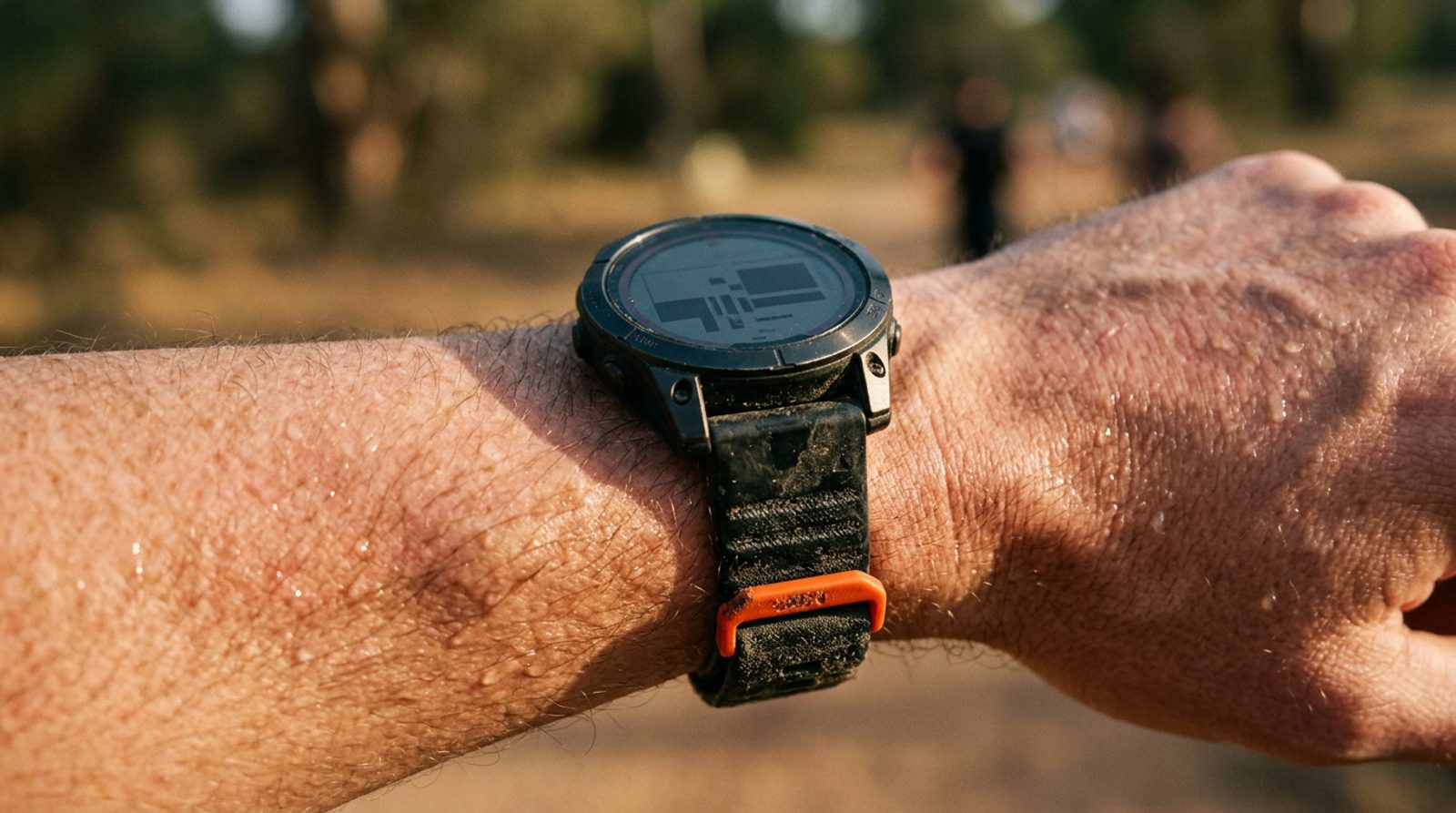
No. You can start without one: the plan is based on your goal, level, and available time. With a Garmin or Apple Watch, the plan can be tailored more precisely — the coach can see your heart rate, sleep, and actual weekly training volume.
What happens after the free week?
The subscription costs 450 ₽ per month or 4999 ₽ per year. There are no automatic charges: your card details are not stored, and you renew manually using the link in the reminder.
Is the coach a person or a program?
1trAIner is an informational service: plans and reviews are prepared by AI based on your data. This is not a medical service and not a substitute for a doctor or an in-person coach.
What if my goal changes?
Let the coach know in the chat. Your plan is currently built around “Do 30 pull-ups in one set in 16 weeks”, but race dates can change, injuries happen, and vacations come up. The coach will adjust your training cycle to fit your new circumstances.
In the blog

The first 7 days are free, no card needed. No automatic charges: you renew your subscription manually.
Subscription terms are on the plans page and in the public offer. The service provides informational services and does not replace a doctor or an in-person coach.