

Fitness tests, GTO and pull-ups
Push-up program: from 20 to 100 push-ups week by week
A hundred reps in one set takes sustained effort: build volume gradually to avoid overloading your shoulders and elbows.
Quick answer
A push-up program progresses through 20 → 50 → 100 reps: start at your current level and gradually increase volume. Train 3–4 times a week, keeping reps in reserve and resting between hard sessions. Twelve weeks is a guideline: moving to the next stage depends on technique and recovery.
1trAIner is an AI coach that creates a push-up program for your current maximum and schedule, recalculating the next session after every workout.

- Training timeframe
- 12 weeks
- Price
- 450 ₽ per month or 4999 ₽ per year
Said it out loud
And it's in progress
The first 7 days are free, no card needed. No automatic charges: you renew your subscription manually.
One hundred push-ups in a single set is a high goal that requires accumulated strength endurance, not just frequent attempts to failure. If you start at 40–50 clean reps, an example starting point is 3–4 sessions a week of 4 sets of 15–20 reps: 12–16 sets and 180–320 reps per week in total, and not every session is hard. Rest between sets is 1.5–3 minutes, and consistent range of motion and a stable core matter more than the number in the report.
The coach in 1trAIner is an AI: it builds a plan around your result, schedule and the volume of your other strength sessions. Garmin or Apple Watch data syncs automatically, but you log the number of push-ups and the quality of the last reps separately. After every workout the plan is recalculated, and your notes on fatigue help decide whether to increase volume or keep it the same. First 7 days free; then you can choose 450 ₽ per month or 4999 ₽ per year, with no automatic charges.
In the first three weeks the volume of sets grows gradually, then later blocks add ladders and long sets without daily max tests. Weeks four and eight are easier, and week twelve reduces volume before the test; negative reps are only needed for a specific technique goal, not for extra fatigue. Twelve weeks is a guideline, especially if your starting result is already high: weight, experience and recovery can noticeably change the timeline. If you feel pain in your shoulders, elbows or wrists, reduce the load and consult a doctor about whether you can continue.
Progression stages
From zero: incline or knee push-ups
Start with incline push-ups on a high support or knee push-ups. Gradually lower the support while maintaining body control.
20 floor push-ups: technique and first sets
Build consistent range of motion and short sets with 1–2 reps in reserve.
20 push-ups50: volume through sets and ladders
Build volume across several sets; ladders replace some regular sets rather than adding extra load.
50 push-ups100: long sets and endurance
Lengthen one set gradually while keeping the others easier. A hundred consecutive reps is an advanced goal and may take longer than 12 weeks.
Weekly structure
- Train 3–4 times weekly with a rest day between hard sessions; an optional fourth session is easy, depending on recovery.
- Do 4–6 sets with 1–2 reps in reserve and 1–2 minutes of rest. Shorten the set if technique deteriorates.
- Every 1–2 weeks, test your maximum clean reps when ready and rested; this replaces a hard set.
- Keep your body straight, elbows roughly 45° from your torso and a consistent range of motion.
- Daily practice means only easy sets without failure, if recovery allows. Do not push through pain; reduce the load.
Week-by-week plan
The numbers are guidelines: progress when ready and repeat a stage if fatigued. Do not push through pain; reduce the load.
| Week | Stage goal | Sets | Test |
|---|---|---|---|
| 1–2 | 20: technique and starting load | 4 × 6–10 or incline reps as manageable | Starting maximum clean reps |
| 3–4 | Consolidate 20; ease off in week 4 | 4–5 × 8–12; less in week 4 | 20 when ready and rested |
| 5–6 | Toward 50: build volume | 4–6 × 10–15 or short ladders | Current maximum every 1–2 weeks |
| 7–8 | Consolidate 50; ease off in week 8 | 4–6 × 12–20; less in week 8 | 50 when ready; otherwise repeat the stage |
| 9–10 | Toward 100: a long set | 1 long set with reserve + 3–4 easy sets | A test replaces the long set |
| 11–12 | Ease off and attempt 100 | 4 easy sets; reduce volume before testing | 100 only when ready; extend the timeline if needed |
How the AI coach adjusts the program
The AI coach considers your current maximum, available support and schedule. Log reps and the exercise variation in your report; heart rate and duration sync from your watch if worn. After every workout, the next session is recalculated: fatigue and shoulder or elbow pain call for a lighter load. Do not push through pain; reduce the load and report it.
Next goals
See how 1trAIner works
What you get during 7 days of free access
- In the first free 7 days, fill in the questionnaire about your training history and all strength work, then test your current max in one continuous set.
- Get the first week of the plan with 3–4 sessions: volume is distributed and one session is easy, rather than daily work to failure.
- Review the completed volume and your fatigue notes with the coach: based on the week, the load will increase, stay the same or decrease.
How it works
-
1
You tell us about yourself
Share your level, how many days a week you can train, and your race date or target date. It takes five minutes in the chat or by filling out a questionnaire.
-
2
You get a plan
The coach designs a training cycle leading up to your goal and lays out each week day by day: what to do, at what pace, and the purpose of each workout.
-
3
The plan follows you
Workouts from your watch sync automatically, and you get feedback in the chat. Miss a session or get sick? Your weekly plan is adjusted.
Frequently asked questions
How can I reach 100 push-ups?
Work through 20 and 50 reps, building volume across sets and then longer sets. Approach 100 when ready; 12 weeks may not be enough.
What push-up program suits beginners?
Start with a manageable variation and three weekly sessions. A high support helps maintain technique while floor reps are limited.
How can I learn push-ups from zero?
Use incline or knee push-ups while keeping your body straight. Lower the support gradually without sacrificing range of motion.
How many times a week should I do push-ups?
Aim for 3–4 sessions with a rest day between hard ones. Keep the fourth day easy and account for other pressing exercises.
Can I do push-ups every day?
Only with easy sets away from failure and good recovery. Daily maximum attempts interfere with recovery; add rest if fatigued.
Push-up training program: how many sets should I do?
Usually 4–6 sets with 1–2 minutes of rest and 1–2 reps in reserve. This is a guideline: reduce volume if technique slips or fatigue builds.
Do I need a sports watch?
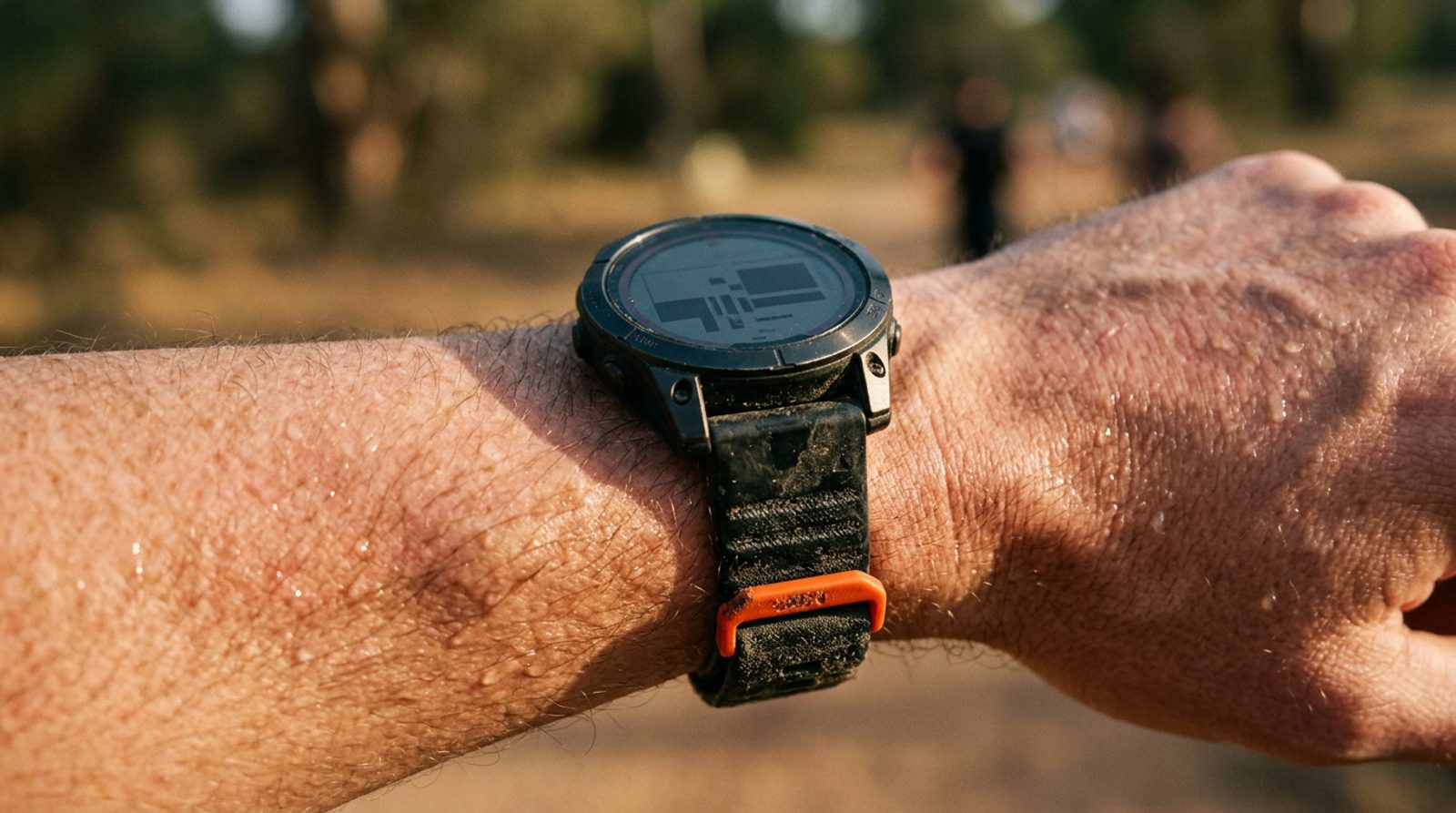
No. You can start without one: the plan is based on your goal, level, and available time. With a Garmin or Apple Watch, the plan can be tailored more precisely — the coach can see your heart rate, sleep, and actual weekly training volume.
What happens after the free week?
The subscription costs 450 ₽ per month or 4999 ₽ per year. There are no automatic charges: your card details are not stored, and you renew manually using the link in the reminder.
Is the coach a person or a program?
1trAIner is an informational service: plans and reviews are prepared by AI based on your data. This is not a medical service and not a substitute for a doctor or an in-person coach.
What if my goal changes?
Let the coach know in the chat. Your plan is currently built around “Do 100 push-ups in one set in 12 weeks”, but race dates can change, injuries happen, and vacations come up. The coach will adjust your training cycle to fit your new circumstances.
In the blog

The first 7 days are free, no card needed. No automatic charges: you renew your subscription manually.
Subscription terms are on the plans page and in the public offer. The service provides informational services and does not replace a doctor or an in-person coach.